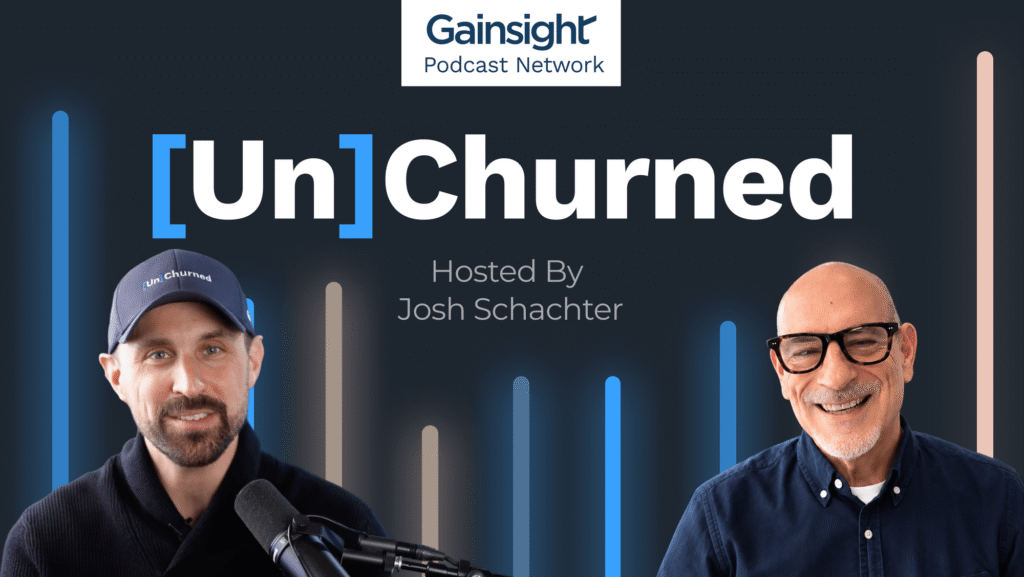
Learn how PubMatic uses AI in customer success to automate 100% of onboarding, scale QBRs 6x, and turn CSMs into revenue owners.

219. How CSMs Can Scale QBRs Across Their Entire Book of Business ft. Abbie Reichner (PubMatic)
Show Notes
What do CSMs do when AI takes over the busywork? At PubMatic, onboarding went from a couple a quarter to hundreds, and QBRs are set to jump from 5 to 30.
On this episode of Unchurned, Gainsight’s Josh Schachter talks with Abbie Reichner, VP of Customer Success at PubMatic, about AI in customer success: automating onboarding with AI agents, scaling QBRs, and why CSMs are moving from reactive account management to strategy, relationships and owning revenue. Abbie also shares her hiring rule (“hire your opposite”) and her leadership advice for women in ad tech: let your results do the talking.
What you’ll learn
– How PubMatic automated customer onboarding 100% with AI agents and forward-deployed engineers
– Why humans stay in the loop: “the nuance is the tribal knowledge”
– How AI-generated client briefs take QBRs from 5 to 30 a quarter
– Why CSMs will increasingly carry a sales or growth number
– The hiring rule Abbie swears by
– A learn-by-doing approach to enablement when products ship faster than training can keep up
– Why peer relationships across your industry make you a better advisor to customers
– Leadership lessons for women in ad tech and tech in general
Timestamps
0:00 – Preview, Intro & Abbie’s tattoo sleeve story
2:25 – What ad tech really is (it’s not Mad Men)
4:30 – From media operations to customer success
5:50 – CS at PubMatic
9:30 – Why Abby hires her opposite
10:42 – Why CS now owns a revenue number
13:30 – Team structure & How they automated onboarding with AI agents
19:55 – Human in the loop: the nuance is tribal knowledge
21:05 – Peer relationships in freed-up time
23:55 – Personal AI projects: auto-groceries & never missing lunch
25:50 – AI client briefs: from 5 to 30 QBRs a quarter
28:18 – Enablement when everything moves fast
29:45 – PubAssistant: one AI agent for customers and CSMs
31:00 – Community, events & learning from peers
32:45 – Women in ad tech leadership
Featuring

Josh Schachter, Host
SVP, Strategy & Market Development @ Gainsight

Abbie Reichner, Guest
VP of CS @ PubMatic
Transcript
Abbie Reichner:
This brief is kind of based off of the entire QBR, but you can break it up into pieces depending on—
Josh Schachter [Host]:
Different lenses.
Abbie Reichner:
Yep, what you’re, what you’re doing.
And I would say, you know, we were able to do maybe 5 QBRs a quarter, and with this we’ll be able to probably do 30.
Josh Schachter [Host]:
Wow.
Abbie Reichner:
And so If each, uh, account manager can do 30, that’s their entire book of business.
Josh Schachter [Host]:
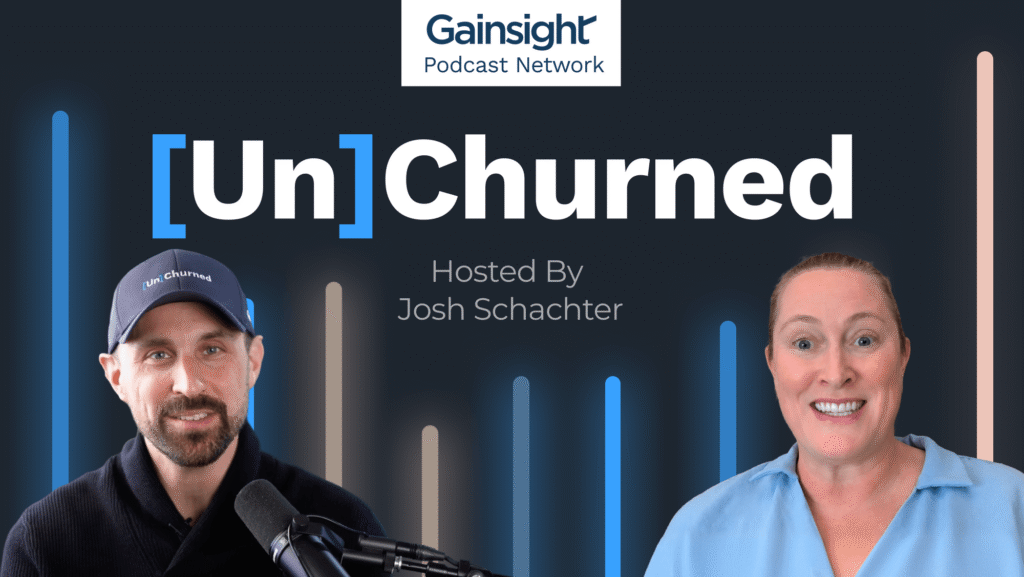
You’re listening to Unchurned, brought to you by the Gainsight Podcast Network. Subscribe to our Substack at unchurned.gainsight.com, where we go deep on every episode, like how one post-sales team at Cloudbeds built over 150 AI agents. That story and more at unchurned.gainsight.com. Hey everybody, welcome to this week’s episode of Unchurned. I’m your host, Josh Schachter. Senior Vice President of Go-to-Market and Strategy at Gainsight. And I’m thrilled to be here in person in Midtown New York with Abby Reischner. Abby is the VP of Customer Success at PubMatic.
Josh Schachter [Host]:
Abby, thank you so much for being here in person.
Abbie Reichner:
Thanks for having me, Josh.
Josh Schachter [Host]:
Yeah. Okay, I’m actually just gonna get this question outta the way upfront. I wanna talk about, because we’re in such a beautiful environment here, we’ve got great camera, great lighting, and the first thing I see is your sleeve. Is your sleeve full of tattoos? And honestly, this is beautiful. Like, it’s a work of art. Well, tell us, tell me the story about this woman with her hand on her cheek there.
Abbie Reichner:
Yeah, I mean, I am originally from California and it was during COVID I was a little bored and I actually found the artist and he just did beautiful work. And so, you know, I’m trusting the artist, so I gave him my arm and I was like, here you go, do whatever you want. And it worked out. That was your first
Josh Schachter [Host]:
tattoo just during COVID
Abbie Reichner:
No, it wasn’t my first tattoo, but it was my first like large piece.
Josh Schachter [Host]:
Like big pieces, big canvas.
Abbie Reichner:
Yeah.
Josh Schachter [Host]:
Okay.
Abbie Reichner:
And yeah, usually it’s one of the first things that people do notice for obvious reasons, but I do love it. Okay.
Josh Schachter [Host]:
Well, for everybody that’s listening, watch, take a second and you’ll see the beautiful piece of art there on Abby’s arm.
Abbie Reichner:
Thank you so much.
Josh Schachter [Host]:
Over to customer success.
Abbie Reichner:
Yes, very different.
Josh Schachter [Host]:
And to AdTech and PubMatic. Now we’re in New York. New York, we, you know, know, I tried watching Mad Men, the TV series, I couldn’t get through a few too many episodes. But we know that New York is the center of this stuff. So tell us a little bit about what advertising in technology looks like.
Abbie Reichner:
Unfortunately, it’s probably not as glamorous as Mad Men is. But funny enough, I can’t remember what the show was. When there was a show way back in the day, and that’s what originally It was about advertising, and that’s why I wanted to get into advertising. Now, as—
Josh Schachter [Host]:
Was it like Ally McBeal, or was that a legal movie?
Abbie Reichner:
No, I can’t remember what it was. It was only on for like a season.
Josh Schachter [Host]:
This literally inspired your entire career, and you don’t know what the show is.
Abbie Reichner:
I know, I know.
Josh Schachter [Host]:
But that’s fine, we’ll get there.
Abbie Reichner:
Yes, I need to figure out what it is one of these days. But so ad technology is slightly different than advertising where We are providing the platform and the technology to actually help media businesses make money off of advertising. So specifically in the digital space where PubMatic sits, we’re the underlying technology that basically allows for the buying and selling of ad space and placing advertisements. So if we think about all the political campaigns we recently saw for quite a few months.
Josh Schachter [Host]:
It’s your fault?
Abbie Reichner:
It is. The ads are all your fault? I know. All our fault, yes. So we work on both the advertising side with the political ads as well as the content supply side. So if you’re streaming your favorite show, we work with the content owner and—
Josh Schachter [Host]:
Which is the publisher.
Abbie Reichner:
Which is the publisher and allowing them to make money off of their ad space. And then we work with the advertiser to make sure that those political ads are reaching the right people.
Josh Schachter [Host]:
And you’ve come from the media world. We were just talking offline here how you were working with my college roommate, literally the guy, Theo Orsher, who I slept next to the bed next to me in our own room for 2 years at college.
Abbie Reichner:
Shout out to Theo.
Josh Schachter [Host]:
Shout out to Theo. It’s a small world. So you have that background. And what was that trigger point then, or that inflection from your background in media operations and marketing to then going into customer success?
Abbie Reichner:
Yeah, so I think I started off in operations and actually as an operations specialist. I also did a little bit of media planning fresh out of college. Again, that’s where I ended up as it relates to advertising, not exactly what I thought based off of this show that I can’t remember. But we started there and I think I really got into just problem solving and how do you kind of tinker and fix things. And in order to do that, it’s really about, you know, listening to the customer or the client or the buyer, whoever it is,
Josh Schachter [Host]:
Yeah.
Abbie Reichner:
and figuring out a way. And I do it from a very like operational technology-driven space, but I think people who don’t lean that way can still kind of have that tinkering mindset. And so that’s kind of what led me into customer success, because you’re listening to the customers, you’re listening to their pain points, what, what their goals are, what their KPIs are, and you’re trying to figure out how to help them deliver that and be a part of their, their business and help them grow in parallel to helping, in this case, PubMatic grow.
Josh Schachter [Host]:
So you guys are a consumption-led business, right? And now you have some features that are SaaS-based as well that you can tell us about. So you’re actually going a little bit the opposite direction of the trend these days of SaaS businesses than dipping their toes into consumption. You’re working the reverse, you’re swimming upstream like salmon here. What is CS at PubMatic within ad tech? What does that look like per se? What are you helping customers to achieve?
Abbie Reichner:
Yeah, so I lead the customer success team in North America and there’s a little bit of pre-sales as it relates to supplying the publishers and getting those deals signed with new publishers, whether it’s streamers or a new website. But most of the team is focused on post-sales. And so again, we’re working with the publisher and we’re working with the supply. And our team is really focused on how do we help that content owner grow? How do we help them scale? So within that, to your point, there’s a couple of different models and we’re really flexible. And so that’s part of the customer success journey is listening to the customer and figuring out what works best for them. And it might be SaaS or a SaaS model in certain cases, it might be consumption. And it does really depend on who the customer is. It could be an app-based customer when you think about being on your phone, or it could be someone that has access to a bunch of inventory and they are almost a sales house.
Abbie Reichner:
And those 2 types of customers are going to operate and transact completely different. So even within their commercial models or how we service them, we have to figure out, okay, which one are you and what would work best for your business?
Josh Schachter [Host]:
And are your customers both the publishers and the buyers, or is it just one side?
Abbie Reichner:
Yeah, so the team that I mainly manages mainly supply side.
Josh Schachter [Host]:
Okay.
Abbie Reichner:
There is a team within my org that also works with the buyers. It’s more of a subject matter expertise versus working with them on a day-to-day basis. Same concept. This team goes in and it’s more of a specialized request from the advertiser, from the buyer on what, what are they looking to achieve, whether it’s I want to deliver on live sports, or I want to reach this audience. And they come up with that solution if it’s not out of the box already.
Josh Schachter [Host]:
Do you ever bring the 2 worlds together? I mean, do your CSMs, do they speak both languages? Have they ever represented both the supply and demand side?
Abbie Reichner:
So they don’t necessarily come together in representing both the buy and the sell side. There are certain cases where we have certain publishers that also act as a buyer, but their main core business is being a publisher. Yeah. However, there are— you do have to know both sides. So very much so in order to talk to a publisher, and for the most part, what do they care about? They want to make money, they want to grow. And where does the money come from? It comes from the buy side and the advertisers. So knowing the buy side and how the buy side operates and transacts is really important. Again, me personally, I come from operationally, how do things fit together?
Josh Schachter [Host]:
This is your background that you came from.
Abbie Reichner:
It’s my background.
Josh Schachter [Host]:
Does everybody come from that background on the team? Do you seek that out or?
Abbie Reichner:
So I actually don’t normally seek that out. So when I’m looking to hire someone, And it definitely does depend. There’s a certain profile that you typically have of an operations manager or an account manager or a business development person. But if I’m looking for a manager or direct report, I’m actually looking for someone that has completely opposite traits of what I have because I’m looking for where are my gaps and who can come in and help.
Josh Schachter [Host]:
So what are your gaps?
Abbie Reichner:
Oh gosh, so many. No, I mean, I am super operational, and so that is my strength, and I like digging into the details and the tech piece. I have some folks on my team that are amazing at relationships, and that building relationships, getting people to talk to them, maintaining those relationships. There’s other people that lean a little bit more high-level strategic, and so when you put all of those pieces together, I think they’re very complementary.
Josh Schachter [Host]:
How about the commercial aspect of things? Are you guys involved in the commercials?
Abbie Reichner:
Yeah, so we’re involved in the commercial. So obviously there’s a presale motion, which is the publisher development team that is also under the customer success role.
Josh Schachter [Host]:
That’s like you’re helping them. It sounds like from what you’re saying, you’re helping them kind of select the best model and the best packaging for them.
Abbie Reichner:
But there’s also a level of we always are— PubMatic is particularly innovative and we’re AI-forward, agentic-driven. And so With that, we have new products all the time. You’ve
Josh Schachter [Host]:
got your Agentic OS.
Abbie Reichner:
We have our Agentic OS and Activate. So those are going to be separate commercial-driven models. And that is where, because it is technically post-sale, my team is going to help with the commercials.
Josh Schachter [Host]:
Are they— this is happening in real time, it sounds like?
Abbie Reichner:
Yes, very much so.
Josh Schachter [Host]:
And so the consumption of their customers will be— and the adoption— well, the adoption will be tied to the consumption, which will be tied to the commercials.
Abbie Reichner:
Yes. Yes.
Josh Schachter [Host]:
And they will have numbers to own.
Abbie Reichner:
They have numbers to own. So it is like we are part of a revenue organization, and everyone has a number that they have to hit. I’m probably jumping the gun here. But as we become a little bit more AI efficient, and we’re using AI tools, The evolution of what I am looking at from my account management and customer success sort of roles and responsibilities is going to start to lean or align a little bit more towards sales relationship strategy, which is going to hold a sales number or a growth number versus— Mm-hmm. just upkeep and traditional account management and being reactive to requests and, you know, just like what you would historically think of an account management.
Josh Schachter [Host]:
But what about that technical and operational aspect? Is that just the table stakes foundational layer they must have?
Abbie Reichner:
So the technical, we’re doing a lot of work on actually AI enablement of the operations and the technical piece as well. And so that right now is really helping, and it’s allowing these folks and the people on my team to start to build that muscle of relationships and strategy, etc. So we’re in this nice transition period where they’re still using their operational knowledge and experience, but at the same time, they’re learning a new skill set and they’re growing in a new way. So an example is we onboard customers all the time, whether it’s on my team from the supply standpoint or the advertising standpoint or a tech partner standpoint. And we recently automated the entire onboarding process.
Josh Schachter [Host]:
100%.
Abbie Reichner:
100%. For all segments? It’s for a couple of segments, but we’re now broadening that to multiple of the segments. that is like a huge milestone for us because that was such a—
Josh Schachter [Host]:
I’m gonna pause and give you a round of applause.
Abbie Reichner:
It wasn’t me, but—
Josh Schachter [Host]:
Just take the credit.
Abbie Reichner:
Okay, okay.
Josh Schachter [Host]:
That’s awesome.
Abbie Reichner:
So we— it was definitely like more of a bottleneck to have this like pipeline of customers that just needed to be onboarded.
Josh Schachter [Host]:
Yeah.
Abbie Reichner:
And of course, like, we’re waiting to get whatever their inventory or their demand, and it’s all very procedural, right? Like, you have a checklist of I need this, this, and this, and then we do this, and then the customer does this.
Josh Schachter [Host]:
It’s deterministic workflows.
Abbie Reichner:
It’s very much so. And so we went from being— I don’t know the exact numbers, but onboarding, you know, a couple of folks a quarter to— I don’t even know, like—
Josh Schachter [Host]:
Hundreds, thousands. Hundreds. Millions. Yeah, these are large accounts. This is not just the long tail.
Abbie Reichner:
Nope, large accounts.
Josh Schachter [Host]:
And you have the long tail as well as part of your segmentation. We didn’t talk about really your remit, the number of roles and segmentation.
Abbie Reichner:
Yeah.
Josh Schachter [Host]:
Maybe back up and tell us a little bit about that.
Abbie Reichner:
So, um, uh, my team is currently a team of about 60 folks and we have, uh, I think I mentioned publisher development. We have, uh, a CSM role. We also have, uh, customer success operations. There’s also solutions, solution engineering, uh, and technical escalations. Um, and then I also was managing a little bit of our audience solutions business. which we have hired an amazing person to take that over that’s actually an expert in that area. Those are the different functions of the team. So we do still have, you know, very much operations.
Abbie Reichner:
And again, every single one of those teams, we’re looking at how do we uplevel your skills? At the same time, how do individual contributors contribute to the automation of something that they know on the back of their hand, something that is very deterministic. And so they’re very involved in actually building out those automations as well.
Josh Schachter [Host]:
Yeah. Well, let’s talk about that. Let’s talk about the AI transformation that’s taking place.
Abbie Reichner:
AI is everywhere.
Josh Schachter [Host]:
AI is everywhere. Where do we start? Where do I mean, I want to hear— well, I mean, I want to hear about actually, As I say that, I want to hear more about this, making your onboarding autonomous, making it self-served by the customer. How did you start that process? What are some key learnings that you could share?
Abbie Reichner:
Yeah, so I mean, for this particular customer, it was actually someone on— Brian on my team who was leading a group of engineers to put this together. But we had to take a look at obviously, where is the biggest impact? And so this segment of customers was the biggest impact because we were, and this is on the more on the buy side, there’s a finite amount of publishers that we’re going to work with or onboard.
Josh Schachter [Host]:
The big ones.
Abbie Reichner:
The big ones. Also, to your point earlier, we do have some long tail mid-tail, long-tail. But there is a finite, and that’s where our business kind of started. And it started as a supply-side platform. So you have to get supply to help sell before you get the buyers, right? So there, however, are always new buyers or curators or different tech partners that are looking for that supply.
Josh Schachter [Host]:
Mm-hmm.
Abbie Reichner:
And so that’s really where the biggest impact is going to be made. So a lot of what we are doing, and this is relating to the Agentic OS that you mentioned earlier as well,
Josh Schachter [Host]:
which is a commercial product
Abbie Reichner:
that you offer your
Josh Schachter [Host]:
customers. Okay. Yeah. But you also use it, it sounds like, internally, or no?
Abbie Reichner:
Yes, we use it internally. So what the Agentic OS is, is it basically houses all of our client-facing agents and agentic workflows. This onboarding is an internal tool for us, so it’s not necessarily part of the Agentic OS as it relates to the monetization, Agentic monetization. Selling to customers. Right. But the onboarding piece, it’s agent-led. You take a look at what are the inputs that are needed, and then the engineering team took that, those pieces. And this was a combination of our solutions engineering team as well as our engineering team that is specifically looking at AI automation for sort of our internal usage.
Josh Schachter [Host]:
For your org, for CS specifically?
Abbie Reichner:
It’s across our revenue org.
Josh Schachter [Host]:
Okay, go-to-market.
Abbie Reichner:
But yes, yeah, go-to-market. Yeah. But that’s what this team is there for, just go-to-market,
Josh Schachter [Host]:
Yep,
Abbie Reichner:
the
Josh Schachter [Host]:
classic go-to-market engineer
Abbie Reichner:
that’s coming up. Yeah, yep. We call it, I don’t know if this is a common term, but they are FDEs, forward deployed engineers.
Josh Schachter [Host]:
Yes, yes, very common. But usually FDE is on the commercial side working with your customers. You’re saying you have an FDE internally?
Abbie Reichner:
Yes.
Josh Schachter [Host]:
Interesting.
Abbie Reichner:
Yes. And there’s like different use cases and we’re putting all of those together. But the first pieces of this, and I, I do believe this, right, is like, what do we need internally? And then what are internal and external tools that we can use? And then what are the external tools? And we have also like our product and engineering team continue to work on external tools aside from that. But yeah, I mean, that’s really the onboarding tool and we’re taking that framework.
Josh Schachter [Host]:
So just to be clear then, like there’s no more, the CSM doesn’t really have to do anything for onboarding. Literally nothing? Are they still— is it still the human in the loop, or are they—
Abbie Reichner:
There is— there’s gonna be a human in the loop aspect, especially because, um, you know, we are asking for very specific inputs, or here is the, the format, and it might not fit the format exactly right, or there might be some nuance. There’s always a nuance. There’s always a nuance. But, um, it went from The nuance, by the way,
Josh Schachter [Host]:
is important. The nuance is the tribal knowledge that makes the team valuable.
Abbie Reichner:
Yes, it is.
Josh Schachter [Host]:
So there’s a lot in the nuance.
Abbie Reichner:
Well, and I think that’s where some of the strategy and relationship piece, that’s where you dig into the nuances, right? And so that’s why I think as we look at where customer success is pivoting to, it’s no longer, you know, one size fits all. It’s gonna be like, what are the specific nuances of every customer and how do I basically take advantage of that and grow our business and their business?
Josh Schachter [Host]:
What do you want your team doing with the extra time that they’re gonna save from not doing onboardings? I mean, you mentioned getting folks that are commercial and sales-oriented strategy work by nature. It sounds like the work can be pretty technical too, but where do you want them spending their time?
Abbie Reichner:
Yeah, so I really would love if we had more time to spend on just like peer relationships. And I don’t mean just relationships with their clients. I mean relationships across the entire ad tech industry. And ad tech, I find the ad tech industry to be very small, right? We all know each other. you leave one company and go to another company and you’re working together still, right? So whether it is a publisher that they’re working with or the OMS of, you know, the publisher they’re working with or an ad server like Freewheel, cultivating those relationships I think are really important because there might come, you know, down the line that information to know or knowing information about the ad server server is going to be really important. And so if you have Theo and you can just call up Theo and ask him the question, that is going to service your customer that much faster.
Josh Schachter [Host]:
Yeah,
Abbie Reichner:
but you have to build those relationships
Josh Schachter [Host]:
because then you can be strategic, then you can be the true advisor because you have that knowledge.
Abbie Reichner:
Yes, exactly. So I, uh, I, I spent, um, when I first moved to New York, I spent a period of time where I’m not generally a social butterfly, but I tried to just go to all the events, all of the anything that was happening in the industry to meet various people. And I think that really served me well. That’s something that I tell my team is it doesn’t have to be your client. Just go out and meet people, go out and network with people because At some point in time, you’re gonna have a question and you’re gonna want to reach out to someone and you can just be like, oh, I met this person, you know, at this Christmas party. And you have to, you know, keep those relationships.
Josh Schachter [Host]:
I’ve done over 200 of these episodes and that’s the first time I’ve actually heard a leader talk about that, encouraging their team to go out there and build relationships with their peers. When you first said peer relationships, I had to do like a double take in my mind. I was like, wait, what? Not customer relationship, not internal relationship. I think that’s really cool. Yeah. I applaud that.
Abbie Reichner:
I mean, I, again, this is coming from like my own personal experience and kind of being, uh, on different sides of the business and just meeting different people. Uh, it served me very, very well.
Josh Schachter [Host]:
How has AI served you personally the best?
Abbie Reichner:
I have recently, I mean, we all know that you have to spend time with—
Josh Schachter [Host]:
You have to tinker.
Abbie Reichner:
Yeah, you have to tinker, which I love to do. Uh, But it does take time. And so I’m start— I’ve recently in my own personal life have started like small. And I now have like my whole meal plan grocery list where I don’t— I just have to say these are the number of meals or dinners I want to plan this week. And it puts it in my shopping cart and it tells me what day, you know, I’m gonna eat this meal or whatever.
Josh Schachter [Host]:
Is that like FreshDirect or something? It’s like literally putting it into your online shopping cart?
Abbie Reichner:
Yeah, into Whole Foods.
Josh Schachter [Host]:
Into Whole Foods?
Abbie Reichner:
but it gets delivered. And
Josh Schachter [Host]:
that’s like the, like the Claude extension is like going into Chrome and doing that for you? That’s super cool. I hadn’t thought about that.
Abbie Reichner:
And I have, um, I have a recipe book and I have specific recipes and it just pulls from that. And, uh, you know, I’m like, don’t repeat the same recipes twice in a row or whatnot.
Josh Schachter [Host]:
Yeah.
Abbie Reichner:
So, and then the other thing also related to food— I don’t know why all my AI things are—
Josh Schachter [Host]:
Well, it sounds like it’s a passion of yours.
Abbie Reichner:
I guess so. Uh, well, This one is we have a lunch service, but you have to, you know, select which lunch you want. And I always forget to select my lunches. And then I get to lunch and I’m like, well, who’s not here? And I can take their lunch, right? So every week it does it for me and it’s just automatic and it looks at my past, what I’ve selected, and it just chooses from there. So now I know I will always have a lunch.
Josh Schachter [Host]:
That’s great. I always go on more for like, it helps you with your board prep, it helps you with your, you know, your forecasting or your coverage model. But you know what? We’ll take that.
Abbie Reichner:
Food is so much better.
Josh Schachter [Host]:
It reminds me to order my lunches so I don’t have to get stuck with the vegetarian meal. Okay.
Abbie Reichner:
Well, I can talk about how AI has helped me at work.
Josh Schachter [Host]:
Yes.
Abbie Reichner:
It’s usually the team that is doing a lot of that operational, those operational pieces that can be sped up or more made more efficient by AI. I think one thing that we are releasing soon that we’ve worked on, and this is something that I have asked for forever, is a, I guess it’s a client brief and it can be used for so many different things. And this is one of the reasons why I thought it was important to get this as part of our AI tools. It’s kind of based on a QBR and pulling all the data, doing all the analysis, making sure that it brings in our priorities and our strategic pieces and how does it align with their strategic priorities, et cetera. And that takes a lot of time.
Josh Schachter [Host]:
Yeah.
Abbie Reichner:
And it also brings together a lot of pieces of the business that you might do on a weekly basis. So if you take a weekly call, you’re doing like mini QBRs, right? You’re still pulling data, it’s just not as much data. You’re still checking in on tasks or new products or whatnot. And then there’s also executive briefs, and it’s the same thing. How much money have we made them? How, you know, like, what are they working on? What are you working on? So it’s just a different voice. You’re putting it into our CEO’s voice or our CRO’s voice. So this brief is kind of based off of the entire QBR, but you can break it up into pieces. Depending on different lenses.
Abbie Reichner:
Yep. What you’re, what you’re doing. And I would say, you know, we were able to do maybe 5 QBRs a quarter, and with this we’ll be able to probably do 30.
Josh Schachter [Host]:
Wow.
Abbie Reichner:
And so if each, uh, account manager can do 30, that’s their entire book of business.
Josh Schachter [Host]:
Wow.
Abbie Reichner:
So
Josh Schachter [Host]:
that’s amazing.
Abbie Reichner:
And that’s huge.
Josh Schachter [Host]:
That’s incredible. Okay. I know that’s still developing, but that sounds really exciting. You also got live demos?
Abbie Reichner:
It’s in the prototype, so it’s looking good. We have to get our CEO’s voice down a little bit better.
Josh Schachter [Host]:
Yeah.
Abbie Reichner:
And then we’ll be good.
Josh Schachter [Host]:
And then you’re good. I wanna talk about enablement, both internally for your team, how they keep up. I’m imagining that there’s just more rapid development, more new features and iterations with I’m sure your dev team is using AI to help them increase their velocity. How does your team keep up? And then how do they help your customers keep up, particularly at the long tail?
Abbie Reichner:
Enablement, to your point, like at this stage with the rapid innovation is, is challenging and it’s definitely one of the pain points that we feel. Maybe this isn’t the best strategy, but my strategy is a little bit learn by doing. Because in my experience, you sit through a lecture or a presentation and it’s not really going to stick until you are in front of a client and you have to answer something, especially with how much, you know, how much work everyone is doing and how much we’re juggling and trying to accomplish. So if it’s like, oh, I do need to answer this, then it becomes a little bit stickier for them. And then taking that success of whatever outcome that, that was, uh, and repeating that, I find to be sort of the best path forward, especially as things are changing so, so quickly. Um, we are constantly developing documentation and Of course, now with AI, it’s more there to answer questions quickly versus to send someone all this documentation for them to read about whatever new tool or product there is.
Josh Schachter [Host]:
More in real time.
Abbie Reichner:
It’s more in real time, yeah, which I also think is incredibly helpful if you’re taking their approach of learn by doing.
Josh Schachter [Host]:
So that’s, that’s there, that’s as a tool for your CSMs to have at their disposal to help them answer questions, or that’s a chatbot for the customer, or?
Abbie Reichner:
It is both, actually. Yeah, so we have a agent for the customer. It’s our Pub Assistant agent, and that agent can pull reporting, it can answer questions on our products, all of those things. Of course, there’s going to be specific information that is internal only. Yeah. Our team and my customer success team does use the Pub Assistant as a tool for themselves because I want them to use the tool and encourage their customers to use the tool.
Josh Schachter [Host]:
Live in the shoes of their customers. Yeah, that makes sense.
Abbie Reichner:
So, but yeah, enablement is challenging for sure.
Josh Schachter [Host]:
Is there any way that the community is helping enable themselves? You mentioned that it is a very tight-knit community in advertising.
Abbie Reichner:
Oh, 100%.
Josh Schachter [Host]:
Are you doing anything around those? Like, do you do anything with community?
Abbie Reichner:
Yeah, we do. We actually just had what we call Pub Academy, which is our own thought leadership forum. And so we do a couple of panels and a happy hour afterwards. But we bring— it’s, it’s open to—
Josh Schachter [Host]:
Oh, it’s real, in real life?
Abbie Reichner:
In real life, yeah.
Josh Schachter [Host]:
Pub Academy.
Abbie Reichner:
Oh, wow.
Josh Schachter [Host]:
Okay, because I hear you say that, I’m thinking about a virtual academy.
Abbie Reichner:
Yes. Nope, it’s in real life. Um, we bring people together, we invite anyone, and anyone can come. Uh, and then you get to hear from experts. Uh, so we heard from a couple of different commerce experts, uh, AI experts, and just like whatever is sort of, uh, relevant right now in the industry, and everyone can meet and chat and mingle afterwards. Um, so there is that piece. I do find that the community does a lot of self-education. Uh, I myself, again, this is going back to relationships, uh, I definitely learn better when I’m having the conversation or I’m talking to someone or talking through a problem with someone.
Abbie Reichner:
And so I reach out to, you know, my trusted community. I have people who reach out to me that are like, this is a stupid question, but I feel like I can ask you. And so we definitely lean on each other in that way. And of course, like, there are plenty of conferences and fireside chats that everyone sort of attends and listens and watches.
Josh Schachter [Host]:
So you are in an industry that historically has been very male-dominated at the leadership level. You are a female leader. What has your experience as a female leader in ad tech taught you that maybe you’d share with other aspiring female leaders?
Abbie Reichner:
Yeah, it’s definitely historically a very male-dominated industry, and I’m assuming all tech probably Sure. Is, uh, so I had to definitely learn as I went, and I am lucky enough to have had some really great mentors, uh, that kind of helped— not only helped me and like educated me, taught me new skills, etc., but they really supported me and they put me in positions that let me kind of have a seat at the table and learn a little bit more, but also kind of fall back on, on them if I ever needed help. Or so they were— they’re very much trusted mentors of mine. This goes a little bit back to what a person’s strength is, and I think for women specifically and looking at, you know, leadership and women in leadership, oftentimes you might see, uh, or you might have that persona of a woman leader who’s aggressive, and that’s the only way that she can get to that leadership position. And I don’t think that’s the case anymore. It definitely was when sort of I was more junior, and that’s not my personality. I’m definitely a kill with kindness person, but also my strength again is operations. And so where I brought value, and I sort of leveraged and used that value, was the ability to really understand the nuances of the technology and of the operations.
Abbie Reichner:
My mentors taught me more of the sales strategy side that doesn’t come naturally to me, but then I really was able to leverage my tinkering and solutions-oriented Uh, but put it into that strategy sales mindset. And so that is how, you know, you deliver solutions, you deliver results, and you don’t have to be loud or aggressive or whatever.
Josh Schachter [Host]:
Let the outcomes do the talking.
Abbie Reichner:
The outcomes do the talking. And you don’t have to talk at a meeting necessarily, because to your point, the results are there and people are going to start trusting you because you get those results. results. So that’s what I would really say. One, put yourself in uncomfortable positions, find ways to educate yourself on the areas that you’re not strong at, and then find the balance. So for my roles historically, the balance between tech and sales is where is where I saw success. And I think that’s something that isn’t easily replicated. So find the balance and don’t feel like you need to be the loudest one.
Abbie Reichner:
Get the results instead. And I think a lot of women struggle with that, and men too, right? But that’s just kind of like more of a historical view on what is what is leadership and what do you have to be to be a leader? It’s, it’s not always the case.
Josh Schachter [Host]:
And it’s not only an advertising thing. It’s not only a tech thing. It’s a life thing. It’s a professional thing. Abby Reischner, thank you so much for being on the show. Vice President of CS at PubMatic. It sounds like you guys are doing amazing things and a lot more to come.
Abbie Reichner:
Thank you so much. I’m so happy to be here.
[Un]Churned is the no. 1 podcast for customer retention. Hosted by Josh Schachter, each episode dives into post-sales strategy and how to lead in the agentic era.
Browse Series
Subscribe on