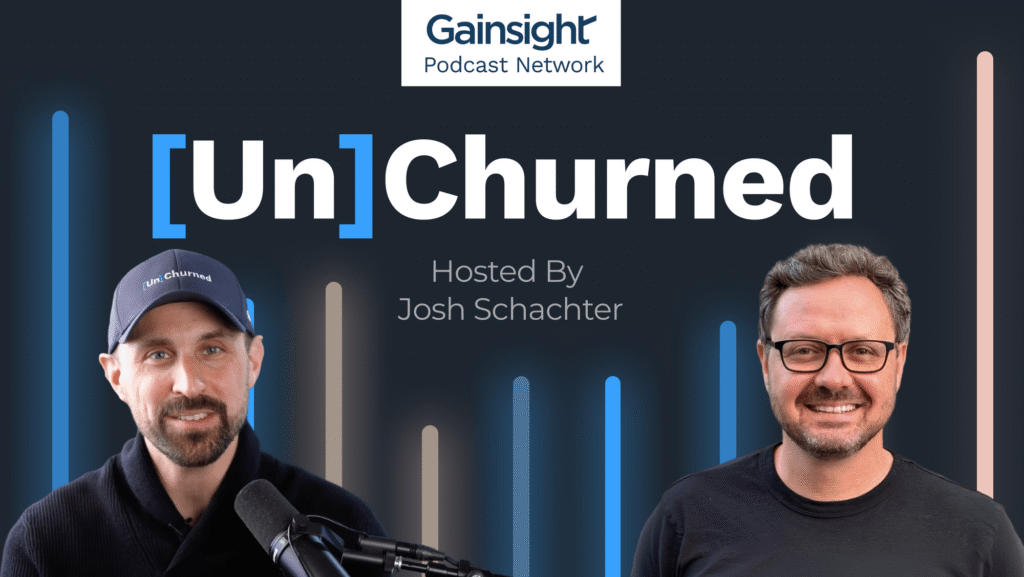
Grant Clark explains how AI agents + humans transform renewals at scale. Discover why the long tail just became profitable & how AINS is reshaping SaaS.

212. Can AI Really Manage Your Entire Renewal Book? ft. Grant Clarke (Gainsight)
Show Notes
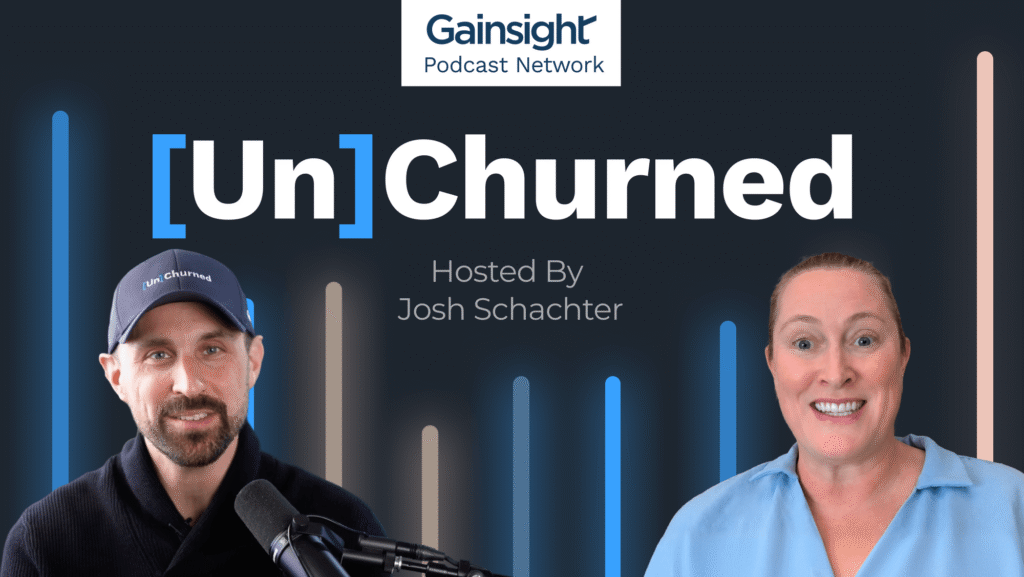
The future of customer renewals is here. And it’s AI-native. Josh Schachter sits down with Grant Clarke, EVP & GM of Gainsight Atlas, to explore how AI agents combined with human renewal managers are transforming the renewal landscape. Grant, a 15-year veteran of renewal operations at ServiceSource, explains how Atlas manages entire renewal books through an outcome-based model—not software licensing. Discover why deploying AI agents in renewals is harder than it looks, how Gainsight is pioneering a new category called AI Native Services (AINS), and why the long tail of customers just became manageable. Plus: the surprising story behind Grant’s 15 beehives outside Nashville.
Want the playbook, not just the conversation? Subscribe for deep-dive, actionable breakdowns from every episode at unchurned.substack.com.
What You’ll Learn
– How AI agents are transforming customer renewals at scale
– Why deploying AI agents in renewals is fundamentally hard
– The margin economics that make productizing AI agents profitable
– Why the long tail of customers is now economically viable to serve
– How combining AI + human renewal managers creates better customer outcomes
Timestamps
0:00 – Preview & Meet Grant Clarke
2:00 – What is Atlas?
4:50 – Grant’s Background: ServiceSource & Dropbox
11:05 – How Atlas onboards a new customer
13:04 – Data hygiene: “The D word”
14:21 – The ideal customer profile for Atlas
16:20 A day in the life: the Atlas cockpit
17:55 – When the agent hands off to a human
19:05 – The learning loop: forward deployed engineers & 2-week sprints
20:10 – The business model: avoiding the pure-services trap
22:04 – Mirage PMF: go fast, go slow, go fast again
23:35 – What’s next for Atlas: Agentic judgment and renewal edge cases
26:40 – Can AINS hit 70% gross margins?
26:35 The renewal action inventory: 10–25 actions per renewal
28:38 From 20% to 55% agent-led actions: margin accretion
29:43 Grant’s 15 beehives outside Nashville
32:39 Wrap-up
Featuring

Josh Schachter, Host
SVP, Strategy & Market Development @ Gainsight

Grant Clarke, Guest
EVP & GM @ Gainsight
Transcript
Grant Clarke:
So the company pays for the outcome, not for the product, not for the software. We’re bringing an AI agent in the forefront as part of being in the loop of that renewal process with the human.
And with that operational framework, we can do it in a way that delivers that scale that I think every company has been craving to get to that really, really long tail of customers.
Josh Schachter [Host]:
So you’re owning the outcome. Like basically you’re saying, don’t worry about the software. Don’t worry about any factor. Give us the keys. We’re using the software, we’re using the humans, we’re using the combination of the two behind the scenes, and we are, we are your renewal managers.
Grant Clarke:
Yeah. Yeah. We’re extension of the team.
Josh Schachter [Host]:
You’re listening to Unchurned, brought to you by the Gainsight Podcast Network. Subscribe to our Substack at unchurned.gainsight.com, where we go deep on every episode, like how one post-sales team at Cloudbeds built over 150 AI agents. That story and more at unchurned.gainsight.com. Hey everybody, welcome to this episode of Unchurned. I’m your host, Josh I’m Chris Dachter, Senior Vice President of Strategy and Go-to-Market Development, and I’m here today with Grant Clark. Grant is the Executive Vice President and General Manager of the future of Gainsight, Atlas. Grant, welcome to the program, and you’re just a few months in, so welcome to Gainsight.
Grant Clarke:
Thank you. Excited to be here.
Josh Schachter [Host]:
So we’ve got, you know, a multi-pronged strategy here. We’ve got the mothership of Gainsight CS as the category leader, the category creator, the king, as it were, all those sorts of things. That’s the more mature, that’s the PE product. Then we’ve got our Digital Customer Hub. That’s our growth, think about it as like our kind of like growth stage VC level product with Skilljar and Community. And now we’ve got the speedboat, the 0 to 1, and soon to be the 1 to 100, which is Atlas, which is the truly AI native part of the business unit. You’ve come here to run it. You’ve got an incredible background and you are the perfect profile for that.
Josh Schachter [Host]:
But for those that, you know, haven’t heard yet about Atlas, what is this thing?
Grant Clarke:
Yeah, what is it? Uh, well, Atlas just simply combines the AI agent, the renewal rep, or the renewal manager in an operational framework, and it combines it in a way that manages a renewal book on behalf of a, of a company customer that we have of ours. It does that in a way that we are delivering an outcome. So the company pays for the outcome, not for the product, not for the software. And so you could think about this, hey, doesn’t that sound kind of like outsourcing or it kind of sounds like BPO? Of course, there are a lot of companies that go look for BPOs and outsourcers. I worked at one at ServiceSource for 15 years, but that has a lot to do with the people and process and maybe a little bit of tech. What we’re really trying to differentiate here is we’re bringing an AI agent, in the forefront as part of being in the loop of that renewal process with the human. And with that operational framework, we can do it in a way that delivers that scale that I think every company has been craving to get to that really, really long tail of customers.
Josh Schachter [Host]:
So you’re owning the outcome. Like basically you’re saying, don’t worry about the software. Don’t worry about any factor. Give us the keys. We’re using the software. We’re using the humans. We’re using the combination of the two behind the scenes, and we are We are your renewal managers for your business. And I happen to know working with you, it’s the long tail as of this moment.
Grant Clarke:
Yeah. Yeah. We’re extension of the team. I think there was a lot of learnings early on when we were deploying some of these agents with the gains I was deploying some of these agents for companies. I think it’s, it’s really hard, right? I think a lot of companies are going through this process on how to deploy AI agents, whether it’s in the technical services side, on early funnel in the sales cycle, it’s renewals. It’s difficult. It’s difficult enough just to get the process to work with a human. And so what we’re trying to do is bring the practice forward where it’s like, look, we’ll figure it out.
Grant Clarke:
We are trying to put together the right frameworks, the right standards, the right loop process so that we can get that AI agent trained faster because we’ll have the humans deployed with it and try to do that as a service for the companies so that it takes the burden off them. I mean, we want to be able to be really a valued partner with each of these companies so that we are working with them and taking that burden away.
Josh Schachter [Host]:
And this falls into the category of AINs, AI native services. Those that listen to the podcast might’ve heard the recent one we did with Jake Saper. He’s the partner at Emergence Capital and he’s kind of been the one that’s been grandstanding on this and coined the phrase, wrote the white paper, doing all the things. He talks about you need to have expertise to do this. I mean, that’s clear. You’re going to own the outcomes for your clientele. Which makes it seem, you know, why it’s a great choice for, for Gainsight because of the expertise that we have in post-sales. You also have expertise in doing this type of stuff.
Josh Schachter [Host]:
Tell us a little bit about your background.
Grant Clarke:
Yeah. Um, so I’ve been in this whole renewals world for over 20 years. Um, I, I came into the business world by nepotism. Um, I graduated with a degree that I wasn’t sure I was going to use and family friend said, hey, just learn how to sell, come to an early 2000s tech company startup. So I thought that was a good way just to get my feet wet. I walked in and they said, look, we don’t have any sales jobs for you, but you can do renewals because it’s really hard to mess that up because it’s kind of, who cares about renewals? So I got into renewals right out of college in the early 2000s for a tech company and just, I just saw it as an amazing problem to solve. I mean, I’m an Enneagram 5, so like I’m all about trying to solve the different angles of problems. And so that took me on a journey where, you know, moving from company to company and growing up in that renewals process allowed me to really understand what that process should look like.
Grant Clarke:
I’ve seen a lot of difficult ones, problems, you know, all over the place. And so I’m trying to look at it as building the playbook over a career, of seeing what good and bad looks like. When I ended up at ServiceSource, um, and I was there for about 15 years, we kind of hit this perfect sweet spot where in the, call it 2005 to 2007, companies were realizing that the acquisition motion was really getting squeezed and they had to go back and protect their base. And there was this novel concept, you know, even before customer success was really a word back in the, you know, mid, early 2000s, the, the idea of going back and nurturing your install base to unlock value and find more growth. ServiceSource started at the perfect time to try to do that on behalf of customers. It was just kind of the relentless focus to only look at that renewal motion. And so we got to partner with amazing companies over that period of time, SaaS, healthcare, hardware.
Josh Schachter [Host]:
And was it all the long tail of clientele that you worked with?
Grant Clarke:
I think we started there. I think, and that’s usually where you see the most pain. Um, so what’s amazing is that here we are in 2026 and I swear it’s the exact same conversation from 2000. I mean, the long tail that tech companies have of all the customers that are extremely valuable to them, but it’s hard to scale cost and especially scale the engagement level that those customers need when you’re always trying to also retain your largest customers, you know, the customers that really drive the most of your ARR. So yeah, I mean, that’s where we started, but I mean, very quickly once you get in there, prove value, you find other ways to increase that coverage reach on behalf of that company. So yeah, I mean, being able to see that arc was fantastic and being able to have a lot of different relationships built over that time was also valuable.
Josh Schachter [Host]:
And was technology ever a constraint when you were working in this more traditional BPO environment?
Grant Clarke:
Yeah, I’ll tell you the time that we were there. I mean, think about the emerging technologies at the time. So, you know, like the 2010s, you know, RPA automation was really trying to make its way through a lot of business process organizations. We’ve got that involved as well. When you think about RPA at that time, it was a lot of automation around what’s the repeatable process, a lot of back office work that usually got pulled into that workflow. And so we benefited from that for sure, but it never really, we never had the leap that is available now with the agentic AI models and the reasoning and the judgment that can now be accomplished. Man, if like, if we would’ve had it back then, it would’ve just been, you know, people process and technology, it would’ve been a game changer for us.
Josh Schachter [Host]:
Yeah. Yeah. And then you went over to Dropbox. So you— Yeah.
Grant Clarke:
Dropbox.
Josh Schachter [Host]:
Went over to the tech side.
Grant Clarke:
Yeah, that was a fun, um, the chief customer officer at, uh, ServiceSource went to Dropbox and asked me to come over there and help them with their B2B motion. What I loved about that is I’d never worked for an engineering-first company. So product-led growth and being able to understand the A/B tests around, it’s like growth hacking essentially. And that was a great environment to learn quickly, fail fast, learn fast. They have an amazing culture around that. And so that picked up a lot of good elements there. I think that’s going to play pretty well here at Gainsight.
Josh Schachter [Host]:
Yeah, I mean, I think it’s important. Listen, I’ll be transparent on this. I’m trying to sell you as much as Atlas because I think at the end of the day, it comes down to the expertise. piece. And, and, you know, even though this is very AI and technology enabled, it’s the people and the experience also that are embedded in that and that are learning through that. So I, I think, I think it is important that like you’ve got the both worlds combined here, that confluence of, of, of tech and traditional BPO, uh, for renewals.
Grant Clarke:
Yeah. And, uh, I’ll tell you the, the, the tech experience I had at Dropbox, which is, you know, the time that I was there from, you know, 2022 and, and going forward, everyone was really in that early, you know, the early GPT years, you know, where everyone was trying to figure it out as we went. And as Dropbox was putting their AI tools forward, you just constantly learn, like every week you’re deploying something, you’re getting some sort of customer feedback and you gotta adjust your go-to-market motion. You gotta figure out a different way to integrate it in the way that you’re trying to deliver that value. And we’re still there. Like, I feel like with, the AI-native service that we’re in, the people who have gone through the miles, you know, so for my 20 years of going through the trenches of just, it’s like going into the engine room of a ship. Like you’re covered in oil, you’re trying to change gears, you’re trying to problem solve things on the fly. And then you have an agentic model that you can teach based on all of those years of going through the hard stuff.
Grant Clarke:
That’s what’s exciting because in the new world, what I’m Hoping the opportunity that gets unlocked is every time we’re going to come up with a new workflow, understand a new way to come at the problem, we’re just training that back into what is going to help the next customer get started faster. And of course, the down payment is my experience and other people that I’ll be bringing onto the team who’ve just lived this world for a decade plus, because clearly it’s been still a challenge for that long.
Josh Schachter [Host]:
And being able to invest in that is Every company’s renewal playbook, whether it’s for assigned accounts or more long-tail unassigned accounts, is slightly different. So what’s the process that you embark on when you’re starting to work with a new Atlas customer? Do you take their playbook and kind of write the rules with them? You take your existing experience and meet them somewhere? How does that work?
Grant Clarke:
Yeah, it starts Early on in the engagement or just like the early discussions, like we want to understand where they’re currently at in their own journey for how they cover their customers. And we realize that could be different for everybody, right? You’ve got some of our customers that are very tech enabled. They already probably have an at-scale digital renewal motion or auto renewal motion. They may already have like a, they may already have a BPO. They may already be outsourcing a good portion of business, or they may have CSMs that are the plain triage, like they manage probably mid to upper tier, but when they need to dip down to the lower tier, they’ll dip down to that. Wherever they are, we just try to do a somewhat straightforward diagnostic. Like we just want to understand, hey, what are the elements of the way that you cover your customers so that we can assess that from the benchmarks that we would need as part of launching something like Atlas? And then come back to them in a partnership kind of way to say, hey, as part of some of these gaps, here’s where we think we can co-invest in order to make an agentic motion work for you. And we’ll own that.
Grant Clarke:
But of course we want, we both own the outcome, right? If it means that we can improve GRR by 3 points or 5 points, wouldn’t that be interesting? Let’s figure out what you can help us design or what you can help us fill as context inside of that. And then that way we’ll be able to get towards that outcome better together. We start that early in the process, but we also, from an ongoing standpoint, implementation and even, you know, steady state, we want to make sure we keep the constant iteration inside of what we’re seeing and what we’re learning.
Josh Schachter [Host]:
What’s the biggest blocker when you’re working with, you know, onboarding a new customer? And I’m going to take a guess here that it’s data hygiene.
Grant Clarke:
The D word.
Josh Schachter [Host]:
Yeah.
Grant Clarke:
Um, Data, look, again, going back to the 15, 20 years, everyone’s data is rough. It’s just, it’s rough everywhere, whether it’s the constant change of instances of Salesforce CRMs or, you know, you’ve got multiple versions of what the customer actually owns in different systems. So look, I’ve seen it all. What I would say is we understand what renewal data, renewal-ready data looks like. And so whatever those gaps are or whatever those differences are, we want to try to bring them forward and let’s decide together how we can solve that. And I don’t want to say it’s a showstopper, but if you’re trying to get to an outcome and you’re trying to use data in order to get a better value-based engagement for the Atlas agent to engage with a customer on, or you want to inform the human on the right type of context when they’re engaging with customers, Either way, let’s just call it, we’ll work with each customer to figure out what’s needed and try to not make it a showstopper.
Josh Schachter [Host]:
Is there an ideal customer profile for Atlas? I mean, everybody, like every customer has their own different hygiene of data and every customer has a different level of fidelity in their playbook and of course, different sizes of their long tail. Who qualifies and who doesn’t qualify at this moment?
Grant Clarke:
Yeah, well, look, our first interest is looking inside of our own install base. I mean, we want to make sure Gainsight customers who have really embraced the customer success journey and the methodology and the platform itself, it’s a huge advantage because we can layer and tap into everything that Gainsight CS offers as part of access to customers, health scores, CTAs, playbooks, all those things. So that helps. And that’s something we’re looking for in these first set of customers that we’re engaging with. Otherwise, I’d say that the profile from companies in how you enter a partnership, I kind of already said this a few times, we want to build together. I think if a company is looking to throw something over the fence in a classic BPO outsourcing world, is not likely going to get to the full unlocked value that Atlas will bring as part of what the agent and the human in the loop does together. So We’re looking for even senior leadership that are really trying to think differently about how to cover their customers. Getting sponsorship inside of a company where it may mean you have to change some things, change process, change the way in which certain things operate across different groups, that plays into success to make Atlas work.
Grant Clarke:
Otherwise, if you throw something over, you’re just, you’re running a process on something that’s already going to stay deficient from where it started. So I’d say that partnership profile is important, especially early on for us.
Josh Schachter [Host]:
Yeah. I mean, you’ve got the functional experience and your partners have the domain industry experience, so you kind of need to bring those both together. That makes sense to me.
Grant Clarke:
Yeah.
Josh Schachter [Host]:
Operationally, you’ve got human in the loop, you’ve got a combination of AI, Working with some folks behind the scenes. Of course, it has to scale for it to be a successful business model for Gainsight. And we can talk a little bit about that. What does Atlas AI Native Services, AINS, what does that look like day to day today? And, you know, let’s fast forward in the future.
Grant Clarke:
So day in the life of a rep, usually they come in to work. for their renewal book that they own. And it’s, it’s, it is usually triage. You’re walking into a situation where whether it’s the inbox that’s filled or messages or tasks that have been left unchecked in your CRM, I think every renewal rep is going to experience walking in and feeling like they’re behind when they start out the day. The leverage part of what we want Atlas to do is be able to operate almost like a cockpit. for that renewal rep to come in and instead of trying to triage their way through things and decide what the most next important thing is, we’re setting up Atlas to serve those things up for the rep. So when a rep comes in and they log into, into the Atlas cockpit and they still have the renewal book and, and it could be connected to a Salesforce or a Gainsight instance, you know, whatever it is, the agent is already overnight or, or in, in the background has already started researching what the last touch of certain customers have been, or if any customers have responded, have any response to outreach to date. And what the agent is trying to decide is, can I, as the autonomous agent, handle this based on my guardrails, my rules, the deterministic settings that I have? And if I can’t, then I need to escalate that to the human to help me understand what I need to do next.
Grant Clarke:
Or I need to hand it to the human to do what’s next, ’cause I can’t do that.
Josh Schachter [Host]:
Mm-hmm.
Grant Clarke:
So if a rep, they’re walking in and they’re seeing the environment as it, it being pre-prioritized, uh, setting in a way that they understand, okay, the, these are the most important escalations ’cause the agent is asking me to take these things over. Like for instance, it could be a customer that responded and said, um, I’ve had a really bad experience. Uh, here’s 3 technical issues I have. I’m not renewing. The agent may not be prepared with whatever’s been set up in context for them to have the appropriate answer. So those would obviously go top of the list. The renewal rep would look at that, get context from the agent, pick it up, and then just handle it just like they would, you know, in any current renewal process. Now, as that’s all happening, the really exciting thing that, um, I’m looking forward to as we build Atlas is that as the rep is doing those things outside of what Atlas handed off to them, we’re learning what they did.
Grant Clarke:
Because if they’re, if they’re finding another way that we didn’t already document as part of what Atlas could do, we’re now going to document that. We need to classify or put those buckets of what those type of things are so that we then bring that into whatever development sprint that we can try to test inside of Atlas for the next time it happens. So we have 4 deployed engineers. product managers, business analysts that are monitoring these things, they’re almost in the boat with the renewal managers, like sitting there really just side by side trying to figure these things out. And that loop just becomes so much more quicker when we figure out, okay, this has happened now multiple times, this type of category of escalation, put that in as a product requirement, The FDE team can sprint develop that in maybe 2 weeks, run a few weeks of testing, and then it’s right back into Atlas to handle the next customer issue that comes up.
Josh Schachter [Host]:
Let’s talk about the business model. So, you know, we’re a Vista-backed company. They’re keeping an eye on the numbers, on the gross margins. And we don’t want to turn this thing into a pure services business. So what’s the framework that you have in mind around starting Atlas right now? So this year and as we progress of how we create the financial leverage so that this doesn’t just become a pure services play.
Grant Clarke:
The trap that a lot of legacy service providers fall into and and have been around it is when you’re chasing revenue, the ability to scale costs and not let costs keep the same pace as revenue is always the challenge when you’re trying to add value back to the customer. And when a customer is saying, hey, I’ll give you more work, I want you to cover more, you know, in this case, cover more customers or, you know, handle different regions. The very quick answer is yes, we’ll figure it out. ‘Cause that’s driving top line. But then you never have time to really figure out when you scale, when you put the cost in place, how do you continue to scale it over time? And so that’s usually what you’ve seen with some of the margin compression. That’s always tough for services businesses. You know, that’s, I mean, that’s been around for years. And yes, automation helps, RPA helps, all the process improvements help.
Grant Clarke:
But, you know, you start doing more smaller degrees of improvements. And what I think is amazing about AI native services and what Jake has developed around this AINs playbook, if you go to Emergence Capital and check that out, there’s this concept that early on, there’s this mirage P&F where you have a bunch of customers that are really interested and they all come at you. And you have the inflection point to decide if you take all of them on, you have risk that you’re going to dilute what you’re building for long-term in autonomous leverage or AI leverage. And so you, there’s a balance of which, you know, going back to your earlier question, like picking the right fit for customers, picking the customers that are participating in the build with you as part of the outcome. And you may have a little bit of a flattening of the curve. early on in revenue, but you’re doing that because you’re working on the signals, you’re working on the learning loops, and you’re trying to get more and more of those proof points that, hey, when we taught the AI model, it accomplished this more successfully, it failed less. Let’s do it again. Let’s do it again.
Grant Clarke:
And then you productize it. And then what’s really fun is that when you productize it, then you open the floodgates and then your, your curve, your revenue curve then jumps back up because you’re not worried about taking 10 more customers at once, that may totally burden your costs because you now have a productized version of Atlas in our case, or an AI native service that can handle the volume of work without having to put that much cost to it.
Josh Schachter [Host]:
You’ve taken that in, you’ve created more of your knowledge base, you’ve created more of the guardrails, you’ve done your evals, all the technical work, and now you can scale based on that and handle more use cases.
Grant Clarke:
Yeah. So it is a bit go fast to go slow to then go fast again.
Josh Schachter [Host]:
It’s, and discipline and discipline. It takes discipline in what you approach.
Grant Clarke:
Absolutely. Yeah.
Josh Schachter [Host]:
What are you looking forward to for the future of Atlas?
Grant Clarke:
What’s ahead? Well, we are obviously going into the long tail of renewals because that’s the most painful part of where our customers and a lot of companies are seeing things right now. Uh, there’s certainly a lot more to do. With the premise of Atlas, when you think about where you engage your customers, and that could look more beyond just the renewal moment. It could be nurturing ahead of the renewal. It could be going into maybe even onboarding process, which is more of a repeatable process anyway that you could drive more guardrails and rules for. Like, how do you get that amazing customer onboarding? Not technical onboarding, but maybe that just customer success onboarding process to increase adoption.
Josh Schachter [Host]:
Yep.
Grant Clarke:
How does that look, you know, early in the sales cycle? Uh, and then I’d say from a technology standpoint, it, it has been amazing just week over week seeing the leaps a lot of the, uh, the, the engineering team has been doing on, on the Atlas side, really understanding the Agenta capabilities and having that judge layer determine things that have been so nuanced in my renewals world. You know, there’s all of these random things that always come up. I feel like what the renewals team always realizes, you have existing customers that are going to find every random reason to throw something at you to test if, if, if you can show some sort of value or they’re just looking for a reason to cancel. And so there’s—
Josh Schachter [Host]:
Can you, can you, does one come to mind? Some, some, some edge case type of thing?
Grant Clarke:
Yeah, I think there’s always an obscure reason of, Hey, um, I worked with a sales rep who told me this. They quit a month later. I have it in writing. You don’t have it in writing. I need this now or I’m moving to a competitor. Like, they’ll, like, there’s always these subjective things that come up in a renewal conversation. And so what I’ve seen though, I guess when you’re asking me as a future question, there will be a future. I believe that.
Grant Clarke:
That, that context, that learning that we will see more and more and more of those over time. I do believe there’s going to be an agentic layer that really starts sifting through the context and giving that much more of a better way for renewal reps to handle those types of things that come up.
Josh Schachter [Host]:
Yeah.
Grant Clarke:
Because it’s exhausting, right? I empathize for everyone out there who’s done a renewals job. There’s just always something that you have to walk into to figure out. And I do believe the agentic layer is going to soon be able to really leap forward on context to handle every random nuance that may come up, or at least enable it, at least enable, maybe not do it by itself, but it will enable it.
Josh Schachter [Host]:
If it can handle those investigations autonomously, I mean, I can only imagine the time savings of that for probably like one of your smallest renewals, but yet you have to go, you know, filter through all the paperwork from months and months ago.
Grant Clarke:
Yeah, yeah, for sure.
Josh Schachter [Host]:
Jake talks about the gold standard being 70% of margin to get there. You know, in SaaS, it’s around 80%, 80% plus is, you know, you’re doing really well. Jake thinks that Ains companies can get to 70%. Now, Jake Saper has never experienced that because a lot of the, uh, all the Ains companies that he works with are startups and they’re still like early enough in their maturity curve as a company that they haven’t earned the right yet. They don’t even have like the dataset to have, or the reps to have gotten to that level of margin, but that’s like his standard. Can we get there with Atlas?
Grant Clarke:
I believe we can get there with Atlas in a few ways. So the, we talked about the time savings part of it. So the real unit of work that we’re trying to tackle as part of this that really helps unlock Where we have to deploy cost right now for every single renewal. Think about every renewal has probably got somewhere between 10 and 20 actions that take place, and those can expand or contract based on how the customer’s engaging back and forth with you. So really angry customer, they’re probably like 20 or 25. The customer that’s seeing value, they understand what they’ve added, they’re probably closer to 10. If you take all those units of work and you think about the early to late stage of renewals, and you, and you, you add all those up and then you multiply them times the total contracts that are out there, then you kind of have this total renewal action inventory that you now are doing for a set of customers called, you know, 5,000 customers that you’re renewing. What we think is reasonable to assume as part of our journey to get to that value creation is that there are certain tasks that make sense to run through the autonomous agent.
Grant Clarke:
You know, think about outreach and response, you know, being able to, notify someone with a value-based engagement to say, hey, you know, other than your renewal coming up, did you know that as part of your product, you’re not actually accessing this feature? We thought you should go look at this white paper or this training module and see if it helps. You know, whatever those things are, are very well set up for that autonomous back and forth. And then when you get into the late stage, like negotiation or the pissed off customer or the one that’s got some random scenario to play out, we know that the human’s going to do more of that. But we feel like even as you’re eating your way through that inventory of actions, you’re able to return that value back into what we’re building. And so of course there’s going to be a case where we’ll have less reps needing to be assigned to every account, but you are testing that and proving that by the outcome. Going back to the very beginning, we own the outcome. It’s on us to figure out what the right leverage ratio needs to be to keep that outcome being delivered. We’re not going to try to scrape it just to get margin.
Grant Clarke:
We’ve got to deliver the outcome in order to achieve that.
Josh Schachter [Host]:
So yeah, just to be clear, my interest in the margin you can get to is purely from a Gainsight employee perspective, right? And from a business model perspective, of course it affects the customer. You know, it’s, it’s, there’s impact on the customer ultimately somehow, right? But this is, this is just your responsibility for building a successful business unit within Gainsight, right?
Grant Clarke:
Totally. And that’s why this is not just a BPO where we’re deploying a bunch of people to do renewals. If we take those actions and go from only 20% of those actions being Atlas-led to 55% of those actions being Atlas-led, that’s margin accretion. Like we don’t, for every next customer that we have to deploy Atlas to, we’re not deploying the 10 humans plus Atlas, we’re maybe deploying 6 humans plus Atlas or 4 for the same number of contracts. So productizing Atlas and getting all of those action-level autonomous leverage in place allows us to keep deploying in a more economical way for us to keep going into each new customer and growing at scale for us. So we are not compressed over time.
Josh Schachter [Host]:
Last question for you, Grant. We didn’t start out with the personal stuff, but I want to end with that.
Grant Clarke:
Yeah.
Josh Schachter [Host]:
You live outside of Nashville. Tell me about Your 15 million bees that you keep.
Grant Clarke:
Yes. I, okay. My journey into beekeeping was by way of me finding a piece of property that I fell in love with. This is just about 45 minutes south of Nashville. And by the way, I’ve never grown up on a farm. I don’t know anything about farms, but about 15 years ago, I wanted just to get, I don’t know, the, The tech world’s amazing, but sometimes you need tangible things. And so I wanted to go find a piece of land to have fun on with my family. And I was in this dilemma.
Grant Clarke:
I got 50 acres, pretty big spot, but I got to figure out a way to raise something or do something under the Greendale tax exemption to keep the farm property without being something so crippling for me. And so I had to look it up. I was like, what counts as livestock? Because I’m not going to raise goats or cattle, bees count as livestock. So I said, cool, I’m going to learn beekeeping because that can’t be that hard. And that’s led to a journey of me understanding that you don’t own the bees. You’re just keeping the bees there with you. They have survived way longer than us humans. They know what they’re doing.
Grant Clarke:
I’m just there to help them along, just make sure I can do my part to keep them going and keep them healthy. So yeah, I’ve got about 15 different hives across the property. And the beauty of that is, you know, honey is a great byproduct of that. So my son and I have a little side hustle beekeeping business to sell honey locally and, um, and be able to do tours and beekeeping experiences for people who are brave enough to put a suit on. We’ll get you out there maybe someday. I’ll get you a bee suit and actually get in and experience the whole thing. It’s pretty amazing.
Josh Schachter [Host]:
Is there like a big community of beekeepers? Is there, is that like an affinity group?
Grant Clarke:
Oh yeah. Yeah, it is. Listen, anyone who is a beekeeper in August in the South, like there is, there is a badge of honor that you wear putting on a bee suit when it’s 100, over 100 degrees and, and you’re sitting there with tens of thousands of bees flying around you. It’s because you love it. It’s just, it’s, it’s so much, it’s so much passion and love. about what it is. Obviously it’s a great cause, of course, but there’s this energy. I think beekeepers all understand that when you’re going inside—
Josh Schachter [Host]:
There’s a buzz about it, Grant. Is that what you’re trying to say?
Grant Clarke:
There is a buzz. There is the, when people talk about the buzz, it’s a real thing. It’s definitely a real thing. And so, yeah, it’s a diehard community because, you know, it’s a little bit thankless sometimes. You just gotta keep the good cause going. But yeah, it’s been a great love of mine to to have over the past few years, for sure.
Josh Schachter [Host]:
I’m not going to ask you how many times you’ve been stung. We’ll leave that one as a question.
Grant Clarke:
I’ll just say a lot.
Josh Schachter [Host]:
A lot.
Grant Clarke:
Yeah.
Josh Schachter [Host]:
Yeah. You’re probably immune to that at this point. Listen, this was great. I wanted to bring you on the show because of course I did want to talk about Atlas and what we’re doing at Gainsight because it is such an amazing adventure that we’re embarking on and the future of many things at the company. And I wanted the CS leaders and retention leaders to be aware of it, but also we’re pioneering AINs with the help of Jake and others that are, are, are, you know, young upstarts. And I think there’s a lot of founders and entrepreneurs out there that are thinking about doing these types of AI native services. And I wanted to give them a glimpse into what one leader is doing to build this business unit at a larger incumbent. So thank you for sharing that wisdom, Grant, and wishing you all the best of luck.
Grant Clarke:
Appreciate it. Enjoyed it. And good things to come. We’re excited.
[Un]Churned is the no. 1 podcast for customer retention. Hosted by Josh Schachter, each episode dives into post-sales strategy and how to lead in the agentic era.
Browse Series
Subscribe on