Braze's VP of Business Systems on AI chaos, vibe coding sprawl, and cutting handoff time by 90% with AI. Real GTM ops advice.

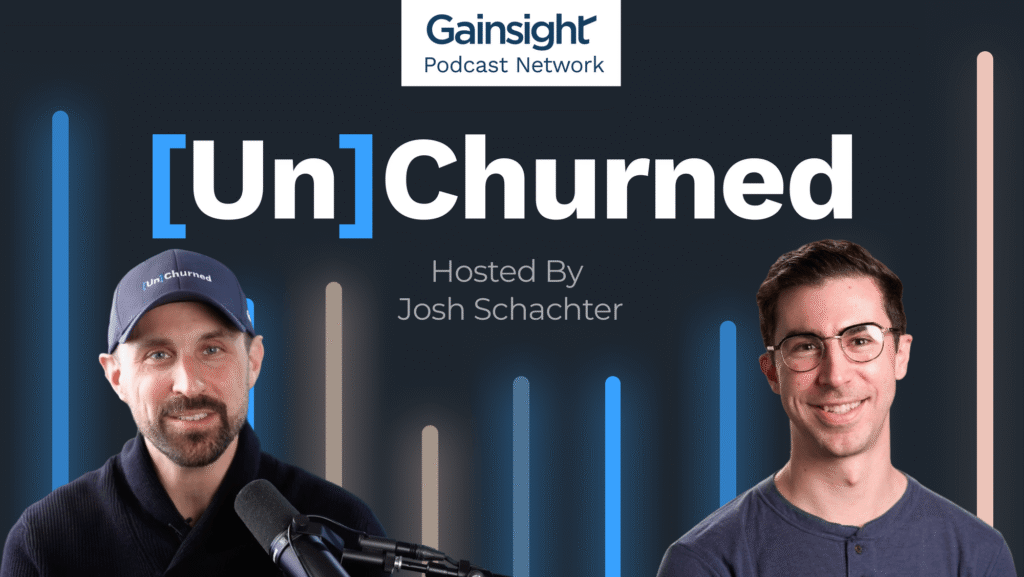
202. Vibe Coding Is a Bandaid on a Bandaid ft. Saumyo Mukherjee (Braze)
Show Notes
AI adoption feels chaotic right now. Saumyo Mukherjee calls it “good chaos.”
He’s VP of Business Systems at Braze. 24-person team. Supports 2,000 employees. Sits between every GTM function using AI.
This episode covers vibe coding sprawl. Duplicate automations. And a handoff automation that replaced 1.5 days of manual work.
Plus his take on in-app intelligence, token budget and why tool-switching kills CSM productivity.
Real tactics from inside a fast-scaling SaaS company.
—
Want the playbook, not just the conversation? Subscribe for deep-dive, actionable breakdowns from every episode at unchurned.substack.com.
—
What you’ll learn
– Why “good chaos” beats no chaos
– How Braze runs quarterly AI hackathons
– The sales-to-services handoff fix that saved days
– Why token costs are the new budget battle
– Why in-app intelligence beats tool-switching
Timestamps
0:00 – Preview & Introduction
1:30 – Meet Saumyo Mukherjee, VP of Business Systems at Braze
3:52 – Vibe coding sprawl problem
7:53 – The AI idea box & Sales-to-services handoff fix
11:52 – Balancing freedom and guardrails (Quarterly AI hackathons)
14:32 – Anthropic, token costs, and budget strategy
18:30 – Why in-app intelligence wins
19:45 – Braze’s return to Gainsight
Featuring

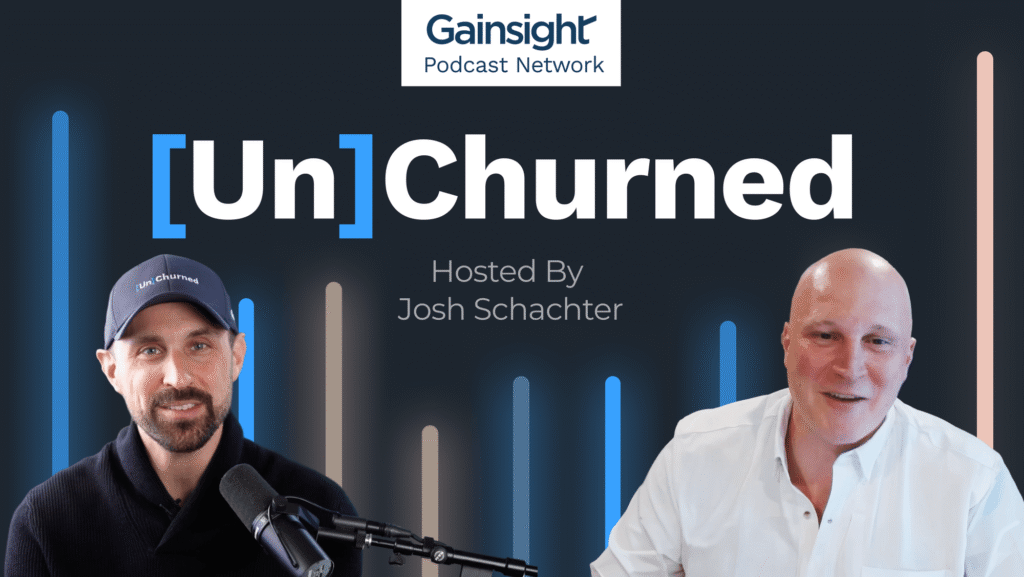
Josh Schachter, Host
SVP, Strategy & Market Development @ Gainsight

Saumyo Mukherjee, Guest
VP of Business Systems @ Braze
Transcript
Saumyo Mukherjee:
Everybody with AI tools in their hands. It’s much more democratized now. It basically makes the convergence a little bit difficult. The problem that a team like mine faces is that we are a point of convergence, if you will, and it’s our responsibility to make sure that we have proper guardrails. There is no lack of security.
There is no overlap of functionalities, you know, stepping over each other’s toes. A person not knowing what to use when is ultimately going to be our problem. Right? So all of that kind of accentuates.
Josh Schachter [Host]:
You’re listening to Unchurned, brought to you by the Gainsight podcast network. Somewhere at Braze, a sales rep is vibe coding their own automation. Three desks over, someone else is building the same thing, slightly different. Neither knows the other exists. Saumyo Mukherjee was asked to describe AI in one word. He said chaos. As VP of Business Systems, he’s the one who has to make that chaos make sense today. What happens when every employee becomes a developer and the same problem gets solved five different ways across the org? I’m Josh Schachter.
Josh Schachter [Host]:
This is Unchurned. Subscribe to our substack @ Unchurned. Gainsight.com where we go deep on every episode. Like how one post sales team at cloudbeds built over 150 AI agents. That story and more at unchurned.gainsight.com hello, everybody. Welcome to this week’s episode of Unchurned. I’m your host, Josh Schachter, senior vice president of strategy and go to market development at Gainsight. And I’m very thrilled to be here today with Saumyo Mukherjee. He is the VP of Business Systems at Braze Saumyo.
Josh Schachter [Host]:
Thank you so much for joining us.
Saumyo Mukherjee:
Yeah, thank you, Josh, for giving me the opportunity. Always a pleasure chatting with you.
Josh Schachter [Host]:
I’m excited because you, you’re not our quintessential archetypal guest VP of CS, you know, Head of CS, CCO. You’re a little bit on the edges here, which I love. It’s a different perspective. You work closely with CS and with go to market systems and teams. And I think it’s really important as we talk about AI, of all things these days, to get your perspective. So let’s start out, give us, you know, give the audience just the quick, quick, quick elevator pitch for Braze and then tell us a little bit about your role. VP of Business Systems.
Saumyo Mukherjee:
Absolutely. So Braze is a customer engagement platform. So we are pretty much the leader in many of the analyst quadrants and waves and everything. Right. So we have enterprise as well. As smaller mid market and SMB customers. And what we offer is a messaging platform, cross channel messaging platform. Not only that, but also we have an AI operator that kind of helps design the messaging, design the cadence, design the orchestration for the marketer.
Saumyo Mukherjee:
So marketer is our actor, key actor that we sell to that uses our platform in our customer companies. So that’s Braze. And in terms of my role, I joined Braze about a year and a half back, a little over a year and a half back as the VP of business systems. What that means is me and my team manage all the enterprise grade applications that are used by all of our customer and partner facing teams. So anything, any external facing teams like marketing, sales, BDRs, partnerships, customer support, success services, all the external facing business teams, all of the applications that they use are owned, managed, implemented by, maintained by my team. So yeah, it’s a very slim team I have for a 2000 employee organization like ours. My team is 24 including me. So 24 member team, but very globally dispersed.
Saumyo Mukherjee:
And yeah, we, we are very slim but very efficient.
Josh Schachter [Host]:
So what does your world look like in this age of AI? Do you have a backlog of everybody who wants to go out there and try to experiment with different pilots and put different tools into your pipeline, paint a picture for a day in the life of your team and running your operations these days?
Saumyo Mukherjee:
Yeah. I’ll start with a quick story. So I was in one of the forums where I was part of a roundtable where we were asked to describe our experience with AI in one word, not more than one word. And then I was, I think the second last person to kind of, you know, speak up, my word. So all the key words were taken already. So I was thinking what to say, so I came up with chaos. And that resonated so well with the rest of the table. So what I mean by chaos is that nothing.
Saumyo Mukherjee:
I mean it’s neither good nor bad, it’s just a fact, matter of fact is that people are, and these days people are chaos.
Josh Schachter [Host]:
Is chaos good? Is there good chaos? I mean chaos.
Saumyo Mukherjee:
I would say my bottom line will be good chaos. But the situation is, especially for companies like Braze where we are very, very high tech and all our field people are also very tech savvy. They are extremely smarter than me. Right. So they are wipe coding their way with their processes, automating their own processes and stuff like that. And Braze is also very technologically advanced. So we have rolled out tools like cloud and Gemini to people and they are free to wipe Code. The problem that a team like mine faces is that we are kind of at the, we are a horror horizontal which runs across many verticals, as I said, marketing, vdr, sales services, et cetera.
Saumyo Mukherjee:
Right. So we are a point of convergence, if you will. And it’s our responsibility to make sure that we have proper guardrails. There is no lack of security, there is no overlap of functionalities stepping over each other’s toes. A person not knowing what to use when is ultimately going to be our problem. Right. So all of that kind of accentuates.
Josh Schachter [Host]:
So you’re saying that you’re seeing different departments that are, that are wanting these, these tools that, that maybe in the past were more point solutions that did one specific thing that was clearly for the department. Now there’s a little bit more overlap, a little bit more convergence. Is that, am I interpreting what you’re saying correctly?
Saumyo Mukherjee:
No, what I’m actually saying is it, it basically makes the convergence a little bit difficult. Okay. Make makes consolidation a little bit difficult because everybody is the, you know, with AI tools in their hands. It’s much more democratized now to, for example, if I’m a sales rep, right, I want to automate a point process, a very pointed process for myself. I can wipe code and see, hey, it works for me. I mean what it is is, it is like getting an approval from my vp. I just automated that process for myself. But guess what? There are at least three other tools that do that same.
Saumyo Mukherjee:
Automation, maybe better. Right? So that kind of sprawling of too many wipe coded disparate solutions is, I mean the good part of it is creative juices flow and we kind of get to learn a lot of cool things that people are doing and we get a lot of ideas that we get to pick from and then consolidate. But then before we get until we get to that point of consolidation, point of kind of guard railing, the solution approach there is chaos. So that is a classic problem of a business systems leader. Not so much for the field users because they are happy with their wipe coded solution. But guess what? I have to manage different users across multiple verticals. I get questions like, oh, that guy John Smith over there did something. Why can’t I get that? Then I get to question, oh, who’s John Smith? What did he build? Right.
Saumyo Mukherjee:
So those kind of situations where it is over democratized, right?
Josh Schachter [Host]:
So of course we want to applaud those John Smiths for taking matters into their own hands in that sense of like they’re rolling up the sleeves, they’re taking ownership, they’re being proactive, they’re building, they’re learning from building all those things. But then like you said, like, the result is maybe a healthy chaos.
Saumyo Mukherjee:
Healthy chaos. And then oftentimes it becomes a band aid over another band aid. So one quick thing that I want to kind of mention here is that we have something called an AI idea box that I run weekly where I have some core team members join on a Thursday afternoon going through our inventory of AI idea box. It may be wildest of your wild ideas, but I just don’t want to lose track of those. So we have a long list of ideas. We prioritize. We kind of prioritize in terms of business impact, the level of effort, et cetera, et cetera. So while going through that, I realized that while there are many things that we could do, it’s important that we scratch the right itch.
Saumyo Mukherjee:
My team is limited, so we cannot build a lot of things. We have to prioritize very judiciously. So one of the things that stood out there was a handoff. When I say handoff, the use case that was brought to me was hey, sales to services handoff. When a sales deal closes and it has a services component to it, how do you hand it off to the services personnel? You have to go through a very complicated spreadsheet, 20 documents, you know, PDFs and you know, contracts and everything putting together. It used to take at least, you know, like on average 1 1/2 business days per. If it’s that complex of a deal per rep to kind of complete that handoff process. Sales to services.
Saumyo Mukherjee:
Right. And then services would almost never be satisfied with whatever they get. So they will be back and forth. So automating that using AI. Why AI? Because guess what? All of the information are information that are available within our enterprise. The braze enterprise somewhere can be snowflake, Salesforce, kinsight. Somewhere that information is residing. Right? The between the rep and these services personnel, they have to figure out where, what is what makes sense and then kind of consolidate.
Saumyo Mukherjee:
So that is something that I thought was a prime case for automating using AI. So we, by the way, I don’t manage this team, but then one of my peers manages a custom engineering team. So they have the talent and the capacity to kind of build these. You know, we use GPT 4.0 to build this homegrown AI solutions. So I actually sponsored the team to kind of drive towards something. So I thought that this could be killing multiple birds with the same stone with a single stone. Right. So though the Initial use case was sales to services handoff.
Saumyo Mukherjee:
Guess what? The information that would be required for such a handoff is account related, deal related, support cases. Related. Right. So all that information, if we are already gathering and producing an output for sales to services handoff, the underlying information would be same, but just the output would be probably a little bit different based on who’s the consumer here it is a services personnel. If it’s let’s say BDR to sales handoff, it would be a sales personnel will be the target consumer. So the output will be different, but then the underlying data required to put together that would be the same. So we kind of everybody got immediately aligned that hey, great use case. So we pushed for it and we actually launched the sales to service.
Saumyo Mukherjee:
It’s being used very well at BRAZE right now and we have plans to expand that into other use cases like BDR to Sales or even Services to Success. After the services implementation is done, guess what, you have to now hand it over to the Success team. So those are the use cases now we are going to expand on. So classic example of us taking the lead and putting some guardrails and putting some consolidation around the various use cases that otherwise users would have wipe coded and said, oh, I need to put together some onboarding, some handoff documents for this services guy. Let me do some of my own automation, little automation. He wants me to fill up five spreadsheets. Okay, I’ll white code that. But guess what? The spreadsheet itself is a band aid.
Saumyo Mukherjee:
You’re building on top of band aid. Get rid of all that, build from scratch, you know, a fresh solution that kind of, you know, doesn’t require any other band aids.
Josh Schachter [Host]:
Yeah, I mean, how do you think about continuing to encourage users to take interest in AI? Adopt it so heavily, do the things like vibe coding, but at the same time you need to create that order and discipline. Is there a balance there for you and how you manage it in your role?
Saumyo Mukherjee:
Yeah, great question. So it is not directly managed by me or part of my remit as my role. But then I partner very closely with that peer of mine who I mentioned manages the custom engineering team.
Josh Schachter [Host]:
Sure.
Saumyo Mukherjee:
So he runs, I think it’s a quarterly. He runs a quarterly AI hackathon. Right. So you know, for GTM teams as well as non GTM teams. And our, in our terms, GTM includes success, support and services as well. Right. Sales and post sales. So he runs that quarterly where we pick kind of we seek interests and based on that, who have we.
Saumyo Mukherjee:
We try to include A lot of, you know, a diverse set of people who have attended last quarter, we want new people to attend, so on, so forth, some standards there. And out of that it’s a two day hackathon where we kind of day one is collecting use cases and defining the use cases, defining the problem, pressure testing the problem in terms of how business critical is it, is it worth solving for, right? That is what we spend. And writing the PRD or brd, that’s the day one. And day two is actually building the solution. So where the requesters, the use case requesters may not themselves may not be equipped enough. So that’s where my peers, engineers come to the floor to help them build the solutions. And what comes out of the day to build are definitely, as you can tell, not productionizable, if that’s a word, solutions, but they are like POC type solutions. So then it comes to my team and as I mentioned, the Thursday afternoon calls, right? We review this AI core team that meets every Thursday afternoon.
Saumyo Mukherjee:
So we review those after the quarterly hackathons, we review those outcomes and see, okay, out of the 10 and there’s an award ceremony also, who’s first, second, third, fourth, et cetera, et cetera. We review those top solutions in the AI core team meetings and say, hey, out of that, what should we prioritize to productionize in this quarter? And then we then, for example, this time was, I think it was propensity to renew. I forget what was. I think it was propensity to renew and some other score, right? So those were the two things that grabbed the top two spots out of the hackathon. So our plan is to productionize those in Q2. So I have a team that is already working towards building a detailed BRD and solution around them and see how we can productionize them.
Josh Schachter [Host]:
I love it. I mean, are you like many other leaders that I’m talking to these days and hearing at conferences, are you also slightly concerned about the cost of tokenization and where this is all going to lead us?
Saumyo Mukherjee:
Yeah, don’t even start that. Yeah, you’re absolutely right. So tokenization is a big, big barrier to success, I would say, without kind of taking names of vendors. So sometimes some of the vendors, if you are part of their enterprise level plan, if you will, larger plan, their billability is not based on tokens, but others are. But guess what? The outputs and the level of use cases that are supportable by certain products, certain vendors are not by certain others. So it’s a very difficult call. Do we really want to Save cost or do we really want to improve our throughput and improve our quality? So that’s the call the leaders have to make. And I think Blaze made the right choice.
Saumyo Mukherjee:
Yes, even if it costs more, as long as the cost is justifiable, as long as we can improve our efficiency. And when I say efficiency, both in terms of quantity and quality, both are important, right? The throughput as well as the quality. So we should not care about the bare bones dollars as long as we can justify the roi. So we are right now, as we speak, in that ROI proving phase, if you will. So we are trying to roll out certain strategies like, hey, every department head, like myself or my boss, right, they will have certain budget allocated to them based on, of course, the size of their teams. And then every individual will have X dollars per month of tokens to use. Now we will watch that for a quarter and see, okay, which user is using how much, which team is using how much, and then try to normalize because all departments may not need the same level of, you know, tokens. My team may need, you know, much more than an HR team, for example, Right.
Saumyo Mukherjee:
Just making it up, right. So right now it is all normalized. So we are in that proving the ROI phase right now. So after we are maybe a quarter, two quarters after that we will know based on empirical data that which team has used, how much, which team has produced, how much quality work and improvement in terms of throughput over the two quarters. And therefore we will distribute the tokens accordingly.
Josh Schachter [Host]:
I think we’re all watching and learning. I mean, Gainsight is at this point fairly heavily invested in Claude Enterprise and we’ve purchased all the seats and whatnot. And, and we’re looking at the, you know, what the tab could lead up to at the end of the year if we can, if we, you know, complete the current pace clip. It’s like, oh my gosh, like, wow, this anthropic company really is going to make a lot of money, you know, in case you weren’t aware, you know, and I was, I was speaking at a customer event the other week. We have a new mcp which is incredible. Take all the Gainsight data, all the staircase data, tap it straight in, you know, Skill jar and other products too, and tap it straight into Claude or whatever you’re your LLM of choices, so to speak. And it could do some great things and people are loving it that are starting to use it. One CS leader did come up to me and say, this is great and I do love it.
Josh Schachter [Host]:
I just also Want to let you know that I came back from one of the conferences and on everybody’s mind was what are these hyperscalers going to do to the pricing of these tokens in a year or two? I mean, I live in New York City and I remember a couple of years ago when an Uber was much cheaper than a taxi. Not anymore. They flip the switch at some point. So I think for us our strategy is like we got to kind of do both. We got to meet people where they are and build the best in class, best in the world mcp. But not forget that there is a value to having a similar feature set and rich functionality within our own platforms because at the end of the day like otherwise we are all just completely beholden to. I don’t know what the new FAANG equivalent is for the, for the MCP companies, but to that, you know, to that group of players.
Saumyo Mukherjee:
Yeah, that’s so true. I mean I’m still, you may call me old schooler, but I’m still in favor of in app intelligence based on my role. Right? So if I’m a csm, I would rather like to, you know, wake up in the morning and log into a platform, let’s say Gainsight. Right. And then my day should be. I should be able to log off at 5pm off of gainsight without having to swivel chair anywhere else. So that is my ideal state of affairs for an end user like a csm if I’m a rep. Well, reps a little more dynamic.
Saumyo Mukherjee:
They will probably need to do a research here and there outside. But ideally they should log in into a system and end of the day log off of a system. Right. So I mean nirvana not going to happen anytime soon. But then I think that is something that I believe will be an efficiency booster by a lot instead of the fact that okay, even though the tool is fabulous, fantastic, but if I have to kind of swivel chair, go to a different app and launch something and do something and copy paste something and come back here to complete my activity. So that in itself is kind of a context switching in my mind. And I don’t know, if I were a csm, I would not be the happiest.
Josh Schachter [Host]:
Yeah, yeah, I understand. I mean my next question was going to be related. You guys at Braze recently came back to Gainsight as a customer and, and you’ve talked about Gainsight as being the system of record for customer success post sales. What does that actually mean to you for you operationally, you know, when there are so many Other places a CSM could live. Yeah.
Saumyo Mukherjee:
So we had a different product before we kind of came back to Gainsight, I think for a few years before my time. Right. So we always, we always had a spot for csms. We always had a platform where we want csms to live off of. And this other vendor, other product, other platform was just not scaling to our needs. I mean, they had some very kind of restricted customization options, configuration options, integration options, restricted AI related capabilities. So we did, as you know, probably we did a very thorough assessment and then Gainsight was the vendor of choice considering all those criteria. So I, as a business systems leader would almost never want my CSM to not have a system of interaction.
Saumyo Mukherjee:
I very carefully call it system of interaction, not a system of record. Because I want the user group, which is CSM in this example, CSMs, to basically spend their day within that platform. And I, meaning my team, with a lot of the various requirements that this user group may have, we meet them there on that platform. So, for example, if they need a data point that does not belong to or that does not exist in Gainsight, so what, we can always fetch it from Snowflake, fetch it from somewhere else, use your staircase AI from external, external to Braze even. Right. So we can bring and surface all the data, make it interactionable, if that’s a word, to the CSMs through that platform of choice. So I would almost never want the CSMS not have a platform. So, yeah, that’s not a good spot to be in, in my mind.
Josh Schachter [Host]:
Sonyo, thank you so much. I think we leave it there. This is wonderful. I love getting the perspective of a vice president of business systems again as opposed to a CS practitioner themselves in this episode. I think it’s going to be very helpful for a lot of people. Sumyo Mukherjee, VP of Business Systems at Braze. Thank you so much for being on the show.
Saumyo Mukherjee:
Thank you so much. Thanks, Josh.
[Un]Churned is the no. 1 podcast for customer retention. Hosted by Josh Schachter, each episode dives into post-sales strategy and how to lead in the agentic era.
Browse Series
Subscribe on