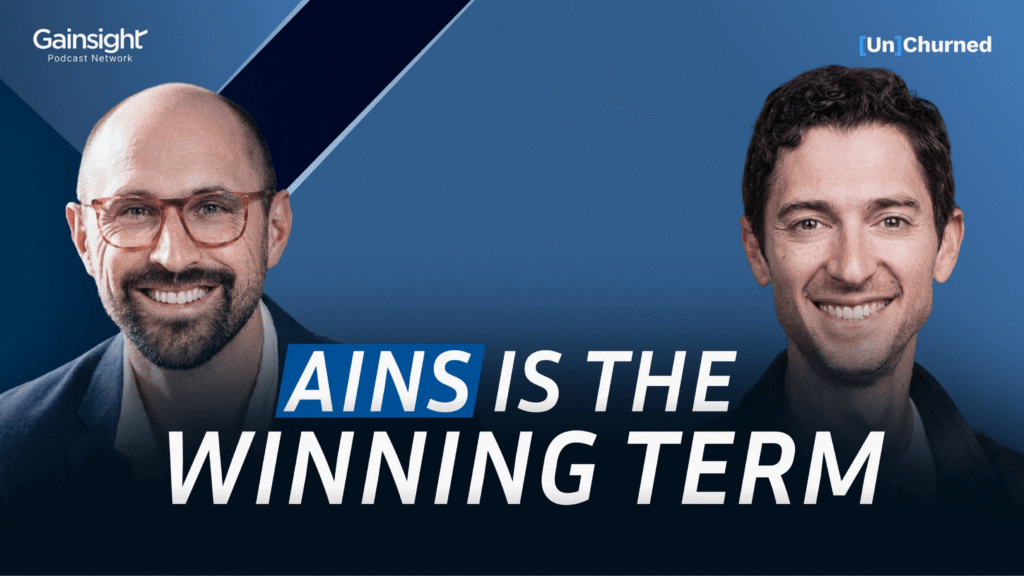
Why are companies still 95% behind on AI? BCG's Matthew Kropp breaks down adoption barriers, identity threat, and the token-maxing advantage.

201. Why BCGx’s Chief AI Officer thinks writing code by hand is a waste of time ft. Matthew Kropp (BCGx)
Show Notes
Most companies think they’re ahead on AI. The data says otherwise. Even the most sophisticated firms are only about 5% of the way down the journey.
In this episode of the [Un]Churned Podcast, Josh Schachter sits down with Matthew Kropp, Managing Director, Senior Partner, and Chief AI Officer at BCG, who’s advised roughly 400 companies’ boards and executive teams on AI strategy since ChatGPT launched. They unpack why most AI adoption stalls out at “1,000 chatbots and no value,” the real psychological reasons people resist using these tools, and why the smartest company isn’t the one winning anymore, it’s the one using AI the most.
Matthew also opens up about Jessica, his personal experiment building a fully AI-run company, no human employees, agents making the decisions, himself acting only as “the governor.”
They also dive into:
– Why 80% of engineers use AI tools, but only 5% actually use them to write code
– The four real reasons people don’t adopt AI, and why “identity threat” is the biggest one
– Why using AI more, and more productively, is becoming the new competitive edge
– Why AI-native companies have a growing allergy to middle management
– Whether consulting itself is under threat, and why demand for advice isn’t going anywhere while the work itself changes
If you’re leading AI adoption inside your company, worried about what AI means for your role, or just want a clear-eyed look at what’s actually working right now, this episode is worth your full attention.
Want the playbook, not just the conversation? Subscribe for deep-dive, actionable breakdowns from every episode at unchurned.substack.com.
Chapters
00:00 – Intro & Backstory
03:33 – Biggest Shifts In How Executives Think About AI
08:32 – The Four Reasons Companies Don’t Adopt AI
16:20 – Marketing, Sales & Insurance’s AI Transformation
18:59 – Token-Based Competition & “Token Maxing”
23:28 – Inside BCG’s 3,000-Person Engineering Org
28:42 – AI Brain Fry: The Psychological Cost
30:59 – What Happens To Middle Management
33:17 – Is Consulting Under Threat?
39:21 – Building Jessica: A Zero-Human Company
Featuring

Josh Schachter, Host
SVP, Strategy & Market Development @ Gainsight

Matthew Kropp, Guest
MD, Sr. Partner, and Chief AI Officer @ BCG
Transcript
Matthew Kropp:
Anything that AI can do, you shouldn’t do, because if you’re doing it, you’re wasting your time.
Josh Schachter [Host]:
I’m thrilled for this week’s episode with Matt Kropf. He is the managing director and senior partner at BCG. He’s also the chief AI officer at BCGx.
How wide is the gap right now when you talk about the leaders and laggards out there in those boards of some more traditional companies?
Matthew Kropp:
Intelligence is ubiquitous. Every person with a smartphone has access to intelligence and expertise. And so the nature of competition will change. Even what, 4 years into this, we’re still maybe 5% of the way there. People feel like the thing that makes me valuable in the world is that I know how to write code. And if you tell me that the AI can write code as well as I can, then you’re telling me that I’m not valuable.
Josh Schachter [Host]:
You’re listening to Unchurned, brought to you by the Gainsight Podcast Network. Subscribe to our Substack at unchurned.gainsight.com, where we go deep on every episode, like how one post-sales team at Cloudbeds built over 150 AI agents. That story and more at unchurned.gainsight.com. Hey everybody, and welcome to this week’s episode of Unchurned. I’m your host, Josh Schachter, Senior Vice President of Strategy and Go-to-Market Development at Gainsight. And I’m thrilled for this week’s episode with Matt Krop, Matthew Krop. He is the Managing Director and Senior Partner at BCG. He’s also the Chief AI Officer at BCGx.
Josh Schachter [Host]:
Matt, thank you so much for being on the program.
Matthew Kropp:
Thanks for having me.
Josh Schachter [Host]:
So when I first thought about bringing you onto the show, obviously, like, the BCG brand was an allure, and, um, there’s always so much, uh, of a thought leadership think tank around everything, honestly, that BCG does. And I came from, from BCG, from, from one of the tech outlets there that you’re involved with. But I didn’t necessarily think that when we did our prep that I was going to get nearly as much depth and insight from the conversation that we had, all the things that you are doing. I mean, truly, it was really like a triggering moment for me when you talked about all the different research, the conversations you’re having, how you’re leading with your own AI startup of one person, you know, as your kind of side project playground. I, here I was thinking, you know, back in the operator seat, it’s the operators that are at the ground floor and know these things the best. And then I was like, oh, wow, like consulting still has its thought leadership. So kudos to you, Matt. I’m just gonna start with that public praise.
Matthew Kropp:
Thank you. Thank you. It’s an interesting place to be for sure.
Josh Schachter [Host]:
Yeah. Yeah. And I’m sure you guys are doing so much AI transformation right now for the Fortune X that you’re working with. Tell us a little bit about that. Why don’t you start out? Why don’t we zoom out for a moment and just talk a little bit about the work specifically that you’re doing at BCG? It’s not meant to be necessarily a plug for BCG. Everybody knows the brand. But the types of work and your involvement, your role is unique within what people usually think. So give us a little bit of that context.
Matthew Kropp:
Yeah. Well, it’s been really interesting this last 3, 4 years because AI You know, it’s technology, but really it’s about change and it’s about changing people and processes and organizations and so forth, which is the core of what, you know, BCG and consulting firms do, right? So, you know, there was this pivotal moment. ChatGPT came out, what, November 30th, 2022. All of our clients, you know, they took probably a month or so to catch on to that something was happening, right? And then—
Josh Schachter [Host]:
To find out, to figure it out.
Matthew Kropp:
Pretty much, right? And then the phone started ringing. And because I had been— so I’m a technologist from the beginning of my career. I started getting pulled into these meetings where clients were saying, tell me what this means. Like, how should I think about AI? And it’s pretty much been just this journey ever since of, you know, us providing advice to clients about how they should think about AI. And certainly, my role has been doing that. So I’ve spoken to about 400 companies over the last 3-odd years, you know, the boards and executive teams around AI strategy and around, you know, what does the technology mean? What does it mean for my organization? How do I get value out of it? How do I get people to use it?
Josh Schachter [Host]:
That’s been the, So, you’re speaking to executive committees, you’re speaking to board members, like you said, truly the C-suite. What’s been the biggest or what have been some of the largest shifts that you’ve seen in how they are talking and thinking about AI?
Matthew Kropp:
Well, as we’ve gone through this sort of arc where, you know, it first came out, nobody had a budget for it. So, it was more about education. Then we moved into this phase, I would call it the 1,000 flowers blooming phase, where, you know, every large company had 1,000 initiatives and, you know, chatbots everywhere, right? And it was great. I mean, it was good that they were experimenting, and especially for the employees, you know, for the people in the company to actually get hands-on and touch the technology and understand what it could do, that was important. But it didn’t create any value. You know, sort of like if I show up and say, here’s a tool, you can use it to summarize your email, you might say, that’s great, you know, now I can summarize my email. Did it change anything that I do? You know, maybe I save a little bit of time and I take a longer lunch break, but it doesn’t actually change the business. So we’re now sort of past that, and most of the companies I’m working with are realizing that That doesn’t create value.
Matthew Kropp:
And what they need to do is actually focus on what matters. So we talk about find your big rocks. What are the 3, 4, max 5 areas where I can have a real focused program, where I can put investment, I can have a senior executive that’s sponsoring it, that it has an objective that ties up to my overall corporate goals, not just an AI goal, but What am I trying to do in the company? And that I can actually drive this as something that’s going to have a meaningful change.
Josh Schachter [Host]:
So it’s no different than classic consulting work. It’s, you know, hey, we’ve got this problem statement and help us make more money or spend less money or reduce risk. And let’s map out the workflows. Let’s use AI as the tool. Let’s make sure that everybody’s enabled around it. And let’s be able to measure against those outcomes effectively.
Matthew Kropp:
100%.
Josh Schachter [Host]:
Yeah. Okay. How wide is the gap right now? When you talk about, you don’t have to name names if you don’t want to, I would love to hear names, but like, when you talk about some of the leaders and laggards out there in those boards of some more traditional companies, what’s that gap look like?
Matthew Kropp:
I mean, so my view is even now, you know, even what, 4 years into this, we’re still maybe 5% of the way down the journey. And that’s for the most sophisticated companies. And maybe I’ll give you a kind of specific area. So if you look at software engineering, which is, you know, the most advanced, right, the tools are the most advanced, it’s sort of, it’s the close, you know, software engineers obviously are very close to AI. It’s, you know, they’re sort of native, you know, in the topic. Even in software engineering, outside of Silicon Valley, So, outside of the labs and outside of the startups that have started in the last 2 years, if we’re talking about corporate America, no more than 5% of engineers are effectively using agentic coding tools in their work. So, in the place where you would have the most impact and the people that are the most ready to use the tools, what we see is about 5% of engineers, they’re really using it. And what I mean by that is, You know, you’ll have— so we worked with one of the cloud players, helping them get their engineers to adopt AI tools.
Matthew Kropp:
It’s sort of an amazing statement, right, that one of the cloud players who makes these tools themselves needed help to adopt the tools. But they—
Josh Schachter [Host]:
I was just gonna ask you, by the way, like, I was thinking in the back of my mind, I’m like, I want to ask him, like, do these Silicon Valley companies, are they actually using BCG for transformation? Or you would assume that they’ve got it already?
Matthew Kropp:
No, they are not the AI natives, right? So, you know, it’s not like the cursors, and, you know, they’re not using us, right? But it’s, you know, the established technology companies are. But, I mean, in this case, they had 80% adoption of their tools, meaning 80% of their engineers were logging in to use, you know, Claude Code or, you know, whatever the AI tool of their choice was.
Josh Schachter [Host]:
Copilot. Yep.
Matthew Kropp:
Exactly. But 5% were actually using the tools to write code. So, what’s happening is people, they use the tool instead of going to Google.
Josh Schachter [Host]:
Yeah.
Matthew Kropp:
They use the tool instead of going to Stack Overflow to get an answer. So, they use the tool to ask a question, and they love it. You know, it’s great, it gives me answers, right? They might use it to write tests, right? I hate writing tests, so I use it to write tests. But they don’t use it to actually do their job because that’s my job. You know, I like writing the code. Why would I have the AI write the code? And so is it a—
Josh Schachter [Host]:
so that’s the way you said that. It’s not an enablement piece. It’s not an education piece. This is a pride piece, maybe a little bit of FUD, fear, uncertainty, and doubt piece here that’s at play. Yeah.
Matthew Kropp:
Well, and so we’ve done surveys on this. There are 4 reasons why people are not adopting. One is they feel like they don’t have the time to learn. So actually, you have, in order to get the change, get people to really adopt, you have to give them dedicated time to learn. What we do with when we do this in engineering is we say, the managers have to give their team 2 hours a day for 2 weeks to play, just to play, just experiment. You’re released of your responsibilities, just play with the tools for 2 weeks.
Josh Schachter [Host]:
Super important. And it has to be 2 hours a day. This is not 2 hours.
Matthew Kropp:
Minimum.
Josh Schachter [Host]:
This is not a 1-hour, 1-day, it’s not Google, like, 20%, like, use your Fridays. It should be continuously.
Matthew Kropp:
It should be continuous. Absolutely. So that’s the first thing, they have to have time to learn. The second thing is people don’t believe the tools will work. They’re skeptical that it works. And part of that is because, you know, these— they’re getting better. You know, we’re on this exponential curve. If you are a coder and you tried to use, you know, Copilot or what have you a year ago, it wasn’t very good.
Matthew Kropp:
You know, it did write so-so code, right? Maybe you tried it and it gave you, you know, a bad, bad output. And so now it’s in your head, oh, this tool doesn’t work. So you have to show them, no, no, wait, you know, you got to try it. You have to try it today. You have to try it on your work. You have to see that it actually works. So that’s the second thing is convince them that it works and train them, you know, show them how it works. The third thing is we’re human and we have habits and it’s very hard to change habits.
Matthew Kropp:
And so you actually have to get people to change how they work. And we find that the only thing that works for that is coaching. think about it almost like a personal trainer. If you don’t go to the gym, it’s hard to start a habit of going to the gym. If you have a personal trainer that you have to meet that makes you lift the weights and do the work, well, then that starts to build a habit. And so, we find that same thing is necessary here.
Josh Schachter [Host]:
But, it’s an accountability coach just to be clear.
Matthew Kropp:
It’s accountability. It’s also you need somebody that you respect So, when we do this with engineers, we bring in an engineer, not a consultant, not a trainer, we bring in a coder who basically says, this is how I work. And so, it’s, you know, you’re sort of, you’re seeing a peer, and you’re seeing them be successful, and you’re understanding that they, you know, they get value out of this thing, and that makes you more open to listening to what they say. But, yes, it’s also accountability. And the fourth thing— oh, go ahead.
Josh Schachter [Host]:
No, no, I’m sorry, I interrupted you. Please, please.
Matthew Kropp:
Yeah, it was just the last thing is we call it identity threat. And this is what you were hitting on, the kind of psychological factor. It is that people feel like, you know, the thing that makes me valuable in the world is that I know how to write code. And if you tell me that the AI can write code as well as I can, then you’re telling me that I’m not valuable. It’s not about I’m worried about losing my job, it’s I’m worried about losing my identity. And that’s a very scary thing for people. And so, what happens is, because I don’t wanna believe that it’s true, I come up with all these excuses. Oh, it writes bad code.
Matthew Kropp:
It’s too risky. I work at a bank, and it’s highly regulated, so we can’t use these tools. Those are all excuses because I don’t wanna believe that it actually can work.
Josh Schachter [Host]:
I love that hypothesis. the psychological kind of impact of it. How do you know that to be true? Did you guys, have you guys spoken to folks? And then, and then, and then, and then second, so, so I want you to finish that, but then also, okay, well then, then what do you do? I don’t think Matt Kropf coming in, you know, from BCG saying, hey, it’s not going to take your job is going to fix anything.
Matthew Kropp:
It’s that fear.
Josh Schachter [Host]:
So how do you, how do you counter that?
Matthew Kropp:
So, so we have, we have lots of evidence that this is true. So both from surveys that we’ve run, We also did— my best evidence, actually, is in talking to engineers. We did a training where we had them keep a journal. And we have this journal entry from one of the engineers where he literally articulates this. He says, my world has been shaken. I see that AI can code as well as I can. My value to the world is that I write code. If AI can write code as well as I can, then what’s my value to the world? I mean, literally, we have that statement.
Matthew Kropp:
So, it’s absolutely true. Yeah, you’re right. The consultant coming in and telling you, you know, don’t worry, that doesn’t work. What works is the coaching. It comes back to this, giving you time to learn and having a peer coach that works with you daily and helps you both understand how to make it work in your context, but then also show you that— what happens every time, and this is every time, as you get people through this process, they come to the realization that this tool is not taking something away from them, but it’s actually making them more successful and more powerful. And you talk to engineers that have fully adopted, and every time they will say, I’m never going back. I love working this way. Not only can I get more done, but I’m more creative.
Matthew Kropp:
It’s more fun. I’m not doing the toil part of my job. I’m more successful because now I’m, you know, running way faster than my peers who are not using these tools. So, you get over that fear. It’s just until you’ve had that experience that the fear is what keeps people back, a big part of what keeps people back.
Josh Schachter [Host]:
Is all this the same outside of the engineering function? We talk about go-to-market teams, knowledge workers.
Matthew Kropp:
So, yes, it is less— we’re not seeing it as much because every other part of the business is less advanced. And so, this is why, you know, you asked me, like, how far are companies along? This is why I’m saying, you know, engineering is the leading indicator here. These are the effects we see in engineering. The same effects apply everywhere else. It’s just that they’re less mature.
Josh Schachter [Host]:
Is engineering all that matters right now? Like, if we’re gonna apply, like, 80/20 to this, could you make that argument?
Matthew Kropp:
Well, so, I would say they’re 3 or 4 areas that really matter right now. So engineering, if you have a big engineering team, full stop, absolutely, you must go down this path. You are behind if you’re not getting your engineers to adopt. And most organizations outside of Silicon Valley are behind. Customer support, you absolutely have to be going down this path. I mean, how many, you know, how many of your listeners have an experience with a bad customer support chatbot? They’re all terrible. It’s not that the technology is bad. The technology is great.
Matthew Kropp:
It’s just nobody’s implemented it yet, or very few. But you will see it over the course of the next year, you know, more and more when you call a customer support line, you’re gonna be talking to a voice bot because that is absolutely—
Josh Schachter [Host]:
Are you able to say who’s doing some cool stuff for customer support from your view?
Matthew Kropp:
I don’t, so I don’t have a good, I can’t, I mean, I have some clients that are doing this Work on the vendor side even? Well, the leading edge here is really coming out of the labs in terms of the, you know, so OpenAI’s, you know, real-time GPT Real-Time 2 is really quite excellent as a voice engine. It’s just getting built into the, you know, the telephony platforms. So it’s still, you know, we’re still a little bit early. But it’s, the technology is there.
Josh Schachter [Host]:
Okay.
Matthew Kropp:
So customer support, marketing, you know, any, the whole content generation pipeline is, you know, massively being transformed. We do a lot of work with big brands that spend billions and, you know, billions and billions of dollars on marketing. And the big shift there is to say, you know, their agencies have a big chunk of non-working spend, which is what goes to generating the creative. A bunch of that is just production work. So I’m not saying you use AI to create your brand and create your hero images and so forth. But what happens is you’ll create that ad, and then you’ll create 10,000 variations of that ad for social and for different markets and different languages and different cultures and so forth. And all of that right now is being done, well, less and less, but it has been done manually, right? That is all turning into like you just give that to the AI pipeline and boom, you’ve got 10,000 variations of that ad. So the whole content production part of advertising and marketing is changing.
Matthew Kropp:
Sales is changing. So any, you know, if your sales, whatever kind of sales organization you have, Any time that they are spending on preparing for a call or a meeting with the customer, on documenting what’s happening in that meeting, on follow-up, on preparing quotes, that’s all waste, toil. It shouldn’t— the human shouldn’t be doing that. The human should be managing the relationships and thinking about the strategy and how do I sell. You should have AI doing all that. So this is what we’re finding right now is It’s not just engineering, it is these other areas. It is, like, in insurance, you know, insurance companies, interestingly, have been in the forefront. Like, the first industry we saw that really leaned into AI was insurance, which is surprising because they’re not exactly the most, you know, most leading-edge industry, right? They tend to be very conservative.
Matthew Kropp:
But they recognize that, their whole business is just documents. And so it is just a natural. And so we’re seeing insurance companies focusing on, you know, how do I change the underwriting process? How do I change the claims process? This is the core of their business. So this is where, you know, everybody’s going. They’re moving out of experimentation. They’re moving into what are my big rocks? What are the places that I can actually get impact? But we’re still just at that place where they’re starting to implement those things. So we’re not yet seeing kind of the output and the impact of it.
Josh Schachter [Host]:
yet. And they’re token maxing. And you shared this with me when we spoke, when we prepped here, that, yeah, I guess there was a study— I don’t know if it was your study or not— but that out of 107 public tech companies that are above $500 million in annual revenue, the top quintile in token consumption grew at 15% annually versus 5% for the bottom quintile.
Matthew Kropp:
Yes.
Josh Schachter [Host]:
you know, in token consumption. So there’s a correlation. The more you use, the more you grow.
Matthew Kropp:
That’s right. So I guess I was speaking Monday to a group in Silicon Valley, a group of tech folks, and I brought this point up and I got a very strong reaction. And somebody stood up and said, wait, token maxing is bad. And it’s lots of ways.
Josh Schachter [Host]:
Were these CFOs? What was the persona you were talking to?
Matthew Kropp:
It was a range. These were more tech actually technology people. So it was interesting to get that negative reaction. So I want to be very clear. So we have this concept that we’re calling token-based competition, which is what you’re referring to. And it is the idea that, you know, now large language models are intelligence. And, you know, we’re on this path to having PhD-level intelligence within these models on most subjects within the next couple of years. I mean, we’re already there on some subjects, and it’ll just be more and more, right? And so, you know, up until now, in all of human history, intelligence and expertise were scarce.
Matthew Kropp:
And you, as a company, you could hoard talent, right? I get the best and the brightest, and that’s who I have in my company. And I, you know, I keep those people, and that gives me an advantage.
Josh Schachter [Host]:
Well, now— BCG should know, right?
Matthew Kropp:
That’s what we do, right? What does BCG do? We recruit, you know, the best and the brightest, and we pay them well, and we keep them, try to keep them. Of course, they go out into industry as well. But that’s not the case anymore. Intelligence is ubiquitous. Every firm, in fact, every person on Earth, every person with a smartphone has access to intelligence and expertise. And so competition will change. The nature of competition will change. And our theory is that The firms that apply that intelligence more, which shows up as consuming more tokens, are the ones that will outcompete the firms that use it less.
Matthew Kropp:
And that’s exactly what came up in that study. The firms that were maximizing the use of tokens grew 3 times as fast as the ones that didn’t or the ones that used fewer. Now, the key point here is this is maximizing the productive use of tokens. And so this is where this token maxing concept sort of flies in the face of that. So you had Meta famously had their leaderboard. People were— there were performance management expectations in terms of how many tokens you were consuming. And guess what happened? You had engineers that would write a process that just burned a whole bunch of tokens. They’d be high on the leaderboard.
Matthew Kropp:
Well, obviously, that’s not productive use. of tokens. So the part of this is— and by the way, I’m— maybe I shouldn’t be making light of Meta’s leaderboard. I actually very much support what they’re doing because right now the problem is not people wasting tokens. Right now the problem is people not adopting the technology. So actually what they were doing, and they’ve changed since, right? What they were doing was saying, look, We expect you to use AI. Let’s create a leaderboard so that we can see who’s using AI. I actually think that was a very good strategy.
Matthew Kropp:
Now, of course, this is where Goodhart’s Law comes in, right? As soon as you have a measure that becomes a goal, it’s no longer a good measure because now people game it, which is what happened.
Josh Schachter [Host]:
Yeah.
Matthew Kropp:
But the point is, I want people to use as much intelligence as they can in their job. I want them to be using as many tokens as they can. But I want them to be using them smartly. I want them to use them on something productive, not on waste. And so, we’re in this moment where, and frankly, I just came off a call internally where we are talking about our engineers. We’ve given our engineers all of the tools. They have all the tools. They can use whatever they want.
Matthew Kropp:
And now, we’re—
Josh Schachter [Host]:
I should say, you have 3,000 engineers.
Matthew Kropp:
We do.
Josh Schachter [Host]:
So, that’s something most people probably don’t know. you are running an engineering organization as well.
Matthew Kropp:
That’s right. So, yeah, so everybody knows BCG is the consulting firm that writes PowerPoint slides. Most people probably don’t know we have 3,000 engineers, it’s called BCGx, that don’t write slides, they write code. The xGroup builds AI solutions. So, we’re out, and that’s, it’s a nice, works really well because you have the strategy part that is figuring out what to do, right? What is, how is AI impacting your company? And then you have the build part, that’s BCGx, that then can execute on that. And that pairing works really nicely.
Josh Schachter [Host]:
Yeah.
Matthew Kropp:
But we are very keen, you know, so I’ve been pushing our engineering team for the last 2 years to say, you must use AI. In fact, I’ll make a statement that I probably shouldn’t say. When I have teams working for me on my projects, the first thing I tell them is, if you write any code by hand, you’re fired. It is not an option.
Josh Schachter [Host]:
And have you fired anybody?
Matthew Kropp:
I haven’t. No, no, no. Well, partly because—
Josh Schachter [Host]:
I think for that reason.
Matthew Kropp:
That’s true. No, the people that want to work with me are the ones that are very AI-pilled, right? That’s because that’s what we work on. So, it’s not been a problem and everybody laughs. But the point is, not everyone is adopting, right? Not everyone believes. And So, you know, we’re making a big push on everybody’s got to use these tools. You know, everyone has, you know, Cursor, they have Claude Code, they have Codex, they have Replit, you know, we’re, you know, Figma, like everything, we’re giving them everything.
Josh Schachter [Host]:
It’s too much, Matt. It’s too much. I’m gonna play the straw man on this.
Matthew Kropp:
It’s too much.
Josh Schachter [Host]:
You’ve got like, you know, like I just joined this call. Again, you’re saying things you shouldn’t say. I’ll say things I shouldn’t say. And I get, I get Notion popping up. Hey, would you like me to transcribe this meeting? I get Glean popping up, hey, would you like me to transcribe this meeting? If I wanted to go to my phone, I could have my Summary AI, my personal transcription app that I use for meetings, right? So isn’t it the same thing though when you describe all the different Replit and Lovable and Figma and this and that? But I’m saying that for a reason because you’re a smart guy. Like, I want to hear your response to that.
Matthew Kropp:
Yes. Well, the reason why, so 100%, and we, like everybody else, will need to trim down and say, what is the standard tool? Part of the reason we’re doing this is, first, the tools are evolving so fast. I mean, you know, when people ask me what’s the best model, my answer is, well, whichever one was released most recently. Like, you know, they’re just all one-upping each other. And so, and the, you know, part of this is about developer product or, what do I say, preference. You know, what do I like to use? How do I like to work? Part of it is the tools are advancing, and so we want people to experiment, and we want to— and this is what I was going to say, is we’re actually looking at, okay, we’ve got every— we have all the tools out there now.
Josh Schachter [Host]:
Who’s using—
Matthew Kropp:
who’s actually using what, and where, you know, where are they gravitating toward? And then how many tokens are they using, and what should the, you know, what should appropriate limits be? Because there are some people that are, you know, way outsized in terms of the number of tokens. probably want to go talk to them and say, are you sure you’re using this effectively? Or are you using this to run your side project? Are you actually using it for work? Like, why? It’s great that you’re using so much, but let’s just understand why. And then lots of people are not using enough. So this whole topic of what tools, making sure people have access, making sure people are adopting, helping people understand where is appropriate use and how to use the tools effectively. And we’re starting to move into a world where the frontier models are just getting better and better, but they’re also expensive. They may even get more expensive. I wouldn’t be surprised if we didn’t start to see the whatever, Opus 7, some future model that is super expert on, say, molecule discovery, drug discovery, right? And maybe they’re charging $10,000 for a million tokens instead of $25 because it’s so valuable. But I don’t need to use that for everything.
Matthew Kropp:
I use that for drug discovery, and then I use a lesser model for my code or an even cheaper model for planning my vacation.
Josh Schachter [Host]:
I want to move on, Matt, quickly before we do. And this applies, again, this applies not only to engineering. Maybe that’s the most significant impact, but it applies to all functions. this idea of token maxing and, you know, using more but being smart about it.
Matthew Kropp:
Right.
Josh Schachter [Host]:
Okay.
Matthew Kropp:
Yes? Sorry, what’s the question?
Josh Schachter [Host]:
I don’t know. I just want to make sure we’re not talking only about engineers here that are— Oh, yeah.
Matthew Kropp:
Fair, fair, fair. No, and it’s— yeah. And I’m sorry, I get hung up on engineers because I’m an engineer and it’s, you know, It is the place where it’s most advanced. But this applies to everything. So actually, interestingly, when we looked at usage, marketing is one key area where you see a lot of adoption and really people changing their jobs, changing their behavior. We did a study. We want to talk about AI brain fry. where we did a survey of about 1,000 people around their AI use.
Matthew Kropp:
And this was not just engineering. This was across functions. And so marketing was one of the key ones that came up at the top. But we asked them about their AI usage and about the psychological impact. And what a key finding was that when you have very heavy users of AI, they describe this phenomenon that we dubbed AI brain fry, which is this literal cognitive overload, and people described it as sort of a buzzing in their head. And, you know, they would have to step away from the work and go outside to, you know, sort of recharge from this. So, there’s a real negative psychological impact of people that are very heavily using AI tools, and it’s not just engineering, it’s across functions. Yeah.
Josh Schachter [Host]:
Yeah. Leaders need to be careful about that. I just instituted recently at Gainsight a Monday morning breathwork session for anybody that wants to join.
Matthew Kropp:
It’s great.
Josh Schachter [Host]:
It’s called a Monday reset. And call it breathwork, call it meditation. Every week’s a little bit different, but because we need that now, we’ve got the AI edge, but we also need the human characteristics and focus as well.
Matthew Kropp:
Definitely.
Josh Schachter [Host]:
Okay. Anything else to say, by the way, on AI brain fry? I mean, how you’re seeing it or other tactics, strategies that you’ve seen from others?
Matthew Kropp:
Yeah, I mean, I think it’s something that managers need to be aware of. And, you know, just like in physical work, you know, physical work, you have breaks. There’s a reason you have breaks, right? You need to recharge. We need to be doing the same thing. And if, you know, you look at people who are using these tools, you know, they have 3 or 4 or 5 or 10 agents running at a time and they’re sort of going back and forth between them. You’re not getting that reset that you would normally get. in kind of normal work. And so, that’s something we have to be conscious of.
Josh Schachter [Host]:
And then the context shifting is in play and the deficits of that sort of thing. What’s going to happen to middle management?
Matthew Kropp:
So, this is very interesting. So, we’re doing this study right now. We’ve been interviewing AI-native companies. So, we’ve talked to about 60 companies. And so, this is the companies that have been born in the last 2, 3 years. And so, they’re evolving in, you know, a very AI-first way. You know, this is the every job they start with trying to automate with AI before you put a person in place. And, you know, every role is expected to be using AI maximally.
Matthew Kropp:
These are sort of the, you know, again, the token-based competition. I’m not going to call them token maxers because they’re using it effectively. But a couple of things come out in this. One is, There’s a real allergy to middle management. There’s a sense in these companies that middle management is really mostly about coordination and communication, and that should be done by AI. And the other thing that they’ll do is they do still have middle-level managers, department heads, GMs, et cetera, but they’re expected to contribute work, not just manage, because they can use agents. So you will have senior engineers or senior marketers, et cetera. Their job isn’t just to manage and coordinate a bunch of juniors.
Matthew Kropp:
Their job is to manage some juniors, but actually produce work themselves using agents. And I think that you still need people to provide mentorship, you know, and, you know, performance management and, you know, help their junior folks develop. So, I still need managers, but so much of what the typical manager role does is now being automated with AI. I have this other capacity. And so, there’s a debate, and different companies treat it different ways. Some places are saying, actually, I’m going to have much larger spans of control, so managers that manage many more people. Others are saying, no, they’re still managing the same size team, but they are producing their own work because they’re using agents to do that.
Josh Schachter [Host]:
How’s it playing out at BCG? Not in the engineering org, outside the engineering org.
Matthew Kropp:
Yeah, no, no. So we’ve had a whole debate. I mean, go back to this idea of intelligence and expertise now being ubiquitous. you know, what is the consulting business other than expertise? And so, you know, we’ve had a lot of navel-gazing and a lot of discussion over the last 3 years about what happens to consulting. Are we a threat? You know, are we under threat? Could we be replaced? Um, I actually— so this is now my opinion, but this also reflects what we’re doing. Um, I don’t see consulting as under threat at all. In fact, our clients need help with implementing AI. It is a huge and fast-growing part of our business.
Matthew Kropp:
This is, again, my personal bias is it will be all of our business pretty soon. And so I don’t see the demand for advice and help going down. However, what we do is changing. For sure. And so much of the effort of our teams in the past has been, I go collect data, I go interview people, I go create a model in Excel, I create a bunch of PowerPoint slides. And all of those things take a lot of time. Well, guess what? AI can do great interviews. Certainly, nobody should be taking notes in those interviews.
Matthew Kropp:
And certainly, nobody should be summarizing those notes, right? AI is actually really good at building models. So am I building an Excel model or am I just telling Claude to build the Excel model? The PowerPoint is getting there. Within a year, it’ll be better than anything that our people can do, right? So those tasks that used to take a lot of time suddenly don’t take any time. But that doesn’t mean that, you know, is the value that we create that we can move things around on a PowerPoint slide? I would argue that the value of that is like Nil, right? What the value is, the thinking, the strategy, and mostly it is getting change to happen. And that can’t be done by the AI. And so, at least yet. And so right now, actually, the business hasn’t changed at all. The number of people we have, you know, we’re still hiring the same number of junior people.
Matthew Kropp:
We still have the same ratio of, you know, junior to senior people. The work is changing, but the number of people and the roles are not changing.
Josh Schachter [Host]:
But it can do the thinking, Matt. I mean, if you look down a couple, let’s say 24 months from now, 36 months from now, I mean, it’s getting closer to doing the thinking. And it’s getting closer to doing the pattern recognition as well, which is a classic muscle of consulting.
Matthew Kropp:
So this, and this goes back to what we were talking about, the identity threat.
Josh Schachter [Host]:
Right?
Matthew Kropp:
And the engineer is saying, well, if the AI can do what I, you know, can do the engineering, then what’s my value? It’s sort of the same thing, right? If the AI can think and do the pattern recognition, then what’s the value? And yes, you know, everybody is worried about this. My take is this. So, actually, one of our— Vlad Lukic runs our tech practice, and hopefully he’s okay with me saying this. He led one of our practicary meetings. He is The first thing he said in his keynote, he told this story and he said he had a project. They spent a month, they built a strategy, you know, they built all the slide deck and everything. They went in and they presented to the CEO of the client. And in the meeting, the CEO pulled up ChatGPT, asked the same question, and then he said, ChatGPT’s answer is as good as yours.
Josh Schachter [Host]:
Right.
Matthew Kropp:
Scary moment, right? And that, that’s what we’re all afraid of.
Josh Schachter [Host]:
Well, for $20 a month.
Matthew Kropp:
Right. But so here’s what Vlad said, which is exactly the right answer. He said, so from now on, what ChatGPT produces, that is the baseline. That is the starting point. And in fact, and this is frankly how we work now, you start with, ask the question of ChatGPT, ask the question of deep research, get that answer. Anything that’s in that answer, now the value of that is zero. I mean, there’s value in that answer, right? But the value, our value add on top of that answer is zero. So if that’s the answer you give to the client, your value is zero and you deserve to be fired.
Matthew Kropp:
Now, how are you going to make it better? How do you layer more intelligence? How do you bring more thinking to it? How do you make, how do you, I mean, frankly, if it’s the perfect answer, then our value isn’t the answer. Our value is getting the organization to adopt it and change, which, by the way, is really, really hard.
Josh Schachter [Host]:
Hmm.
Matthew Kropp:
So, I think this is what happens to everybody. It is AI creates the baseline. Anything that AI can do, you shouldn’t do, because if you’re doing it, you’re wasting your time. AI just did it. What can you do on top of that? And it is, you know, go back to, you know, engineering, like so much of coding. And this, I’ve been coding since I was 8 years old. So much of what we used to do until now was waste. You know, you would spend days, weeks, months setting up the basic infrastructure, setting up the basic scaffolding, setting up, you know, kind of the core of what you were building.
Matthew Kropp:
There was zero value in any of that, but you had to do it because otherwise you couldn’t build whatever you were trying to do. Now all that comes for free. So now how do you create value on top?
Josh Schachter [Host]:
So now you’re the orchestration layer on top of the AI, but you’re using a very logical process for that to get the most out of the AI and synthesize it, I suppose. Makes sense. The last topic I want to talk to you about honestly might be the most interesting to many of our listeners. So I’m a little bit sorry I saved it for last, but you do come from a technical background, but you’ve been a consultant for how many years now, Matt?
Matthew Kropp:
20.
Josh Schachter [Host]:
20. Okay. So at some point you turned spreadsheet guy, board deck guy, and now you’ve turned back to builder. We didn’t talk about Vesica, but I would love for you to bring up Vesica. Yes. And you’ve, I, it may not be a reinvention. You might not think of it as a reinvention, but it almost has that reinvention quality to it. What, you know, becoming the chief AI officer building out Vesica, which you’ll explain, writing the Substack, which I hope you can plug now as well, because it’s great, about Vesica.
Josh Schachter [Host]:
And you’re a senior partner at BCG. How do any of us find the time for this stuff? But you have. AI.
Matthew Kropp:
It’s the tools. So, yeah, so I’ll introduce— so Vesica is my side project. I’m using I’m doing it outside of BCG mostly from a risk mitigation perspective. And it just allows me to kind of do anything I want there. I’m using it for my research as well as part of BCG. So it sort of goes back and forth.
Josh Schachter [Host]:
Vesica.ai?
Matthew Kropp:
Vesica.ai. Vesica as in Jessica, but with a V. The AIs came up with that name. The concept is I wanted to see— so I’m doing all this research around you know, agents and work. We did a study where we actually found that when you call AI an employee, it harms performance of teams. So there are a lot of negative effects if we call AI— and by the way, in the study, 30% of the participants said their company had AI employees or had AI on the org chart, which is 30%. I was blown away. I thought it would be 5%.
Matthew Kropp:
But anyway, so we’re finding all these negative effects of calling AI an employee or a teammate. But at the same time, we were having this discussion about, should our clients be creating digital attackers? Should they be creating AI-native companies that go after their core business as a way to really understand what might be a threat? I just had this notion of, well, is it possible to have a 100% AI company, a zero-human company? And the only way to find out is to try it. So I’m doing this experiment, building a zero-human company. It started out as— literally, it started in Claude Code, right? I started using Claude Code. I created a bunch of agent profiles in Claude Code. That is my team. I have a CEO whose name is Apex, and there’s a brand strategist named Muse, and there’s a product manager named Prism, and Scrum Master named Forge. They pick their own names, by the way.
Matthew Kropp:
And the way that I’ve been building this company is I’m— they called me the governor. I’m not the CEO. Apex is the CEO. They come up with the ideas. They implement everything. And I’m just there to keep it in control, so to speak. And so it’s been a really— and then I blog about it on my So mattcroft.substack.com, and you can see the journey. And I’m trying to really do it from the beginning.
Matthew Kropp:
Day one was, okay, here’s the idea, here’s what I told the agents, here’s what they did. And then it’s tracing the evolution of the idea and what’s being built and how it’s being built. I haven’t yet launched the company. I’m actually quite eager to launch it because what I’m really interested in is what happens from an operations perspective when you have everything being run by the agents and you actually have customers that are using it. I’m probably a month away from that still. But it’s been a really interesting experiment because it is surprising how much they can do. It is also surprising what they can’t do. And so you sort of get this, you know, the— I posed the question to the agents and said, here’s the idea, let’s create a zero-human company.
Matthew Kropp:
come up with ideas. What should the company be? They came up with a list of ideas. They narrowed it down. It started out it was going to be an MVNO, a mobile operator. Very quickly, they decided actually that was going to take too long from a regulatory perspective, so we should do a SaaS-only kind of product. And that has evolved a couple of times. But the process is essentially me saying, okay, What, you know, what’s the strategy? And they come up with a strategy and I say, okay, sounds good. Write the spec.
Matthew Kropp:
And they write the spec and I say, okay, that sounds good. Go build it. And then I have a whole harness engineering pipeline. And so it turns the spec into code and tests and deploys.
Josh Schachter [Host]:
Do you have any decision-making authority or do you always just say yes to what they recommend?
Matthew Kropp:
I write about that. I tried to implement a policy for myself, which was that I would not make decisions. I would just essentially approve whatever they came up with. What’s been really interesting, so that, and I held that up for probably a month. And so everything that was being built was including like the design, you know, layout of the UI, the brand, like all of that was the agent’s decisions. And I just said yes, whatever they suggested, I said yes. What has happened is that got it to probably 80%. And now, I’m actually having to assert control because it was going to keep going forever.
Matthew Kropp:
It was never going to converge. They were just going to keep adding and adding and adding. And, at some point, you have to actually shit. And so, I’m intervening at this point.
Josh Schachter [Host]:
I’m sure you can create a great guardrail for that, or you’ve probably tried.
Matthew Kropp:
Probably. I may— maybe I’m not a good enough engineer to get the guardrail right so that they actually converge.
Josh Schachter [Host]:
Matt, this has been great. Thank you so much for sharing what, you know, all that you’ve learned, how you’ve stepped into AI yourself and in the organization, and how all the other big players are doing it themselves or not doing it. I learned a lot from this conversation, and I hope our listeners did as well.
Matthew Kropp:
Great. Thank you for having me. It’s been fun.
Josh Schachter [Host]:
Thank you.
[Un]Churned is the no. 1 podcast for customer retention. Hosted by Josh Schachter, each episode dives into post-sales strategy and how to lead in the agentic era.
Browse Series
Subscribe on