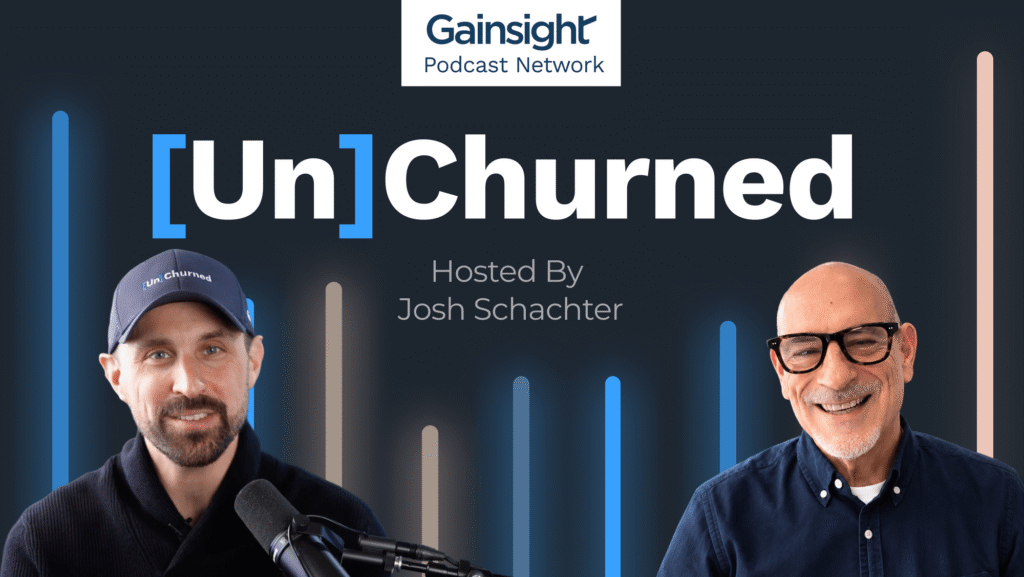
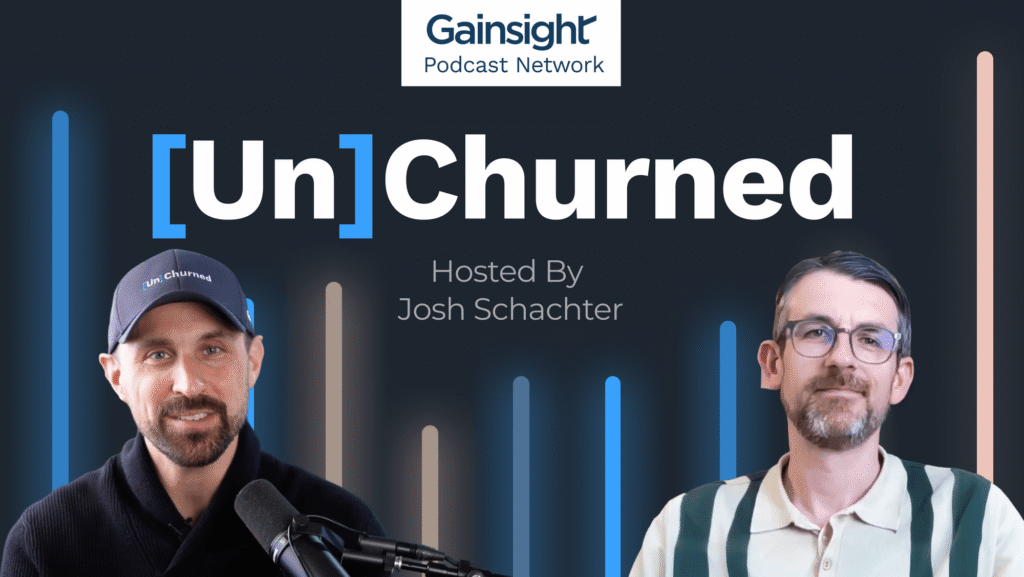
Guy Galon, CCO at Obrela, joins Jenny Calvert at Pulse Europe in Dublin to discuss how he's transforming CS hiring and operations for the AI era.

167. How Do You Measure AI Proficiency in Your CS Team? ft. Guy Galon (Obrela)
Show Notes
Guy Galon, CCO at Obrela, joins Jenny Calvert at Pulse Europe in Dublin to discuss how he’s transforming CS hiring and operations for the AI era.
In this conversation, Guy explains how he measures AI capability in his team, why he’s building some AI tools internally at a cybersecurity company, and his three big bets for AI in 2026.
Guy tackles the generalist vs. specialist debate, explains why his technical background as a software engineer helped him earn credibility as a CS leader, and explores the emerging question: What does it mean to manage AI agents? From performance reviews for bots to getting CS leaders a real seat at the revenue forecasting table, this conversation covers the practical and philosophical challenges of leading customer success in 2026.
—
Want the playbook, not just the conversation? Subscribe for deep-dive, actionable breakdowns from every episode at unchurned.substack.com.
—
Timestamps
0:00 – Preview & Introduction
0:54 – Meet Guy Galon, CCO at Obrela
2:27 – The Generalist vs. Specialist Debate in the Age of AI
3:35 – The Multifaceted CSM Framework: Origins and Evolution
4:47 – How to Measure AI Proficiency
6:05 – 2026 AI Strategy
8:03 – What Changes When AI Delivers on These Three Promises
9:41 – Q4 Advice: Think in 8-10 Weeks, Not 12
11:30 – Getting CS a Seat at the Revenue Forecasting Table
13:00 – The Human Element AI Can’t Replace: Trust and Influence
14:14 – The Future of Managing AI Agents
What You’ll Learn
* How the Multifaceted CSM Framework helps identify talent across five key capability areas
* How to balance AI innovation with data compliance in highly regulated industries like cybersecurity
* How to move CS from execution-focused roles to strategic contributors in revenue forecasting
* The difference between building internal AI capabilities vs. using external tools in customer success
* What it might look like to manage AI agents in the future (priorities, objectives, performance reviews)
Featuring

Josh Schachter, Host
SVP, Strategy & Market Development @ Gainsight

Guy Galon, Guest
CCO at Obrela
Transcript
Guy Galon:
It was difficult for me to recruit CSM with different skill sets. So I said, okay, what type of domains of expertise I want to have in my team. So it made me think about being more general. So I came up with project management capabilities, data analysis capabilities, sales account management capabilities and domain expertise capabilities.
But it helped me to focus at that time. Okay, I need those, at least two of those facets. 18 months ago I added the AI proficiency AI capability because that interjects with all of them.
Jenny Calvert:
And how are you measuring AI proficiency, efficiency and capability? I am Jenny Calvert coming at you live from Pulse Europe in Dublin. I am so excited to welcome Guy Galon to the chair. Guy, welcome.
Guy Galon:
Thank you very much for having me.
Jenny Calvert:
Thank you for joining us. And you are the chief customer success officer at Obrela. Correct. Tell us a little more about yourself, your remit, your teams, all of that.
Guy Galon:
So in umbrella I’m responsible for the customer success team, the technical project management team and lately even the channels and partners. So partner and channel success kind of synergize with customer success in our own organization. I come from a mixed technical business background, so over the years I like to kind of stay between technology and customer facing. Started my career as a software engineer and over the years I played many roles in software delivery, software quality support, project management, account management and let’s say the last 10 years more or less focused more on customer success, account management and cybersecurity.
Jenny Calvert:
How has the technical experience early in your career helped as you evolved into a CS leader?
Guy Galon:
I think it helped me not to be overwhelmed because in early my career I was told, you know cs, they just relationship people, what’s, what is the exact value that they add? So if you know technology and you understand technology and you evolve with technology over the years, I think puts you in a, in a, in a position, in any role which is customer facing role where they understand that they speak to someone that actually understands. So it’s not just about all you can press this button or do something like that, but you understand how technology actually correlates with business.
Jenny Calvert:
Goes well with something that I’m thinking about and there’s a little debate whether or not as we move forward in the agentic area is more generalist or more specialist roles going to be critical as we move forward. What’s your take?
Guy Galon:
I was related probably to two different parts. First of all, let’s say generally for any professional these days, I think the combination of being adaptable, flexible and curious, I think that’s a must. You cannot, otherwise, otherwise you stay behind regardless if you are in CS or not in cs. I would say if you are a small company, you know you, you probably have to be generalist and you have to kind of master different aspects. If you companies who grow in growth mode probably they will seek more specialities or to be more statistic in what you are you’re doing because they scale and they need to be a bit more structured. So I don’t have a particular opinion but I think you need to be flexible enough to know when you need to be generalist. Because my next job is in a startup versus I need, I’m going now to a scale up or a growth company and I need to kind of focus my, my, my capabilities and skills in a specific domain.
Jenny Calvert:
Yeah, how is some of your like talent development, talent acquisition shifting as AI becomes more integrated into everything we do in cs?
Guy Galon:
So let me take you five more than five years ago before COVID I came up with my own, I call it the multifaceted CSM framework that I used for a.
Jenny Calvert:
The multifaceted CSM framework.
Guy Galon:
Yes, got it. I, at the time I saw it was difficult for me to recruit CSM with different skill sets. So I said okay, what type of domains of expertise I want to, I want to have in my team. So it made me think about being more general. So I came up with a project management capabilities, data analysis capabilities, sales account management capabilities and domain expertise capabilities. So those were the four facets and I said if I find one that has all of them that’s a superwoman or super or Wonder Woman. But it helped me to focus at that time. Okay, I need those, at least two of those assets.
Guy Galon:
18 months ago I added the AI A, a proficiency AI capability because that interjects with all of them. AI helps you today with all of them. Definitely with data analysis.
Jenny Calvert:
And how are you measuring AI proficiency and capability?
Guy Galon:
First of all, my curiosity and not I talk to my team, I don’t want to hear things about, you know, I, I don’t try it, it’s too, it’s too technical. It’s not too technical, it’s just it acquires some attention, some focus and as I said, some curiosity to understand that you do it also for yourself, not just for the sake of the company because guys said so you do it before because you need it for your.
Jenny Calvert:
Professional career, you for them as individuals.
Guy Galon:
So I measure it, let’s say on curiosity and willingness to try and experiment and the other thing, I wouldn’t say outcomes but the fact that you can do it, iteratively and quite quickly. So don’t try to set big targets, try to solve a small use case first and see that it works for us. And I encourage them to do so because essentially I want our AI next steps to come for my team, not just because guys say so.
Jenny Calvert:
So your four became five of the multifaceted csm.
Guy Galon:
Exactly. And I still think the model holds even today with the AI because it’s difficult to find someone that will do all of them. But AI helps you to improve your facets or your skill sets in each one of those four domains.
Jenny Calvert:
Well, speaking of AI, as we move into 2026, give me a little sneak peek behind your AI strategy. Where are you hedging your bets? Where are you investing moving into next year?
Guy Galon:
Okay, so I think I would not say bets, but I would say let’s be prepared. So I’ll give you some things that are a little bit of concern to me. So the we are cybersecurity company, so what exactly the data view you want to analyze and process? Right. So we hold quite sensitive information. So if I do any AI and I have to make sure that I’m compliant, it’s not just about, you know, I, I, I use different tools and I have to understand what type of data do I, I want to process. Some of the things we do are just internal. We are not using any external tools. We are developing our own capability.
Jenny Calvert:
So you’re building.
Guy Galon:
Yes, for certain aspects, for other aspects where we are using other tools as well, for customer management, for taking notes and so on. Those are standard tools that we use. So I would say which data I’m trying or I wish to analyze what am I compliant? Am I not risking my customers and myself? And then I would say what I said before moving into iterations, not try to solve big problems, but try to move fast and solve it. So that’s let’s say for my own personal opinion, if I would expect big things from AI next year, help me to weave between the line to find those early indicators of churn that even today it’s difficult for us to find. Second, tell our CSMs what’s the next best action to do given a certain situation or place.
Jenny Calvert:
Finding those early indicators, something’s wrong. Helping your CSMs figure out exactly what.
Guy Galon:
Do we need to do or give me some options. What if because we do that in our head, the question is AI can do it. And third, find me early expansion opportunities. Not just what we find ourselves by using our brain and our experience, but what if AI can help as well.
Jenny Calvert:
What’S possible for you, your teams and your business if AI can do this? Well, so if we solve the early warning system, we’ve got the CSMs engaging and the different strategies and we’re identifying those expansions. What changes in your business?
Guy Galon:
What will you ask? What will change in terms of my customers? Sure. Well, first of all, I see first internally for us. So we will be more effective, more efficient. I don’t, I can scale without having to. I mean, I’ll keep my team, we’ll not drop the team, we’ll keep the team. We will expand based on real, you know, growth. With my customers, I expect that my CSMs, they’ll have a helping hand that helps them with some of the major objectives that they have. They will have more time to focus on what customers needs are because their customers, they change security.
Guy Galon:
There are a lot of changes also because of AI. So we need to figure out how we help them on things that they don’t know enough about or we need to learn more about. This is maybe more domain expertise, a part of domain expertise and how you build that into your customer management.
Jenny Calvert:
I’m hearing a real hyper focus on the opportunity and change. Your customers are experiencing a lot of change. In the age of AI, you and your teams are anticipating and experiencing a lot of change.
Guy Galon:
And maybe my customers already experience some of them. I will know some of the things, I will know some of the things I will not know. But if I come and share with them what we do to make their life easier, I think it will open up the discussion with them.
Jenny Calvert:
Leading by doing a little bit. That’s fantastic. All right, advice time. It’s Q4. What is a piece of advice that you would give or you have received around how to hit your grr numbers to close out the year?
Guy Galon:
Okay, so two cases, two examples with my team, I give them a very straightforward advice. Just focus. It’s not a 12 weeks order, it’s 10 or 8. So if you think about it, freeze. Usually we have eight weeks. So if we need to complete onboarding or complete a major milestone, let’s try and plan it before end of November. If we, if we have renewals or potential expectations, then let’s work very close with sales to close them. So I’m asking them at this quarter, let’s be more focused on what we need to achieve and think that we have 10 instead of 12 weeks.
Guy Galon:
We have eight, nine to 10 weeks and let’s plan accordingly. So maybe it’s a very old school straightforward, but it helps people to focus.
Jenny Calvert:
Realistic timelines, partner where needed to see it through.
Guy Galon:
Exactly.
Jenny Calvert:
Sounds pretty simple and smart to me. Guy.
Guy Galon:
A good advice I received or let’s say unexpected was a few years ago in my career I was working a different role but still in front of customers. And one of my very good sellers in my company says you don’t need just to look at what Q4 has for you. Think about Q1 next year. Which of the renewals and expansion we can bring forward now retrospectively. I know why he did that. He had to meet his target. So he was kind of. He knew that I had very good relationship with customers.
Guy Galon:
Right. But it made me think over the years that sometimes even for customer success there are some opportunities waiting in Q1 and if there are the right circumstances and you work closely with the customer and says they are willing to renew earlier, to expand earlier, they get some discount because it’s the end of the year. Your sales are happy, everyone are happy.
Jenny Calvert:
It’s a win win for all. Parting words before we wrap up. What are you most excited for about Pulse in Dublin?
Guy Galon:
I think I. First of all I’m excited to meet the community that’s. You get so many interesting discussions. You hear different people’s different perspectives. I think that will be the first thing for me. And I also like. Although I speak today, I also like to get into sessions and what is your topic?
Jenny Calvert:
Admittedly I did not look it up. I know horrible.
Guy Galon:
We like transparency and honesty.
Jenny Calvert:
I’m be honest. I’m not going to pretend I know what you’re speaking about. But I am curious.
Guy Galon:
It’s a workshop and I call it some insights to impact and how customer success can shape revenue forecasting. So take out the signals that we have in the future with AI. Yeah. And how we have improved discussions and planning with sales and finance. Very cool. So I don’t. I think we do a lot in terms of renewals and expansions. I call it the execution side.
Guy Galon:
But going back and plan it. CS are not part of it all the time. Sometimes we’ll do. Sometimes we’re just bystanders, sometimes we just being. I want to promote it more into the revenue table. So you are a serious contributor. That’s what I’m. I’m trying to do some to train them.
Guy Galon:
Sorry practice them in some cases that I built which are based on experiences that I had before and just tell them try. We have a question about the renewal, about the expansion. What do you need to do? What’s missing? What will you do to make it happen? So In a way I’m thinking, think about how you will do it and later when you have agents, you know what to expect them or how you train them to ask the right questions. Because I don’t, you know, agents will do it. Maybe partly do it today, but I still think that there’s a human aspect here that still needs to be a.
Jenny Calvert:
Deep trained one of if you’re familiar with the works of like Robert Cialdini at all and the influence. Right, influence. AI will be able to help influence. But there is a human element that’s really important for that commonality, that connection that we required building that trust.
Guy Galon:
Because eventually when a CFO and a CRO, they’re doing their revenue projection for next year, even in a couple of years from now, it’s not going to be okay. The AI told me that it will be 50, 50% renewal chances. Nobody will accept it. Right. I mean I think that it will be another input and somebody human, CS leader will have to say, yes, we can put it in 50% by the agent, but I believe we can close it. Because eventually you need to put a plan in place. That’s how we build the business. So we need to be confident about it using, using AI, but using our own capabilities.
Jenny Calvert:
It’s an end on the first side I think this we’ve moved away from I think the fear enter into a little more of exploratory what’s possible, how do we this three work together. And then we talked a lot about and how people will end up being managers of it. So everybody will be a manager or leader of some for in the very. Because you’re going to have to be the one helping to iterate guide and influence our agents.
Guy Galon:
Correct, Correct. It’s still interesting to see that you have a team. You’ll be a team lead of agents. Yeah.
Jenny Calvert:
We’ve had some people talk about how they’re managing or thinking about managing agents, but I don’t know if anybody’s really doing it yet.
Guy Galon:
I think it’s too early.
Jenny Calvert:
Yeah.
Guy Galon:
What does it mean to manage an agent? Will you give them priorities? Okay. Will they have objectives? Yes. So you will interact with them?
Jenny Calvert:
What if they underperform?
Guy Galon:
Exactly. What would you fire them?
Jenny Calvert:
We fire them.
Guy Galon:
No. Performance review. It could be a performance review of your agent.
Jenny Calvert:
I mean there are, you know, there’s evals and all of that kind of stuff. So do we bring some of that concept into. There’s a lot of, a lot of fun to come. Super exciting, really fun to hear a little bit about how you’re thinking about it, how you’re prioritizing. Thanks so much for joining.
Guy Galon:
Thank you very much for having me.
[Un]Churned is the no. 1 podcast for customer retention. Hosted by Josh Schachter, each episode dives into post-sales strategy and how to lead in the agentic era.
Browse Series
Subscribe on