Customer Success must prove revenue impact to survive. PowerSchool CCO Manish Chawla explains why AI is table stakes, and execution drives retention.

Customer Success must prove revenue impact to survive. PowerSchool CCO Manish Chawla explains why AI is table stakes, and execution drives retention.
Customer Success doesn’t become mission-critical because you say it is.
It becomes mission-critical when it owns revenue.
In this episode of Unchurned, Josh Schachter sits down with Manish Chawla, CCO at PowerSchool, to talk about what it actually takes to make CS essential — to customers and to the company.
Manish doesn’t come from traditional CS. He’s been a CRO. A GM. He learned that the only truth that matters is what the customer believes.
Now he’s applying that lens to CS.
At PowerSchool, CSMs don’t just manage relationships. They carry GRR and expansion targets. AI isn’t a premium add-on — it’s table stakes. And cost-to-serve must go down while customer experience goes up.
This isn’t theory. It’s operational.
If Customer Success isn’t tied directly to profit, it risks becoming optional. And optional doesn’t survive.
This episode is for operators who want CS at the revenue table — not watching from the sidelines.
—
Want the playbook, not just the conversation? Subscribe for deep-dive, actionable breakdowns from every episode at unchurned.substack.com.
—
0:00 – Preview & Introduction
1:25 – Meet Manish Chawla & Overview of PowerSchool
3:35 – From consulting to CRO to CCO
6:13 – Why execution matters more than strategy
8:35 – Bringing a commercial mindset to Customer Success
10:52 – Should CSMs carry revenue? (GRR & expansion targets)
16:20 – Making CS mission-critical inside the company
17:42 – Cost-to-serve: Driving efficiency without hurting CX
18:50 – Scaling through digital CS. partner & ecosystems
21:25 – Designing CS for K-12 and vertical SaaS
28:30 – AI is table stakes (and customers won’t pay extra)
30:51 – Using AI internally to increase productivity
32:25 – Building a CS engineering team
35:45 – Becoming essential to customers
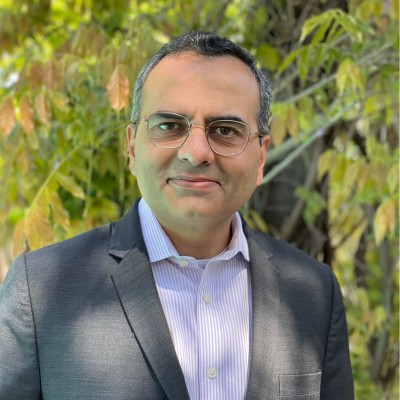
Manish Chawla:
I don’t think customers are going to pay for additional AI solutions. From a retention perspective, we are taking these as fundamental additions to our portfolio that allows to create more value bundling, right? As we go through retention or expansion or new sales, et cetera, right?
So you have to have a very strong operational execution apart from strategy. And at the end, the only truth that matters is what the customer believes.
Josh Schachter [Host]:
You’re listening to Unchurned, brought to you by the Gainsight Podcast Network. Hey everybody, welcome to this week’s episode of Unchurned. I’m your host, Josh Schachter, Senior Vice President of Strategy and Market Development at Gainsight, and I’m super excited to be here this week with Manish Chawla. Manish is the Chief Customer Officer at PowerSchool. PowerSchool is one of the leading K through 12 platforms out there. They serve over 60 million students. 18,000 customers across over 90 countries. And within Manish’s purview, he’s got professional services, customer success, customer support.
Josh Schachter [Host]:
I think he’s got like half the company. Isn’t that right, Manish?
Manish Chawla:
At least a third. That’s the latest count.
Josh Schachter [Host]:
Yeah. Wow. Well, welcome to the program.
Manish Chawla:
Thank you. Thank you, Josh. Super excited to be here. Yeah. Been a fan of your your podcast and not only that, I’ve made it required listening for my leadership team as well because I think there’s lots of good stories you bring on and lots of great experienced people you bring on. So you touch upon a lot of topics that are close to my heart.
Josh Schachter [Host]:
I love it. Thank you. I think you said that you listen to it at the gym, is that right?
Manish Chawla:
That’s right. That’s my podcast time. And I don’t mandate when my team listens to it, they just have to listen to it.
Josh Schachter [Host]:
Okay, well, so lots of topics that you joy. What topic should we go into here? I mean, there’s lots of different angles we can go to. You just, you joined PowerSchool not so long ago, 6 months ago.
Manish Chawla:
Yeah.
Josh Schachter [Host]:
You know, how are things going?
Manish Chawla:
No, so PowerSchool, a great company, great platform. I think, you know, the, so to speak, 800-pound gorilla in the K-12 space. And, you know, it is time to write the next chapter, which is which is what we are doing here, sort of taking the company from the way our CEO described, going from good to great. So I’m really enjoying the combination of making sure that we are executing for the today and then building very fast for the tomorrow.
Josh Schachter [Host]:
Yeah. So let’s actually, you know what, before we go into PowerSchool, because I want to hear all about what you guys are doing and everything, you have an interesting background. You were working with your CEO previously., right? We were talking before about that. And before you joined PowerSchool, you were actually CRO. You were at AspenTech and you were Chief Revenue Officer, but you were also Chief Customer Officer. Tell us all your career background.
Manish Chawla:
Yeah, sure. So, so I have a, what I’ll simply call is a non-traditional background for a Chief Customer Officer or for that matter in the software industry, you see most people leading a function who’ve grown up purely through that function. I think my variety of things I’ve done and the global experiences, and I credit my IBM stint for the variety. I’d say before the IBM stint, 15 years in pure professional services, consulting professional services, Accenture, BearingPoint, et cetera. With IBM, I did definitely a stint in consulting in leadership roles and then moved into business leadership roles. And those business leadership roles, GM, global sectors, global industries, really, if the chief revenue officer title was in vogue at IBM, that’s pretty much what it was. You sort of had the market leadership and customer-facing roles. So taking a business, reshaping it, and you had the end-to-end ownership, that’s pretty much what a chief revenue officer slash chief customer officer is doing.
Manish Chawla:
Sometimes it’s divided like, like we have at PowerSchool. Sometimes it’s combined. That’s the general manager role. So the experience of what’s available in our product portfolio, one is of course helping reshape that based on market needs. But then what’s our customer sentiment today? What are they looking for? How do we expand? How do we retain? How do we expand? So that pretty much summarizes those dimensions. And you get to learn which customer is happy and is going to buy more, which customer is unhappy, and what is the patterns to address the states of dissatisfaction. And then the third part is how do you move upstream, partner with all your colleagues to really level up so that you’re not fixing every time, you are expanding. So I’d say then that was also the role going forward.
Josh Schachter [Host]:
How do you think your background in revenue changes the way that you think about customer success?
Manish Chawla:
So in terms of how my background has helped, I think, you know, given the fact that I grew up pretty much, I’ll say, at the core face, i.e., delivering for customers, selling to customers, right? So I’ve sort of grown through that concept and then building up the portfolio gradually from here’s my project or here’s my part of a customer to owning a customer, owning a portfolio of customers. And then seeing how an IBM and then also layering on my AspenTech experience was really, you have to have a very strong operational execution apart from strategy. Strategy is, I’ll say, if you had 60 minutes, you spend 5 minutes on strategy, 55 minutes on execution and constant tuning. And at the end, the only truth that matters is what the customer believes. So those are the factors. And so you have to change the belief. And similarly, given IBM’s highly matrixed environment, that is just a statement of fact. You learn that by—
Josh Schachter [Host]:
I can’t believe that IBM would be a matrixed company, Manish.
Manish Chawla:
So I refer to it as the infinite matrix. If you think you’ve got it right in terms of, okay, I’ve understood the matrix, it’s changed again. And so you got used to the alignment, creating alliances, creating alliances with sort of the customer in mind, not political objectives. And those are sort of the traits I think that stood me in strong stead, the operational execution, get the right strategy, get the right team. Coach extensively. I was benefited by a lot of coaching by my bosses, mentors. So bringing all those things into each role is my goal. And so then it’s not only about what’s in it for the customer, but what’s in it for the team? How do you motivate them to sort of the higher mission and level up, which is all my journey so far.
Josh Schachter [Host]:
What I was hoping I hear you say is, yeah, I was a CRO, and so I’ve got all my CSMs selling, selling, selling, you know, carrying books of business, responsible for renewals. I’m, you know, hiring salespeople now as CSMs and account managers. I didn’t hear that quite, but maybe there’s pieces to the commercial aspect.
Manish Chawla:
The commercial aspect underlines everything I do. Okay, so the way, as CCO, both at AspenTech and at PowerSchool, what I’ve told the team is, you step back and look at how sales is, what’s the word I would use? Venerated, celebrated. Okay? So, you know you’ve arrived when you are essential. Sales is considered essential to an organization. You cannot exist, of course, okay? People are claiming they can sell with AI or product sells itself. Good for them, okay? That’s not true for most of the world. You actually need a capable sales force. So that commercial aspect is indeed the underlying thread.
Manish Chawla:
And so a CSM that measures themselves on NPS, is only the hygiene part of the story. That’s the other part that I emphasize. How do you become essential? You become essential when you’re articulating clearly top line or bottom line, straight line of sight, right? So that’s how you become essential, that the customer points to you as having delivered, you the CSM, as having delivered on their commitments. And therefore essential to have gain value. If it’s always the account manager or salesperson, then that’s what a CEO or CFO takes away, right? Because you can, you have direct line of sight to hit quota and quota attainment in sales. What’s the line of sight to, in the case of the Chief Customer Officer, a line of sight to gross revenue retention, right? So gross revenue retention, and then secondly, expansion. To your point on renewals, actually, I am not— it depends on the market for sure, but given that I’ve now spent most of my time in verticals, AspenTech was a vertical software company prior to that. All most of my leadership roles at IBM was in a vertical.
Manish Chawla:
Our school, of course, different vertical, so I’m still learning about the vertical, but you don’t— account management becomes paramount. You don’t have schools popping up every minute. You can’t change your sector. If you were doing cybersecurity, you could switch to a different industry or sector. So customer health, customer sat, the value they’re getting from your solutions, is the bedrock for retention and expansion. So therefore, a connected experience commercially, which is there is a commercial face, so commercial CEO. I actually heard it in one of your podcasts. I don’t remember which one of your guests said it, but they said the AE should be thought of as the commercial CEO for an account.
Manish Chawla:
And the CSM as the COO. So now you’ve created clear sort of lanes, but a CEO and a COO by definition are partnered closely together. So you create that partnership and I think you create confusion by splitting commercials into, you know, into two different roles. But the commercial mindset, a CEO cannot operate without the commercial mindset. Without clear line of sight to the outcomes. And so I do individual, so to speak, attainment goals. It’s similar to how sales would do.
Josh Schachter [Host]:
Yeah, tell me about that. What does that look like for your team?
Manish Chawla:
So if you have a portfolio of accounts as a CSM, then you have a GRR goal based on, of course, a bottoms-up as well as or top-down allocation based on the company goals for GRR or attrition. And if you’ve, that’s one. Second is expansion for your portfolio. And the third is health, i.e., health is a, so you’re not just focusing, hey, I just got the renewal home. So you’re not just looking at what’s in front of your nose. You are looking a bit further ahead saying, what’s the value? What’s the usage, et cetera, et cetera. What’s the health and success of the customer? So these three focused on the individual and their portfolio, and in addition, added a lead generation kind of commission. In addition, at SKO, then just visualize the SKO one, the celebrated salespeople are coming on stage, then there is a top 3 CSM award by attainment.
Manish Chawla:
Okay. So if there’s 15 salespeople or 20 salespeople, there’s at least 3 CSMs coming on stage. So it starts to become a celebration and sort of assertion that they are as qualified for President’s Club as sales would be. And then not only the CSM team, so back to the teams I have, I have transformed even at AspenTech and PowerSchool services to own GRR, right? So services, if you sort of visualize in a multi-product company, they’d be organized by practices. So the practice GRR is also owned by that grouping of people. And why is that? Because services is the core arm that brings the product knowledge, or the domain understanding or the consulting that helps in accelerating time to value for a solution that is not just plug and play. If you take a Gainsight, you take any of our solutions or Sim require beyond, you know, you gotta go beyond a login and a training, right? You’ve gotta set up the customer with their work processes and so on. So then that creates the alignment and so then CSMs start to have partners in crime from a domain and a technical perspective as well.
Manish Chawla:
They can draw upon, if also there is an adoption challenge, they can go back and do, you know, intervene with consulting. So creating that clarity in terms of alignment. And then at the end, if I see how both the tasks have been taken here, the CEO Talks about new business growth. He’s looking at the CRO. He swivels his chair. He talks about retention. He swivels to me. And when he talks about what’s the total score, he’s looking at the CFO, right? A minus B is the total, you know, total.
Manish Chawla:
And of course, price increase is part of that equation, but that’s sort of, you become one of the three. That are executing. I’m sorry, one of the two that are executing. The CFO is the one keeping score.
Josh Schachter [Host]:
So if I roll up everything you just said into the question of, do you believe that CS, customer success at PowerSchool is mission critical? You would say?
Manish Chawla:
Beyond critical, beyond mission critical. You’re there.
Josh Schachter [Host]:
You’re, there’s no, like you’re, you’re already there. I mean, of course you want to continue to increase the criticality of it, but you’re, but the team is there.
Manish Chawla:
That’s right, that’s right. And I think the AspenTech experience helped me head off the— now CSM is a— or the CS team, right? I broadly call it the CS team, Services Success Management plus support. And for that matter, our extension into partners as well. That’s a second subject, but all that, is CS, all that is customer success. I saw the— I led the evolution of the CS org from a tier 2 visibility to a C-suite mission criticality. And so you have to own that, a part of that revenue equation, and you have to own a part of the expansion equation. And you have to own a part of the best cost to serve equation. That’s how you become critical to the math, which at the end of the day is the profit dollars that the company is seeing.
Josh Schachter [Host]:
Should we talk about cost to serve at all?
Manish Chawla:
Sure, let’s absolutely talk about that.
Josh Schachter [Host]:
What question should I ask you?
Manish Chawla:
So cost to serve, I think in, you see, I’d say the, There’s a couple of vectors, right? One is, of course, if you take a focus on productivity, right? How you did productivity before, say 2, 3, 4 years ago was different. Today, you know, we talk about AI. How do you take the friction out? Okay? That’s one, using AI, using automation, et cetera. How do you have, a CSM that covers 10 accounts cover 15 accounts, right? So how do you give them, rather than hunt and peck, simple use cases, right, that we all talk about, QBRs, dashboards, et cetera, that allow them to focus on what matters, et cetera. So that’s an example of productivity. So you’re not going getting additional headcount, you’re creating more coverage. Then there is the reach and scale, right?, right? So which is the digital CS to the long tail. So how do you not turn around and say, well, I’ve got 18,000 customers, 1:10 ratio, so I need— clearly that math is not gonna work, right? So you’re gonna have half the company headcount doing CSM.
Manish Chawla:
So you’ve gotta have digital CSM. And then the other part of this is very important, which is ecosystem and partners. So how do you, if you fundamentally take the view, which I would say in enterprise customers is, these customers need help. Start of story, end of story, right? Business process consulting, how to, what’s the best practice, what are my choices? And the tool, your system, your software is only an enabler of that. They’ve gotta make so many, many, many choices. We did this at AspenTech, set up an ecosystem of partners which allowed us to avert similar size and scale, you know, 4,000 employees, $1.2 billion when Emerson, you know, acquired it 100%. But we avoided 150 headcount, by scaling a partner ecosystem just in 18 months, right? Just in 18 months. So have I skimped, have we as a company skimped on the help and the service and the advice that our customers want? No, absolutely not, okay? And so I think that’s another part.
Manish Chawla:
So people think of cost to serve as an independent equation. Cost to serve is one of the constraints that you’re optimizing for. So you want cost to serve down and customer experience up. And so you’ve gotta do both at the same time, right? So those are a few things. And today, cost to serve, and of course support is always now become a top priority cost to serve topic. And you have to keep your customer experience or improve your customer experience. So that naturally is all about the AI that, you know, that is being talked about and implemented. So you have to use technology and you have to use process improvement and you have to use an ecosystem of partners.
Manish Chawla:
Those are sort of my three big buckets and I’m using, putting AI of course in the technology bucket. Yeah.
Josh Schachter [Host]:
Yeah. And I do want to hear more about how you’re instituting AI. K through 12 is a very rewarding industry to play in., you know, education, of course. I’m sure there’s some amazing customer stories that you guys have accrued through the years. It’s also tough. I had a startup for a hot minute that was a K through 12, actually it was universities, but academia, the tough, at least to sell into, it’s tough. We didn’t even make it so far to get to the customer success cycle. But how do you design a CS motion for K through 12, your buyers, that actually matches how schools operate? Or are you still learning? You’ve been there for 6 months.
Manish Chawla:
You’re probably still learning this as well. No doubt I’m still learning. I introduce myself to customers saying, I’m in, basically I’m in the 6th month, at least till the end of the month. And so I say I’m in 6th grade. I’m on my K through 12 journey. And also of course implying that I’m a fast learner. But see here, I think at the end, the customers want to engage with folks that understand them, understand their domains, okay? Understand the platforms. So now you, so the CS organization, including all these folks in a vertical business, the domain understanding is deeply important.
Manish Chawla:
So you can speak the lingo and understand what’s important, what’s not. So the who we hire, but you need a unique capability around a tech-savvy educator. I don’t have a better, or tech, very tech-friendly educator. Because if you take a pure educator who’s not tech-friendly naturally, you’ll get a poor combination. In what we do. So I think that’s one, who we hire. And if there’s a gap in, I’ll say fundamentally project management alignment, deeper understanding of technology, those are things that can be addressed. The other part is understanding the rhythm and capability levels of the school.
Manish Chawla:
Rhythm, by rhythm I mean, here’s the annual cycle, here’s when they do report cards, assessments, here’s the peak cycles. It’s not a, you know, my prior life was around utilities, around oil and gas companies, chemicals, automotive, et cetera. It’s a totally different dynamic, right? What’s important? What are the moments that are important to them becomes the question. And so when you study that, then the aspects of the solution, if you look at the public school system in the US, it’s funded mostly taxpayer funded, right? And of course now the whole charter school ecosystem is starting. People are getting vouchers. So education, public schools are under pressure around funding. So things that are relating to attendance matter a lot for them. So how do you make sure that you understand the starting point for the superintendent?
Josh Schachter [Host]:
On downwards, because attendance is a factor of their funding is basically what you’re saying.
Manish Chawla:
Enrollment and attendance drives funding. Okay. Or there could be special programs. For example, there could be in a state, a special program around interventions around specific classes of of students, okay? So then how are you helping them track that? How are you helping them submit their compliance reports saying, you know, here’s everything we are doing around different kinds of interventions, disabilities, medical, et cetera, et cetera. Different states have different rules. So once you understand, hey, here’s the normal run cycles and peak periods of a school, And similarly, and I carefully went through that without using special specific terminology. One is I’m still not familiar. No, but I’m still trying to say it in simple English, which is, is the different report cycles they have to Department of Education, either federal or state level, that is a direct line of sight to funding.
Manish Chawla:
What is that predictive enrollment analytics type of solutions? And so once you start to understand the dynamics of where the money comes from, if you’re in, in, in a chemical company, you have to understand what is the order to cash side, right? So money comes in, they’re able to fund what they’re doing. That’s important. And then what are their business processes that, that happen that you make it, make it easier Give them more. A common pattern is they want their systems to be such that it gives them more instructional time to the teachers. That’s fundamentally it. And then the capability levels is the next topic and the capability levels of the customer, right? What is their organizational excellence? If I draw the— whether you like oil and gas or not, different topic, but If you take an ExxonMobil kind of company, a large scale company in a sector, they would have invested in their own talent. And you keep going down to the smallest company, their own talent and skills and capacity is going to be much more limited. Similarly, in schools, a metropolitan school district will have the IT organization will be able to invest in different things, even if funding is always a constraint.
Manish Chawla:
But as you drive from wherever you are, 3 hours north, south, east, west, you’re in the middle of perhaps rural type areas. The school district is very small. You go from hundreds of thousands of students to 3,000, 2,000 students, right? So dramatic difference and therefore their capability levels as well. So the system administrators could also be a PE teacher. So now, how does your solution become easy to use and maintain? What is that layer of assistance that you can provide them so that they don’t keep struggling with your solution and similarly get value and similarly get help when they need it? So those are the dynamics, you know, that are part of our thinking. And so you have to have a solution that works by solution, I don’t mean just the product, right? Everything, the entire experience is fit for purpose for the largest one and a variation that is fit for purpose for these much smaller ones as well. So those are the dynamics that we keep in mind actively.
Josh Schachter [Host]:
Let’s talk a little bit about AI, the moment that we’re in here. PowerBuddy is your AI assistant, that’s a big bet for PowerSchool. It’s integrated into the platform. I’d like to know, you know, has that impact the way that, you know, you’re serving your customers, that capability being directly inserted? I’d like to know, you know, how you’re driving AI, how you’re thinking about it and driving any type of change management at the org. And then, you know, if there’s any tools that you’re using that have been effective or if you guys are vibing, all the things, we’d love to hear about that as well.
Manish Chawla:
Yeah, yeah, certainly. So I’d say the experience with the customer-facing AI solutions has been very interesting. So we are facing an interesting dynamic of the larger customers saying, hey, I want to use a cross-company, cross-enterprise solution They could be going with Google, et cetera. And then what’s our claim to fame? Our claim to fame is we are the system of record, right? So all the data sits, sits with us. Therefore, we can be more effective. The other dynamic actually interestingly is that I don’t think customers are going to pay for additional AI solutions. That is my evolving opinion.
Josh Schachter [Host]:
Therefore, I think that’s a pretty, I think that’s a safe bet you’re placing there, Manish, at this point in time.
Manish Chawla:
You expect it now, right? It’s table stakes. So in fact, it’s a disadvantage if you don’t have it. So that’s the evolving case. So now from a retention perspective, we are taking these as fundamental additions to our portfolio that allows to create more value bundling, right? As we go through. Retention or expansion or new sales, et cetera, right? So you get disqualified or you’re considered underwhelming in customer settings, but you have to keep talking about them to say, how are you then saving people time? How are you giving them instructional time if I take the K-12 example, right? How are you creating productivity, et cetera, et cetera? Then when it comes to internal Of course, given that I’ve been here only for 6 months, but we have, the first priority was customer support, okay? Improve customer experience. A lot of how-to questions, back to my comment on the smaller districts. Half our cases come from smaller districts. So how do we deflect more and more of those? So AI naturally is a big solution.
Manish Chawla:
That’s a big bet. And for that, we are going with Salesforce and its various solutions related to that. And we are expecting much from it. We’ve already done one version of AI. It’s not the all-singing, all-dancing AI with our existing vendor, but then we are leveling up and upgrading to Salesforce Lightning and its existing solutions. So that’s a big bet. Then the next chapter. And so I have a big swath of work happening till the middle of the year.
Manish Chawla:
And now we are shaping what we will do for customer success. That’s one, customer success management. That’s the active stream and evaluation. We understand the use cases. And then the other activity that I’ve launched with is, hey, the company has access to multiple tools. Microsoft Copilot. We’ve also purchased Agentforce from Salesforce as part of the larger sales and support endeavor. There is Slack, Slackbot, blah, blah, blah, right? So there’s various things available.
Manish Chawla:
And so what I had my, I have a, and I got this idea actually from, he’s been one of your guests and I’ve met him at CXO events as well. Abbas from GitHub, and he’s been a great partner to bounce ideas off.
Josh Schachter [Host]:
He said you need to— Abbas Haider Ali.
Manish Chawla:
Yes, he’s great. Exactly. So he articulated this notion of a CS engineering team. So I’ve built that kind of a team. And so I had the CS engineering team say, okay, let’s crowdsource how people are using AI. And so now we’ve started to, and once we showcase that, I’d say we did customer kickoff. We did, you know, here’s everything important that everybody needs to know for the year. We may have done 15 sessions total, right? 1 hour each over 4 weeks.
Manish Chawla:
The one session with the highest rating was the one for how to use existing tools to make make life easier. It could be as simple as the facilitator capability in Microsoft Teams. And of course, you can keep going on. Whiteboarding an agent to do X or Y, right? Looking at customer health, asking Slackbot rather than me. So now I’ve also become a bit more disciplined. Rather than ask my team for, I have a question, I’d like to see the data for X, Y, and Z. I ask Slackbot. So this is how we start to free up time.
Manish Chawla:
Does it transform immediately like we are doing in support? No, but this is how we create more productivity. And then, like I said, we are actively going back and saying, how do I take AI and automation? Because it’s not just about AI, and take that CSM who’s managing to cover 10 critical accounts to 15 critical accounts. And similarly, what are those agents that will actively engage the long tail, right? The mid-market segment. So, I’ve set the goal for the— I think we understand the use cases and our goal is second half of this calendar year that we are live with I’ll say base foundation for a reimagined CS platform with AI use cases in it, and then continuously iterate from there back to having a CS engineering team. And so we are using existing tools, we’re creating that excitement and buzz and spreading that as a good infection, right? Good infection. It goes viral. That’s my goal. And then we add these layers of, okay, I can build a QBR deck automagically, right? Brings all the things in.
Manish Chawla:
I’m able to send out personalized engagement agents to engage with customers so that then they can get the information they need that is specific to their adoption patterns or specific to their stage in the journey or specific to their problems or opportunities. So that sort of is the next frontier and we are in active motion on that, that last piece.
Josh Schachter [Host]:
So on the frontier, let’s end it with this.
Manish Chawla:
Yeah.
Josh Schachter [Host]:
You’re talking to your team now, you’ve got several hundred people that are under your remit. What’s something you want to tell your team to keep them pushing in the second half of 2026?
Manish Chawla:
The biggest thing is the whole company. Is aligned around a common set of goals, alignment, collaboration. And so you are the cold face, you’re right in front of the customer, be their advocate, and the whole company is behind you, whether it’s product, engineering, sales, finance, all of those. And let’s also fundamentally keep our goal in mind, We have to make ourselves essential to our customers and us essential to the company. And we do that by making sure we are delivering on our commitments. That sort of is the, I’ve got your back, let’s go hit the goal.
Josh Schachter [Host]:
Stay mission critical, work together, drive revenue, the simple foundational building blocks of customer success at PowerSchool. Manish, thank you so much. This was great. Thank you for being a listener. Thank you for having your directs be listeners and thank you for being on the program and sharing everything that you guys are up to. It sounds like wonderful things and a really exciting year ahead.
Manish Chawla:
I appreciate it, Josh. Thank you. Big lift ahead, but I’m excited. The team is extremely focused. Thank you for having me on the show. Thanks.
[Un]Churned is the no. 1 podcast for customer retention. Hosted by Josh Schachter, each episode dives into post-sales strategy and how to lead in the agentic era.