Bloomreach's VP of CS tested 60+ AI tools, then built his own command center in Claude. Here's what he learned.

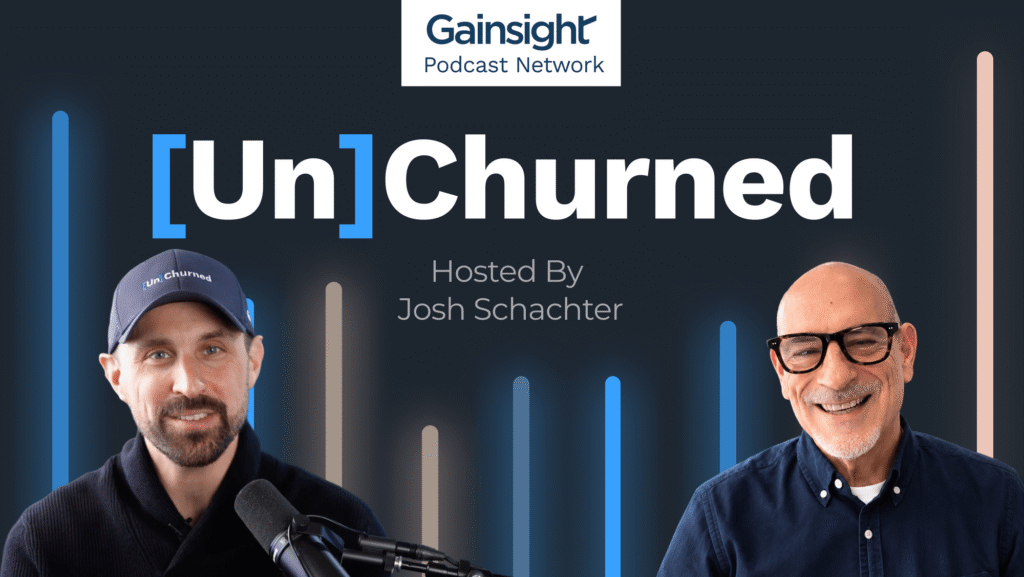
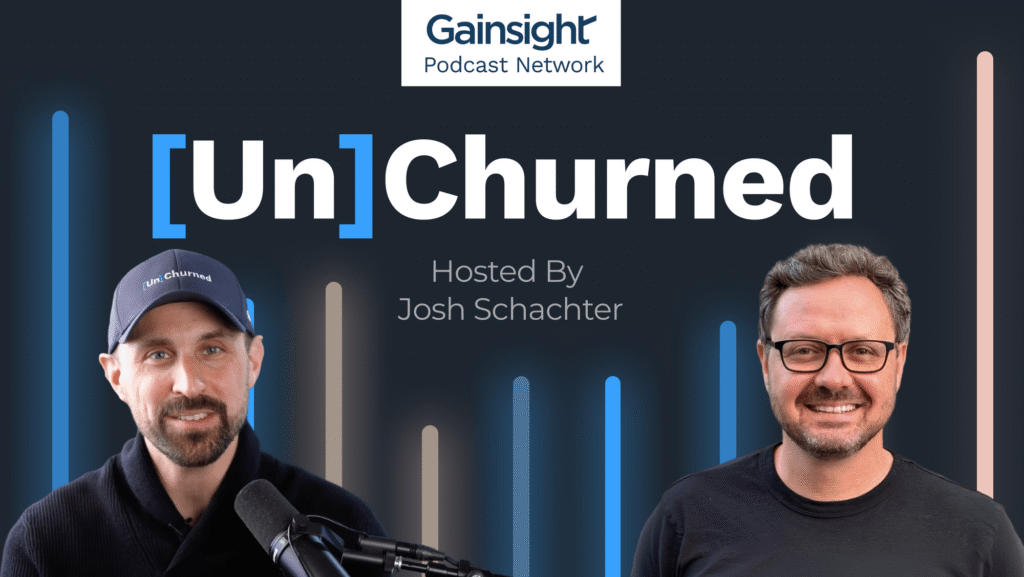
204. He Cut Exec Prep From 4 Hours to 10 Minutes ft. Simon Farthing (Bloomreach)
Show Notes
Simon Farthing, VP of Customer Success at Bloomreach, joins Josh Schachter to discuss what it actually takes to lead a customer success organization in the AI era. Drawing from his experience leading a 100-person CS and services team, Simon shares the lessons he’s learned from experimenting with AI tools at scale, building internal tools, rethinking team structure, and preparing for what’s next. It’s a candid conversation about moving beyond AI hype and turning it into measurable operational impact.
—
Want the playbook, not just the conversation?
Subscribe for deep-dive, actionable breakdowns from every episode at unchurned.substack.com.
—
What You’ll Learn
– Lessons from testing 60+ AI tools across a 100-person CS organization
– How Simon built a personal AI command center in Claude
– A practical framework for build vs. buy vs. build-on-top decisions
– Why AI accuracy becomes non-negotiable at the executive level
– Why “tool migration” is becoming a core professional skill
– How Bloomreach rebalanced CSM compensation around GRR and NRR
– Why Forward Deployed Engineers are emerging and where they fit
Timestamps
0:00 – Preview & Intro
1:28 – Meet Simon Farthing, Bloomreach overview
2:48 – 60+ AI tools tested, tool proliferation problem
6:00 – Building “Mission Control” in Claude
8:57 – Bottoms-up AI leadership structure
11:00 – The accuracy problem: when AI slides hit the boardroom
13:52 – Tool migration as a critical human skill
15:05 – Build vs. buy vs. build-on-top framework
17:00 – CSM comp redesign
18:33 – The rise of the Forward Deployed Engineer (FDE)
21:10 – Smaller customers and customer marketing, agentic AI
Featuring

Josh Schachter, Host
SVP, Strategy & Market Development @ Gainsight
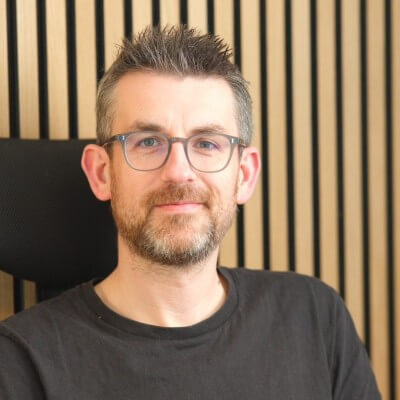
Simon Farthing, Guest
VP of CS @ Bloomreach
Transcript
Simon Farthing:
The thing I’ve built, which I’m most proud of is my mission control. So it’s a personal command center that I built in Claude. And what it does is it connects all of my priorities. It connects customer health one on one project, tracking all of the things that a VP of customer success needs to do.
And it kind of really helps me do things like prepare for exact calls, understand what customer health is looking like. It’s plugging into all of our core tools. And that’s been really liberating to work with something that helps me do some of the laborious, repeatable parts of my job just a lot faster. But not only that, just a lot smarter as well, because the context layer is improved.
Josh Schachter [Host]:
You’re listening to Unchurned, brought to you by the Gainsight podcast network. Simon Farthing took one computer science class in college, and by his account, he was terrible at it. He never finished the degree. Years later, he runs customer success at the global commerce company Bloomreach. And after the kids are in bed, he taught himself to build software, a personal mission control that turns four hours of exec prep into 10 minutes. Today, what happens when AI finally hands the builder’s tools to someone once told he couldn’t build? I’m Josh Schachter. This is Unchurned. Subscribe to our substack@ Unchurned.Gainsight.com where we go deep on every episode.
Josh Schachter [Host]:
Like how one post sales team at cloudbeds built over 150 AI agents. That story and more at unchurned.gainsight.com everybody. And welcome to this week’s episode of Unturned. I’m your host, Josh Schachter, senior vice president of strategy and go to market development at Gainsight. Very excited to be here today with Simon Farthing. Simon is the vice president of customer success at Bloomreach, doing really cool stuff in his organization. Simon, thank you so much for being on the show.
Simon Farthing:
Yeah, my pleasure, Josh. I’m excited to be here.
Josh Schachter [Host]:
I think many people know already Bloom Reach when you guys are a big global company. But for those that may not already, give us a little bit of the TLDR on Bloomreach and then let’s talk about, you know, your remit and what your org looks like.
Simon Farthing:
Yeah, for sure. So bloomreach, we are a personalization platform at heart. So we’re built especially for commerce. We help brands do things like deliver the right experiences to every customer across every channel in real time. And we’ve got kind of a number of core pillars to what we do. We’ve got our engagement product, which is marketing automation. We’ve got Discovery, which is AI powered search and merchandising, and then a ton of new AI innovation sprinkled on top as well. And my role, so I’m VP of CS like you said.
Simon Farthing:
So my team’s about 100 strong. And yeah, we’re covering everything from customer success to services to project management, implementations,
Josh Schachter [Host]:
all those good things, all the good stuff. Okay, all right, I’m just going to jump right into it. What every episode becomes, because people want to hear about it. They all want to learn from each other. We’re all at the same place. We all have imposter syndrome. We all feel behind, but yet we aren’t as behind as we think we are. Let’s talk about AI.
Josh Schachter [Host]:
You’ve done some really cool stuff with your company, with your team. You’re building, you’re transforming. Tell us a little bit about that at a macro level, what you’re up to in the world of AI for your team and then we can get into the finer details of it.
Simon Farthing:
Yeah, sounds good. And you know, I’m going to slightly dodge that to start with just because you said the word imposter syndrome. Because I was going to at some point weave in that. I really enjoyed your LinkedIn post this week when you were talking about kind of, you know, 10 years ago you were terrified by public speaking and now you’re kind of keynote on some major conferences. So, yeah, just wanted to give you a shout because, you know, I’m sure a lot of listeners will be on their own journey to overcome imposter syndrome or whatever’s holding them back. And, you know, some of it resonated with me. I was a very nervous public speaker back then as well. So, yeah, let’s be kind to each other today.
Simon Farthing:
But I really enjoyed that post. I just wanted to throw that in.
Josh Schachter [Host]:
Thank you, I appreciate that. I was, I was quite intimidated coming this morning just to speak with you, Simon. You know, I had to get myself amped up. But no, I. Yeah, it’s something that I was. That I’ve just been very intentional about. And, and it’s funny because you can actually turn your greatest weaknesses into your greatest strengths if you focus on them enough. And.
Josh Schachter [Host]:
And then vice versa is true too. So it’s interesting. But yeah, thanks for the shout out. Okay, now you can. No more dodging it now. Now AI, now all the things AI.
Simon Farthing:
Yeah, I bought myself some thinking time. So, no, I’ve Got a lot of say on this. So I mean we, we’ve been doing a lot. So we’ve tested over the last 18 months of Bloomreach about 60 different AI tools across our go to market teams, which, it’s wild when you sit down and think about it, but we’ve tested Gong, Zoom, granola, Glean staircase, cursor, you know, everything gainsight, of course, multiple note takers. And I think what I’ve learned from that is tool proliferation is its own problem. So we got to a situation where people had too many choices, nobody was consistent, we couldn’t measure anything because we were all doing something different. And in the past quarter we’ve really tried to be more deliberate. We’ve tried to move to more institutional AI.
Simon Farthing:
We’ve gone with a tool called Von by Radl Labs for go to market intelligence, which we’re loving so far. We use.
Josh Schachter [Host]:
Tell me. I’m happy to give them a plug. Say the name again.
Simon Farthing:
It’s a new tool and I think we’re a pretty big customer of theirs and we’re enjoying the kind of customization that gives us. But it’s called Von V O N by Rattle Labs and we use that as our kind of organizational intelligence layer for Golden Market. So if we’re preparing for pitches, we’re working towards a success plan. All the good stuff that services and success teams do as well as ams, it’s supporting us with that and it’s kind of using, it’s using Opus, it’s using Gemini in there, it’s using all the different skill sets of the different LLMs to make it a good platform. But that’s been really cool. So we’re using that a lot. We’re using Claude for Builders in the team Glean for internal documentation. But I mean, personally, I’m a failed computer science graduate because I didn’t graduate.
Simon Farthing:
I took three minors at university, one was computer science, I was terrible at it, but. And I’ve kind of majored in marketing, went a different route. But I’ve always had a kind of burning part of my brain that wanted to develop apps and wanted to vibe code even before I knew what that meant.
Josh Schachter [Host]:
The builder part of you.
Simon Farthing:
The builder part, exactly. So I really feel kind of unleashed by AI personally. And I think there’s maybe a lot of people in my shoes who have maybe never coded or weren’t very good at coding or have been in kind of coding peripheral roles in their careers. And I think that the thing I’ve built which I’m most proud of is my mission control. So it’s a. It’s a personal command center that I build in Claude. And what it does is it connects all of my priorities. It connects customer health one on one project, tracking all the things that a VP of Customer Success needs to do.
Simon Farthing:
And it kind of really helps me do things like prepare for exact calls, understand what customer health is looking like. It’s plugging into all of our core tools. And that’s been really liberating to work with something that helps me do some of the laborious, repeatable parts of my job just a lot faster. But not only that, just a lot smarter as well, because the context layer is improved.
Josh Schachter [Host]:
When did you tell me about the project of building this mission control? Did you intentionally carve out a percentage of your day block time off your calendar? Is this a nights and weekends thing? I’m sure there’s other people that are in your role and you’re in similar shoes that would love to do this. They just don’t know where to get started.
Simon Farthing:
Yeah, it’s a good question. Probably all of the above, honestly. So, you know, a little bit of experimenting. There was a big kind of growth curve to this. When I got together with some of my AI focused leaders, leaders in person, we kind of sat down, kind of played around with what we were building, bounced ideas from each other, had Claude running in the background while we’re talking. So that was really the kickoff. And then on top of that, it’s funny, kind of a lot of people assume AI is going to help us, maybe in a utopian world, work less or be super efficient and maybe it’ll come. But my experience so far is my job as I knew it up until 2025.
Simon Farthing:
I’m certainly doing that faster now. Yeah. But I’m certainly also working more than ever. And I think probably rings true with a lot of people listening in. It’s, you know, you kind of get drawn into, you know, spending a bit of time in the morning or once the kids are in bed in the evening. And it’s, it’s addictive and it’s fun and it’s, it’s exciting. So, yeah, I hate to think how long I’ve spent onto this project now, but. But I think it’s been worthwhile, however many hours it’s taken.
Josh Schachter [Host]:
Well, that was going to be. My next question is how many hours has it taken? How long have you been working on it? How, you know, how many hours do you. Would you say you commit to it each week?
Simon Farthing:
I think it probably took as little as three or four hours to build. But then there’s been hundreds of bugs. I’ve found things that you’d expect to work that kind of don’t quite work. Lots of different kind of plugins and add ons and extra connectors that I put into it. So maybe 30 or 40 hours kind of working on the mission control. But it’s given me an awful lot back in terms of maybe just taking one example. If I want to be really well prepared for an exec meeting that would have taken six tabs open in the past, I would have had to switch between all of those, speak to the team, test all of the insight that I’m getting. Might have taken me three or four hours to do that.
Simon Farthing:
I now get that in 10 minutes and then I can spend the rest of the time really interrogating the insight, really building the talk track and hopefully it’s making me better at my job and more useful to the customers who I speak to because I know more about their businesses than I would have done in the past.
Josh Schachter [Host]:
Have you brought in other folks from your org we didn’t talk about? Really? Tell me actually, what’s the size and scale of the group that sits underneath you?
Simon Farthing:
Yeah, so I’ve got 100 people in my team, so maybe 40% of that’s customer success. 60% of it is the services team. And from that we’ve taken very much a bottoms up approach to AI leadership within my team. So I think it’s probably unwise at this stage of AI development for senior leaders to kind of really dictate, okay, these are the tools we’ll use and this is exactly how we’ll do it because it’s all changing. We want to learn from the experiences that the whole team are having. So we’ve kind of had people volunteer to be part of our leadership group and bubble those ideas up to the surfaces and kind of try to collaborate together. But I will say it’s changing now. Like I said earlier, we’re trying to get more into institutional AI, share those learnings faster and kind of, you know, set gold standard on repeatable tasks and activities that we feel as if AI has given us a really good injection of kind of quality and scalability into
Josh Schachter [Host]:
already and who’s sitting in the middle of those institutional standards. Because what I’m starting to see a pattern of is folks that may even be moving from a traditional CS leadership role, or it could be any type of leadership role post sales into there being. I don’t know if it’s lateral or promotion, but they’re being placed into like this role of AI transformation where they become the central node for keeping all these things going, but in a very organized fashion. Do you have, is that, is that you at this point or do you have somebody that you’ve allocated to a type of role like that?
Simon Farthing:
Yeah, we, we haven’t kind of formally allocated that to one individual person, but the way in which we’ve done it is we have a part of our ops team responsible for AI working across all the areas of the business. We’ve got parts of our ops team who are just go to market based in terms of AI acceleration. And then I’ve got individuals on my team who are the kind of subject matter expert for various AI tools and products that we have. And, and again, that’s been something that’s been self selected to a large extent. But we’re really encouraging everybody to contribute to what we learn there and just make sure we get that balance between creativity and bottoms up insight generation and also just making it scalable. Because we’ve all seen a lot of hallucination out there, we’ve seen a lot of AI slop out there and I want to be really protective against that. The sentiment we have in my team is anything that you produce AI did it is not an excuse. That’s not acceptable.
Simon Farthing:
If you, if you’ve created it and shared it, it’s got your name on it and it’s completely fine to, you know, give the core credit to Vaughn or Claude for creating the content. That’s, that’s all great, but you have to be kind of knowledgeable enough about the subject to get behind what you’re producing from working with AI.
Josh Schachter [Host]:
Yeah, I hear you on that. We had, here’s me with my foot and mouth disease of oversharing. We had a sales QBR for our leadership team not too long ago and everybody, like, I don’t think we’ve ever had a QBR for all the different functions within sales and post sales that all the slides have ever looked as nice or fancy. I mean, everybody came there as if they were working at like a top consulting company, right? Because you take your narrative, you plug it into the, it’s a cloud and then you’ve got these beautiful slides, right? So the presentations were beautiful and they were much more meaningful too and more rich in the value they were serving. But there were one or two occasions where our CRO did a double click and she’s like, wait a second, that number is inconsistent with this other number as oh, oh, shoot. You know, let’s go back to Claude on that one. And I’ve actually heard that from other folks as well, that I’ve spoken to other leaders in the industry that it’s all fun and games right now using AI to do these analyses and prepare these artifacts. But at a certain point when this stuff starts to bubble up to executive teams and to boards like rubber is going to hit the road and there’s no more excuse of, well, you know, AI got me to such a more magnificent output.
Josh Schachter [Host]:
But there was that one number wrong. Like, we’re all going to be held accountable and AI is going to have to be 99.999% correct. You know, when it, when it helps us with those things.
Simon Farthing:
That’s exactly right. And I think, you know, we try to make sure that the, when we’re talking about numbers, we’re using that institutional AI. We have an agreed dashboard and, you know, AI can help us create that dashboard, but we want to use those numbers consistently and. Yeah, and shared across the board. I think when it gets into kind of strategic tasks, that’s when AI could be super helpful. You can really, you know, particularly opus, I find particularly useful if I go kind of deep into planning and sometimes I’ll just ask it questions about, you know, really broad strategic tasks, about where’s the, you know, the market in which I operate in, where’s it going to go in five years and what are the key themes that are going to bubble up. And that’s awesome because there’s no wrong answers to that. That’s all just really interesting strategic, you know, thoughts that go into that.
Simon Farthing:
But when it comes to, you know, how much did the customer pay, how much value did we create for them? Those numbers have got to be absolutely 100% right. And you know, your internal QBR example is a great one. With the customer, it’s even more important because they’re living and breathing their numbers. You know, 365 days a year, you know, we might be managing a book of a number of customers. So we have to be confident about what we are presenting there. For sure.
Josh Schachter [Host]:
Yeah, yeah, that makes sense. Any other headwinds that you faced in this AI transformation, either for yourself personally or through the team?
Simon Farthing:
The thing that comes to mind immediately is maybe just a general point on tool migration. So, you know, I started going deep into Glean, then I went deeper into Claus. Now we use von, but I still use glean. And, you know, we’re all moving around and I think in the AI era, the Migration scale and I mean a human skill, not an AI coded term for something but use an individual. Having the skill to migrate tools is really phenomenally important because you have to be able to use the right AI to help you with the use case that you have and everything’s accelerating and specializing at different levels. So I think it wasn’t a misstep. I’ve looked at this as something as a learning rather than a failure. But it’s painful when you have to say, well okay, I’ve been using perhaps these 10 skills in glean for six months now, but now Vaughn just does a better job or Claude’s better at that or actually you know, I can plug into this specialist tool just for this very specific use case.
Simon Farthing:
So having, I think having that mentality of learning is always been essential in what we do in tech, but now it’s even more essential to be good at your job.
Josh Schachter [Host]:
Yeah, build versus buy or as we say buy and build on top. There’s lots of leaders out there that are trying to figure out that right assortment, that right mix of the two. And you’re an honored Gainsight customer. You’ve talked about all the other tools that you, that you work with and that you’re experimenting with and yet you’re also building something very impressive in your mission control and your team is building their own things as well. So what’s your philosophy around build versus build and buy, buy and build, et cetera today and do you have a sense, any prognostication of where that might be going in the coming quarters?
Simon Farthing:
I think that they’re all important and they’re all different. So I think the in house building like the mission control example, that’s really important. It requires no engineering resources, no product backlog. It’s something I can ship in a day, get feedback from the team and iterate. So I think the speed is the advantage of that. I think in the middle you’ve got the kind of the vendor player which is why you would tap into Gainsight or Vaughn or Claude or whatever it is. And that’s where you really need to emphasize things like enterprise connectors, org level memory, all the infrastructure that is an individual vibe coder. You’re not going to have the skills and the diligence to build yourself in a way that’s going to rival what you can buy off the shelf.
Simon Farthing:
And then I think at a product level as well, I mean bloomreach’s own AI product. So Lumi is our product and part of Lumi is a fully agentic marketing platform, reassuringly, that’s built and owned by actual engineers, not by vive coders like me, because that would be terrifying. So. And it comes into kind of the level of diligence required and how these tools are going to be used. If it’s an individual tool, I think building it yourself is awesome. If more than a handful of people are using it, you really have to go the vendor player. And if you’re selling it to a customer base, then of course I think the traditional software engineering methodologies are just as important as they’ve ever been.
Josh Schachter [Host]:
Yeah. You recently restructured CSM comp. So it was previously it was more GRR focused. Now it’s 50% GRR focused, 50% NRR focused. It’s, you know, beyond the base. Tell us a little bit about that. But more broadly, what other types of structural changes are you seeing or again predicting in this next wave of customer success?
Simon Farthing:
Yeah, and during my. So I’ve been at Bloomreach five and a half years now and we were very much comped around GRR when I started, which made sense because customer success has grown out of customer retention. Of course, the clue’s kind of broadly in the title and we made a change for the CSM team and the rationale was really that the CSM team generally know the customer best. We’re in the account every week, we understand their priorities, their pain points, you know, where they’re growing, where they’re struggling. So I think generally we’re best qualified to find the best opportunities to help them succeed more deeply. So, you know, and that change I think has broadly gone well. Some CSMs were just generally more commercially expansion focused, so perfect for them. Others, it comes from a different place.
Simon Farthing:
Their kind of neutral position is, you know, make sure the customer get every single ounce out of what they’ve already purchased. And I don’t want the team to lose that. That’s more important than ever. But looking at it as an opportunity for, you know, especially given the pace the market’s maturing and how our product’s developing, I think it’s, it’s really important that we’re continuing to, you know, just link new product features with what’s going to be more appropriate for each and every customer of ours. So that’s kind of the status now. And then, and then, if we’re thinking in the future, the first thing that comes to mind is a role that’s pretty en vogue at the moment, which is the FDE role, the full deployed engineer.
Josh Schachter [Host]:
Never heard of it.
Simon Farthing:
So yeah, a Lot of businesses are getting into that, of course, as you well know. And for me, that is something that we’ll grow into. We’re not quite there yet, but we are experimenting and I think that’s important because there’s maybe there’s four levels of customer interaction. This is how I always try to contextualize the FDE thing in my brain. And you know, level one, that’s your csl, they understand how the tool works and the drive adoption. Level two, that’s maybe the technical consultant and they’re trying to understand kind of how the customer integration works and how we best serve them. Then if we skip a level, level four is engineering and they own the core infrastructure of the product. So level three, I think, is the gap that FDE fills.
Simon Farthing:
And in this agentic edge, I think it’s a really exciting development. So that technical engineer who sits between how the tool works and how to build something custom in the customer’s environment, I think that’s going to be really important. And for us, we’re going to start with our largest enterprise customers and look to kind of prove the value of helping to scale from there. But it’s an exciting thing and I think I would look kind of last point on this. I’d always look to for new and emerging roles. I always like to promote from within. And I think one, particularly if you have a talented engineer or a talented technical consultant, they already know customers, they already know the product. So perfect to move into a new role while we help define that role around them.
Simon Farthing:
Whereas I think hiring an FTE off the shelf with no knowledge of either would be quite tough for them to succeed. Coming in without that context.
Josh Schachter [Host]:
Yeah, I mean, that’s what we did. Right. You need to have that domain expertise, the company knowledge, the customer knowledge. That’s certainly. I would agree. That’s the right move. Okay, so that’s on the. Oh, go ahead.
Josh Schachter [Host]:
Good. Yeah.
Simon Farthing:
Just, just curious how’s it worked for you so far? Any, any surprises or anything worked beyond expectations so far? No.
Josh Schachter [Host]:
I mean, listen, you have to invest in it. You have to be very intentional about it. You have your program manager assigned to it and treat it like, I mean, I hear you say that you’re experimenting with it and that’s the right thing to do is just kind of, you know, kind of feel it out first. Right.
Simon Farthing:
But.
Josh Schachter [Host]:
But once you’re in it, you run it as a, as a full motion. So we are kind of in the thick of FTE at gainsight, working with many of our customers. Yeah, I Don’t know that I can give you any more wisdom to be quite, quite honest with you. I’m not on the day to day working team. I know things are going well, but I know it’s something that we’ve been very intentional about right up until the executive, up through the executive team mapping out all the plays, like allocating all the resources, investing in it ourselves, you know, from our own P and L, those sorts of things. So that’s at the, you know, that’s at the level of customers that are the bigger whales, the larger accounts at the company. Talk about the longer tail, the smaller segments of your customers. What are your plans for that?
Simon Farthing:
Yeah, I mean so for us we don’t have a kind of traditional long tail segment like a lot of SaaS businesses have out there. So our smallest customers are, are really important to us and not the sort of customers who pay us $2,000 a year. So the efficiency player for us it isn’t about just building a digital only tier. It’s about making sure that CSMs can be more effective and more valuable across more accounts. I think that’s the scalability part for us. So I think one other area that comes to mind where we maybe have been a little bit underinvested in, in the past, but we’re making some great progress with a great new hire we have here in customer marketing is working with customer marketing. So right now lifecycle programs have been somewhat disconnected between customer marketing and cs. We’ve had kind of very well intended, very, very smart programs, hopefully run by my team and also by customer marketing, but quite different than their foundation.
Simon Farthing:
So what I’m excited about now is how we combine those programs and AI makes that connection a lot more possible. It enables you to be faster on intent. I think it enables you to understand customers better and be more aligned across CS and customer marketing just for them to cohesive way to communicate. And finally the last part of that is the agentic bit itself. So we’re experimenting with various agents within our platform which will basically sit on your shoulder as a customer and say hey, you just did something, maybe that wasn’t what you wanted to do. Can I just check you haven’t broken something? Or there’s a cool part of the platform you haven’t played with yet. Why don’t you go and take a look at this? So I think all of these agentic builds on top are just ways of extending my team and that’ll probably have a disproportionately strong impact with our smaller customers.
Josh Schachter [Host]:
Yeah, I love that. Yeah. I could talk a little bit about the customer marketing front. I mean, that’s my remit at gainsight customer marketing. And one of the things that we’re doing is we’re similar to fte. We are heavily investing in leveling up our executive sponsor program and working with our accounts, you know, on a very kind of high touch basis to understand their needs so they can understand, you know, where the product is going, get their feedback, all those things. But again, like, you have to be very intentional about it. I’ve got a.
Josh Schachter [Host]:
You know, one of my guys is, is. That’s his top, actually. That’s the top okr. We use B2MOM method. But that’s the top priority goal for my group this year is, is that, you know, and putting together the resources and making sure that we’re, we’re, we’re shepherding all of the executives to do all the things right, like stick to the timeline and the cadence and the rhythm and the activities that the program calls for. So it’s, it’s highly valuable, but high touch and high intentionality as well. Do you have, is there any specific activity that you’re looking forward to working close with the customer marketing team on your side?
Simon Farthing:
Yeah, I think the thing I’m most excited about is just being a lot more intentional on the lifecycle part. And we’re starting, as you might kind of expect, by looking at the implementation phase and for customers who join us. All SaaS companies are trying to get time to value, time to live faster. And we’ve had some great incremental improvements in that over the last five years. But for the first time, I think we could really have a crazy step change in how quick we can be in terms of time to value. So that’s the bit I’m most excited about.
Josh Schachter [Host]:
Kind of combined and tell those stories.
Simon Farthing:
Yeah, that’s exactly it. So kind of combining on that is what I’m most excited about. So when we launch our mcp, which is imminent as well, Lumi Connect, everybody’s releasing their own mcps. This is another new world that we’re kind of stepping into as a SaaS company as well. And that’ll create 100 other considerations that I’m sure we haven’t had yet because customers will be leading us more than ever in terms of how to get the best out of the platform. And yeah, maybe you’re seeing some of the same things at gameside, but I think the MCP piece is the bit I’m kind of most excited about. In terms of where AI is leading us.
Josh Schachter [Host]:
Yeah. I mean, that’s our big thing right now. We’re so excited. We’ve released the mcp, and it’s game changing in many ways. And like you said, customers will lead you into understanding the best practices, but you’re also going to have to lead them as well. They want to be handheld. They want to know that, you know, you’re the top dog out there and you can lead them into what best practices are. Simon, this is great.
Josh Schachter [Host]:
You’re doing all the right things. So keep it up. Keep it up. It was a pleasure chatting with you. Simon Farthing, VP of customer success and Client Services at bloomreach. Thank you so much for being on the program.
Simon Farthing:
Yep. Thanks, Josh. My pleasure, Sam.
[Un]Churned is the no. 1 podcast for customer retention. Hosted by Josh Schachter, each episode dives into post-sales strategy and how to lead in the agentic era.
Browse Series
Subscribe on