Is community a cost center — or a retention engine? In this episode of Unchurned, Jon Wishart and Brian Oblinger break down how community drives GRR, NRR, and growth — and how AI is reshaping the future of B2B SaaS communities.

171. B2B Communities Aren’t Dead, Your Outdated Metrics Are ft.Jon Wishart & Brian Oblinger
Show Notes
Is community in B2B SaaS a cost center — or a growth engine hiding in plain sight?
In this episode of Unchurned, Josh Schachter sits down with Jon Wishart and community strategist Brian Oblinger to break down what community really means beyond vanity metrics and buzzwords.
They explore how community drives retention (GRR), expansion, and customer success — and why most companies are measuring it wrong. Plus, they unpack how AI is reshaping search, traffic, and discoverability, and why declining pageviews don’t mean declining value.
If you’re building, scaling, or rethinking your community strategy, this episode will change how you think about impact — and the future of customer connection.
—
Want the playbook, not just the conversation? Subscribe for deep-dive, actionable breakdowns from every episode at unchurned.substack.com.
—
Timestamps
0:00 – Preview & Introduction
1:45 – Meet Jon Wishart & Brian Oblinger
7:56 – What community in B2B SaaS actually is
9:00 – The “eras” of community ownership (Support → CS → Marketing → Product)
12:30 – Is community a cost center? And measuring impact
18:15 – The CFO conversation: investment vs expense
19:35 – AI, traffic declines, and community panic
21:30 – Why AI isn’t killing community
26:42 – The shift from “How do I?” to “How do we?”
30:40 – How community impacts feature development strategy
33:13 – Starting from zero: advice for new community builders
What You’ll Learn
- The core definition of community in B2B SaaS (without the fluff)
- How community drives retention, expansion, and lower support costs
- Why operational metrics (posts, members, pageviews) are outdated
- How to measure the community’s business impact using cohort analysis
- What AI is really doing to search traffic and discoverability
- Why declining traffic doesn’t mean declining value
- How to future-proof your community strategy
- The fundamentals every new community leader must get right
Featuring
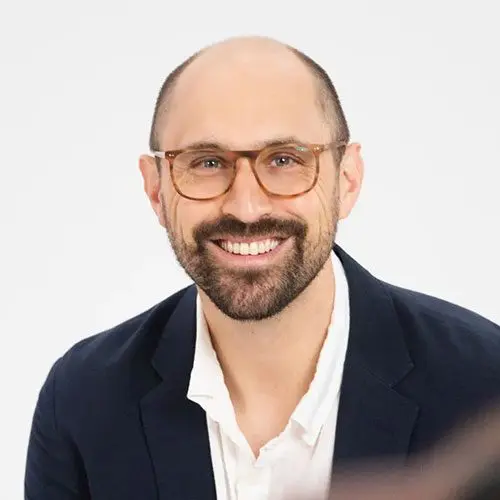
Josh Schachter, Host
SVP, Strategy & Market Development @ Gainsight
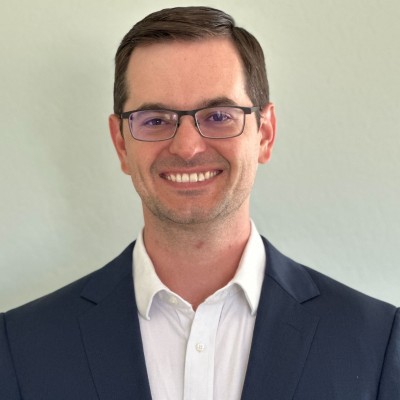
Jon Wishart, Guest
VP Community Strategy & Growth @ Gainsight

Brian Oblinger, Guest
Strategy Consultant
Transcript
Brian Oblinger:
what is community, it’s— what it is for a lot of organizations is thinking about one use case of how can we deliver value or an experience through community. But over time, what you wanna do is try to get all of them. You wanna collect ’em all, right?
And so it’s like, hey, here’s how community is impacting support. Here’s how it’s impacting success. Here’s how product’s using it. Here’s how marketing’s involved. Um, and build the one-stop shop. And that’s often the difference between people who do community good or well?
Josh Schachter [Host]:
If I’m looking at communities in the B2B SaaS world naively, which is often how I look at things, it could, it could feel like a cost center to me. Okay, great. It’s nice. We make people feel good. You know, CS makes people feel happy, right? Happy customers. Uh, no, no, no. We want outcomes. We want GRR increase.
Josh Schachter [Host]:
We want expansion and upsell. How does community do those things when it’s doing it, to quote Brian, when you’re doing community good? How do you do it good and promote GRR? And NRR. You’re listening to Unchurned, brought to you by the Gainsight Podcast Network. Two high school kids in the late ’90s obsessing over PlayStation forums, not playing the games— well, playing the games, but also studying the admin tools behind them. Fast forward 25 years and the communities they help build, AI is consuming them. Traffic is plummeting. The hot takes, say, community is dead. But what if the content is reaching more people than ever? You just can’t see it anymore.
Josh Schachter [Host]:
I’m Josh Schachter, and today on Unchurned, two high school friends turned community leaders on why the real crisis isn’t that community in the B2B world is dying. It’s that we’re measuring it wrong. Hey everybody, and welcome to this week’s episode of Unchurned. I’m your host, Josh Schachter, Senior Vice President of Strategy and Market Development at Gainsight, and I am excited to be here today with two of the leaders of the community— community. We have John Wishart. John is the VP of Community Strategy at Gainsight, and Brian Oblinger. And Brian, uh, is, is one of the, the leaders and, and pioneers and good friend of Erica Kuhl, uh, again, in the community community, uh, and he is a strategic consultant in the community community. I’m having fun saying that one.
Josh Schachter [Host]:
So Brian and John, thanks so much. Thank you so much for being on, on the show today.
Jon Wishart:
Absolutely. Looking forward to it.
Brian Oblinger:
Thanks for having me.
Josh Schachter [Host]:
I, I, I’m not like an insider.— in the community community. So like, tell me a little bit, like you guys are all like big names, I think kind of a big deal. Erica is like the biggest deal. I keep telling Erica she’s like the Oprah of community. Um, I don’t know if that’s, you know, I think that’s a compliment.
Jon Wishart:
You get a community, you get a community.
Josh Schachter [Host]:
That’s exactly it. Right. Uh, I’m like the Oprah of like unchurned hats these days. Um, but, um, so, so how do you guys all know each
Jon Wishart:
other? Well, I think Brian, I guess I can speak for you and I, I think that, uh, goes back into the annals of history. Brian and I actually met in, what was it, junior high, high school, freshman year of high school. So I mean, it’s been a couple decades that Brian and I have known one another.
Josh Schachter [Host]:
Oh, that’s not where I was going. I thought you were— oh, we met at a conference 7 years ago. Like, I wasn’t thinking this is like, you know, high school freshman year.
Brian Oblinger:
I’ve tortured him much longer than that.
Jon Wishart:
Yeah, no, this is the depths of teenage awkwardness. Shared traumas have been bonded together. So we’ve known each other for a long, long time. And I think, uh, you know, ironically, one of the roots of that friendship was both being gigantic video game nerds. And so a substantive amount of our time was spent on the PlayStation forums. And I can recall, I, I mean, dozens of conversations, Brian, of like extremely geeky conversations about like, what’s the admin tool behind this thing look like? How are these moderators moving content out? So I mean, that’s like the genesis of some of our initial conversations.
Josh Schachter [Host]:
So I, I’m actually catching up on Stranger Things right now. I’m, I’m nearing the end of season 4 and, and so I’m gonna just assume you guys have watched it given you said you’re, you know, video game kind of geeky. Uh, so, so you guys were like, it’s practical.
Brian Oblinger:
Yeah.
Josh Schachter [Host]:
So you guys were like members of the Hellfire Club in high school. Is that, that’s kind of it? That was awesome. Yeah.
Jon Wishart:
The Hellfire Club that no one knew about. Yeah, totally.
Josh Schachter [Host]:
Yeah. Yeah. But you know, you weren’t murdering people presumably. So, um, uh, so in any case, that’s the episode I’m on by the way. By the way, just so for context. Um, so, uh, Brian, uh, well, for going back, what video game, like GoldenEye? What was the, what was the big game back then?
Brian Oblinger:
Uh, I believe back then it was a, it was a game called SOCOM where you were like Navy SEALs. Um, just to really, really get in there for all of the gaming nerds that everybody’s tuned out by now. But that was, uh, that was definitely the game I think at the time.,
Jon Wishart:
and it was like voice controlled. It was crazy, right? You could just like tell your guys what to do via a little like
Brian Oblinger:
microphone you had to wear. AI before AI, baby. We were, we were there. We were doing it in the ’90s.
Jon Wishart:
Yeah.
Josh Schachter [Host]:
Is there a thread that we should pull or not around this, this community that for— this is before Twitch, right? This community that formed around gaming and like, ta-da, guys are leading the community, community, uh, for B2B SaaS later in life. Is there anything to be
Brian Oblinger:
said there? I mean, I think some of it’s just that we’re old. Um, we were there at the beginning of this thing. And so I, you know, I think we were fortunate to kind of just fall into it with dumb luck and we didn’t know what it was gonna be or that, you know, we didn’t, didn’t think it could be a job or a career or a business practice or something with ROI attached to it. You know, I think it was the furthest thing from our minds. We probably didn’t even know what any of that meant back then. Um, so I think, you know, a lot of it’s just a function of, of right place, right time, having dial-up, uh, internet connection and, uh, you know, just riding the wave over the last, whatever it’s been, 25, 30 years.
Jon Wishart:
I, I do think though, there’s like maybe this underlying sentiment that I always think through when it comes to community today, which is there was like an, an enthusiasm and a passion that I think is just like latent in a hobby, right? Like by its very nature, that’s what draws you to it. And I think this was at a point in time where the business world was sort of waking up to, oh wait, people are having these experiences outside of the context in which we are used to interacting with them, but they kind of expect it to manifest in the way that we’re engaging with them nonetheless. So I do think that like gaming and, and hobbies generally did sort of pave the way for how businesses could think about how do we tap into that enthusiasm? How do we bring our own enthusiasm? Into that conversation.
Josh Schachter [Host]:
Yeah. And, and Erica Kuhl, you know, our executive vice president of our community side of our business, where did she come into
Jon Wishart:
the picture?
Brian Oblinger:
Um, well, I had been, uh, floating around in the same orbits as Erica for decades. Um, met her a couple of different times and then in, uh, 2019 I moved to Denver and was looking up local people in Colorado, and, uh, Erica was one of the people I just reached out to and said, hey, we’d love to buy you, you know, a coffee or a sandwich or whatever. And, um, we got together and had some great conversations and have been best buddies and podcast partners and, you know, all kinds of things since. And, uh, yeah, she’s probably really tired of me by now, but, uh, there’s nothing she can do about it.
Josh Schachter [Host]:
Yeah. So it was a budding relationship.
Jon Wishart:
Okay.
Josh Schachter [Host]:
Um, Community in B2B SaaS, what is it?
Jon Wishart:
It’s a great question, right? ‘Cause I think it is something that for a lot of organizations, they are either like in one of two extremes. It’s, we have never done this before and we don’t know what it is or how to do it, or, eh, we’ve been doing this thing for 25 years, right? Like old news. And so I think fundamentally at the core, what unites those things together, community and B2B SaaS, B2B holistically for that matter, is How can we create a venue by which customers can interact with one another and us, the organization? And then the mode at which that organization actually becomes real is gonna be really flexible. I’m sure we’ll talk through some of the nuance and what’s changing around that over the course of our conversation today. But being deeply, deeply reductive, it is fundamentally just a mechanism to bring together customers with one another and customers with the brand and vice versa, brand to customer. I think about it in that pretty straightforward, simplistic way. Brian, I’m sure I’m removing a ton of nuance that is worth layering on top of that.
Brian Oblinger:
Yeah, I, I, I think we should talk a little bit about use cases. Um, you know, I often talk about the, the eras of community, um, which usually when I have that conversation revolves around ownership, but also brings in the use case discussion. And so what I mean by this is You know, way back in the late ’90s, you know, early 2000s, communities in companies were almost always owned by support, right? Um, and were a mechanism for case deflection, support cost management, and the like. Um, you know, that’s still a through line today that hasn’t gone anywhere. Still a very valuable use case and a good one to start with if you’re not sure where to start. Um, you know, somewhere in the 2015s you started seeing, thanks to, I think in part to Gainsight, you started to see, uh, success teams. You had a lot of chief customer officers, chief experience officers thinking about community and how to use it as a, you know, go-to-market tool, but also, um, you know, kind of scaling success, right? So we heard all these phrases, scalable success, and like, you know, whatever all those have been. Um, There was definitely a, you know, a period of time kind of around COVID where marketing largely drove communities because they had unspent event budget that they couldn’t do, so they repurposed it.
Brian Oblinger:
So you saw a, a huge explosion of communities with marketing use cases, advocacy. That’s where today customer marketing, um, I think was sort of born out of, you know, what took place, uh, there in, in that time period. And, um, you know, there’s many other ones. Hey, how does product think about community? You know, developers, um, on and on and on. And so what we often talk about is, you know, to answer your question, Josh, like, what is community? It’s, it’s more like, what is it, but what could it be? And so what it is for a lot of organizations is thinking about one use case of how can we deliver value or an experience through community. But over time, what you want to do is try to get all of them, you want to collect them all, right? And so it’s like, hey, here’s how community is impacting support. Here’s how it’s impacting success. Here’s how product’s using it.
Brian Oblinger:
Here’s how marketing’s involved. Here’s how, you know, depending on your organization, like DevRel might be in there, education, how does that get integrated, right? Um, and build the one-stop shop. And that’s often the difference between people who do community good or well, um, they might have one or two use cases and the companies where, you know, we look at them and say, wow, like that’s a really great community and experience they’ve built. Like what makes it better than the others? It’s often that they’ve covered their bases in doing as many of the use cases and, and value drivers as they can.
Jon Wishart:
I, I mean, I tend to think of community having found its most natural place with customer success at this point in that Customer success is used to dealing with— the perception of a customer does not follow your departmental organizational structure, right? Like it just doesn’t. And I think CS recognizes that, that it’s ultimately about, are we delivering for the customer irrespective of where organizationally that responsibility might fall? And I think that’s where we’re seeing, to Brian, your point of CS teams recognizing, oh, community can help serve a lot of these different mechanisms, right? That we’ve had to sort of push to other teams and struggle with ownership paths. Starts to erase some of that, that confusion on the part of the customer that’s able to interact with it on the front end of the community itself.
Josh Schachter [Host]:
If I’m looking at communities in the B2B SaaS world naively, which is often how I look at things, it, it could, it could feel like a cost center to me. Okay, great. It’s nice. We make people feel good. You know, CS makes people feel happy, right? Happy customers. Uh, no, no, no, we want outcomes. We want GRR increase. We want expansion and upsell.
Josh Schachter [Host]:
How does community do those things when it’s doing it, to quote Brian, when you’re doing community good? How do you do it good and promote GRR
Brian Oblinger:
and NRR? Yeah. Well, I, I think the great thing about communities is they, they’re doing this, um, and they often do it, you know, whether we know it or not. I think the real question is how do we measure it? How do we think about it? Um, you know, historically in communities, we’ve often measured what I would call operational metrics, right? Think so, you know, what’s— how many cumulative users do we have? How many posts did we have? How many likes, you know, engage, you know, engagement, whatever that means. Um, and so what you’re starting to see is exactly what you just described is a shift to, okay, cool, we have 10,000 posts and a million members and, you know, whatever those numbers are. How do we contextualize that in the sense of a business? And so how do we take the data and the analytics, you know, that are in these communities and community platforms and blend them with the rest of our business data to get a sense of how is community participation or not contributing to, you know, churn reduction or cost reduction or more leads or higher quality leads or, you know, again, again, back to those use cases, like my methodology is always to just go to each leader of a department inside of a company and say, what do you care about? What are the problems you’re trying to solve? What do you measure? And it’s not like community’s the silver bullet that’s gonna solve all of those things, but what we can start to do is say, okay, success, you know, you’re really worried about time to value. You’re worried about how educated customers are. You’re worried about satisfaction. And of course renewals, those might be some good threads for us to pull on with the analytics analytics team to see, you know, it’s usually cohort analysis.
Brian Oblinger:
So it’s, you know, do people that participate in community, are they X times or Y times more or less likely to do something? Um, and that gives us a sense of the directionality of how valuable community might be. And then from there we can drill down and, and try to build some more specificity in, in numbers.
Josh Schachter [Host]:
So it may not be causation for, for renewal, but it can certainly be correlation. And, and John, um, since you are in, in the software world here with us, Um, how often is, is creating those cohort analyses and, and, and identifying the correlation, you know, to, to healthy customers, is that often difficult for companies? Is there, are, are there constraints there? Is it actually a pretty simple exercise
Jon Wishart:
to do that math? Yeah. Can I be obnoxious and say the answer is both, right? Like, I think both things are true there where for organizations that have access to that data, again, I’m gonna err on the side of, of being a little bit reductive here. If you’ve got the data, it really is just a matter of stitching it together, right? If I am able to know, here’s Brian in my community and here’s Brian in my CRM, I can then say, okay, here’s Brian holistically. Here’s everything that he’s done in community longitudinally against a timeline. Here’s everything that he’s done with us contractually. I can then start to line those things up. That is not incredibly difficult. Where I think organizations run into challenges is what I’m describing is, is probably a scenario that, you know, most folks within an organization would be like, oh, it’d be so great if all of our data was lined up so cleanly.
Jon Wishart:
We all unfortunately live in the real world where our data’s messy. It’s all over the place. It’s across many different systems. That tends to be the challenge is sometimes quite literally just the logistics of who owns this, who, whose desk do I have to go knock on in order to, you know, get this number, uh, in, in front of me. So that’s part of that challenge, but I think to Brian’s point, it is a existentially important challenge to address for a community team, right? To be able to go in and say, here is what we are doing and the data that backs it up. I, I, I mean, I’ll, I’ll try not to make this too navel-gazy, but like, that’s part of what drew me to Gainsight, right? Is the ability to have that community data paired with the broader customer success data. Without a lot of that effort, there’s a lot of power in that, right? To be able to go in and say, look at these people in my community who are engaging at this rate. They have a 2x likelihood to renew, but if we can get them to 100 posts— I’m making up an arbitrary number here— you know, then they’re 3x more likely to renew.
Jon Wishart:
That starts to give us markers for like, okay, what programs do we drive? How do we start to drive against specific metrics that I can then tie back to and look what it’s doing for the broader business. Not just, cool, look at this person’s got, uh, 350 posts. It’s tied back to impact to renewal. And we do see that, like what Brian talked about earlier is not theoretical. Our customers see that. They see that folks who participate in community have higher retention numbers, 2 to 3x, that they’re spending more money, and that they are cheaper to support.
Josh Schachter [Host]:
And then— 2 to 3x, that’s a pretty good milestone. I mean, or, or benchmark. Is that— would Brian, would you agree as far
Brian Oblinger:
as the, the correlation with community? Yeah, it, it varies greatly by organization. You know, John knows better than I do because he’s got access to hundreds of, you know, um, companies worth of data. But I, I think it goes back to your original point, Josh, about the co— how the conversation changes internally, right? Um, when you, when you, you know, I’ve been in the VP of community, you know, and you go to sit in the CFO’s office at budget time and you’re like, hey, I need another forehead count and another, half a million dollars or like whatever the ask is, right? If their perception at that moment of community is, oh, this is a cost center, right? You’re asking for more money to cover costs, um, versus going in with what John and I have been talking about of like, hey, did you know that people that are in community are X times more likely to do this, or they buy more stuff, or they’re happier, or they stay longer, or they advocate for us more. Whatever those key, you know, KPIs, metrics are, those insights, all of a sudden they— it flips in their mind and community’s an investment now, right? Um, and so instead of like, hey, I need more money to cover these— this cost center, the conversation becomes, look what I did with $2 million. Imagine what I could do with 3. And then it’s, it’s a whole different, you know, ballgame. It’s a whole different situation. And again, that’s the difference between, you know, good and great, uh, when you
Josh Schachter [Host]:
look inside organizations and how community’s executed. What’s, um, what’s up with AI? How, how is AI changing the game?
Brian Oblinger:
I’m just hearing this now for the first time. Is this, uh, what is this?
Josh Schachter [Host]:
Yeah.
Brian Oblinger:
Yeah.
Josh Schachter [Host]:
Yeah. What are you vibing these days, Brian? No, but, but we could talk about that too, but, but yeah, like what, how is AI changing the game for community?
Jon Wishart:
I mean, this is such a broad topic and I think there’s, there’s a lot of different elements of community that are being touched on it. Maybe I’ll, I’ll attempt, and Brian, you can poke holes in this, to like break it into a couple of different buckets. I think there is a thread of conversation worth us having around how is AI changing traffic dynamics to community, like inbound, how are people discovering and benefiting from community? I think there is then the one side—
Josh Schachter [Host]:
You’re talking about, you’re talking about like A, AEO or GENEEO, right?
Jon Wishart:
Exactly right. Yeah. Yeah.
Brian Oblinger:
Yeah.
Jon Wishart:
Exactly right. And, and I think there’s then two other elements that are probably of interest, but maybe, you know, a separate conversation. That’s once I’m in the community, what does that experience that is being supported by AI look like? Ease of searching, ease of constructing content, chatbots, like any number of things that are kind of more user-facing features. To my mind right now though, the biggest area of impact is that first one. It’s how am I actually being directed to— community content, maybe before I just start riffing on that. Brian, is that, that pass a gut check with you too? Is that where you’re seeing kind of
Brian Oblinger:
the biggest impact right now? Yeah, I, I think that’s exactly right. And it’s, it’s very misunderstood, right? So maybe what we should do here is try to break this down in like, without the jargon and the doom and gloom, right?
Josh Schachter [Host]:
No, no, no.
Brian Oblinger:
Only jargon on this podcast. Jargon only. Okay. Sorry. Yeah.
Jon Wishart:
What was I thinking?
Brian Oblinger:
I’ll circle back around to that, Brian. Yeah. —have to LinkedIn-ize, uh, this, this discussion. Um,
Josh Schachter [Host]:
I’m taking that as an insult, but that’s okay. We’ll
Brian Oblinger:
move on. Let me take a stab at this and, uh, John and Josh, you can tell me if, you know, this makes sense or if we should tweak it. Um, what’s really happened is that we have not erased or declined or reduced or any of those types of words. What we’ve done is we’ve moved the experience, right? So LLMs are consuming community content and training against that content. And where users are going to now experience that content is the prompt window, right? Uh, or Google or DuckDuckGo or Bing or whatever. And they’re getting the summaries, right? Of like, hey, here’s the answer to your question. And at least in part, some of those summaries have community content as a source, right? Mixed in there. And so what’s happening is, as we all look at our analytics, right, whether that’s, you know, onboard Gainsight community analytics or Google Analytics, like third-party things, people are seeing these massive declines in traffic and, you know, people showing up to their, you know, community.company.com site., and their first reaction is, oh my God, community’s over, right? Like communities are dead.
Brian Oblinger:
There’s no one gonna be there. They’re compl— you hear all this kind of like doom and gloom and what’s actually happened for people, there’s kind of this emerging, um, practice where people are trying to, back to our data conversation earlier, people are trying to stitch it together now of like, okay, we have data and information over here in our community platform. And then there’s things that are happening on Claude and ChatGPT and Google and Bing and,, you know, inside of software development environments. And it’s really hard right now to piece all of that together. But people that have tried, there’s been a bunch of, like, for Stack Overflow, for example, has done a bunch of work on this. It might actually be the case that your community content is being surfaced more often now in these search overviews and, you know, responses with chatbots than they were when people were, you know, going to Google and clicking a link and coming to your property, but you just don’t have a line of sight to that like you used to. So this is causing a lot of consternation. People are really worried.
Brian Oblinger:
Um, I don’t have all the answers right now other than to say, I think we need to see how this plays out. And I think community is still— and the content of the people in it are still extremely valuable. And then we can, I guess I’ll pause there, but we can talk about, okay, now what do you do about it on the community side? Like, what is the future of community look like, but my message to folks here is don’t panic. Um, it’s very early. We’re all trying to figure this out, but the worst thing I think you could do is assume that community’s over and we don’t need it anymore and all this kind of stuff that you see
Jon Wishart:
on the, the hot takes. Yeah, I mean, that, that totally jives with what I’m seeing too amongst both our customer base, organizations I’m talking to that are exploring community or a new community, whatever the case might be. Which is the substantive underlying value proposition remains unchanged, if not improved, honestly, right? It is like the scale at which community impact can now be surfaced is higher than ever. The burden is lower on the community member, or the recipient of knowledge, maybe is, is a more fair way of saying it. That’s lower than ever. What’s changed is a metric developed in the early 2000s is no longer serving us. And at the end of the day, like, It’s probably a good forcing function, right? We have relied on the crutch of natural Google traffic and views and visitors far longer than a lot of other tools and technologies were able to do. So now it’s our turn, right? To rethink what does it actually mean for a modern 2020— I almost said 2025— 2026 community to measure, right? It’s probably not counting the number of people that walked through my front door.
Jon Wishart:
Of the community. We
Brian Oblinger:
can get a little bit more nuanced than that. And, and someone helped anywhere is still someone helped, right? Just because it’s not happening on your domain where you can measure it doesn’t mean it’s not valuable and it doesn’t mean it didn’t help someone. And it, you know, I think this is sort of the big philosophical thing people need to understand is I get that you can’t measure it like you used to or like you want to right now, and that that’s giving you anxiety. But if someone goes to Google and types in, you know, hey, how do I XYZ ABC 123, and it spits back the answer that’s in part informed by the content, you know, on your site, job done. Like, congratulations, you helped that person. You might have deflected a support ticket. You might have deflected a call to the CSM. Um, it’s all good, right? It’s good news.
Brian Oblinger:
Uh, but for whatever reason, we’re, we’re acting
Josh Schachter [Host]:
like it’s, uh, the end of the world sometimes. By the way, it, it might have deflected a, a, a different response coming from like a Reddit or a property that you don’t own, that you don’t have control over. That might not have been the response that you wanted to show up. Right. So there’s also that aspect of it as well. Yep. So do, do teams need to adjust in
Brian Oblinger:
any way for, for this horizon that we’re in? Yeah. Yeah, for sure. I mean, uh, John, maybe I’ll, I’ll start and kick it back over to you, but What I’ve been telling people is that communities, you know, they will not remain unchanged and, you know, like we should evolve them. And my take at this current moment, and we can all come back to this in, you know, 2 years or 5 years and, you know, decide if I was right or wrong, um, is that communities will evolve to be about the things that AI is not necessarily good at or will not conquer anytime soon. Which is the connection, belonging, networking thing, right? So if you think about, again, back to the eras that we talked about earlier of like, hey, communities were about support case deflection and building content and that sort of thing. Going forward, communities are probably— and already starting to see this with a lot of company strategies around this, um, becoming much more centered around events and networking and, you know, the human connection side of it, um, job boards, you know, the, these kinds of things that, that maybe AI isn’t going to solve so soon. And again, we’re seeing that with CS and we’re seeing that with customer marketing. They’re both in that mindset.
Brian Oblinger:
And so I think you’re going to see a lot of evolution there. I don’t think it’s going to be like, oh wow, this is completely different. We’ve never seen this before. I think it’s a lot of the things that a lot of communities have been doing, just a changed focus or spotlight on more of the event and engagement and human-driven side of it, which ironically still yields more content for the LLMs to, to absorb. So,
Jon Wishart:
you know, everybody will win in that scenario. Well, and I guess I, I don’t disagree with any of that. And I think what is so interesting to me is fundamentally for most of the community practitioners and professionals that I speak to, It’s that connection and ability to talk to other folks. That’s what pulled them into the space in the first place, right? There, there aren’t many folks who were like, what I’m really interested in is answering the same question 300 times a week until the rest of— for, for the rest of time, right? Like, that’s not what pulled folks in. It was the ability to have those conversations, to connect with folks. And it was just that constant barrage of, I’ve got a question, I’ve got a question, I’ve got a question that was important to answer. That I think maybe counterintuitively started to pull focus from some of those other connection conversations. There, there’s a framework that I’ve used before that’s— it’s a little kitschy, but I find it useful nonetheless, which is most people’s journey historically into community was, was generally a how do I kind of question, right? How do I fix error ABC? How do I XYZ? Like ad infinitum.
Jon Wishart:
And I think what we are finding with AI is it’s pretty good at answering the how do I questions, right? It is summarization and synthesis, uh, you know, being, you know, brought to the masses. What that starts to then unlock for us are the, okay, now I know what I had to do to get over my issue. Brian, how do you use the same tool, right, to accomplish a different task at your company? Now, Josh, how do you— like, it starts to expand my purview of conversation past just help me fix my issue to learning from one another. I think will then ultimately sort to manifest in a, well, what if we collectively did something together? What if we started hosting events, you know, created user groups? What if we started to provide, you know, feedback on product, uh, suggestions and enhancements? So, so I think counterintuitively that like, as all of this changes, what it’s actually doing is slowly turning the spotlight back on the stuff that I think most community folks got into the space for. It’s just hard to see right now because
Josh Schachter [Host]:
we feel the uncertainty with measurement programs. From how do I to how do you to how do we— I think we found the title of our podcast here. John, are you aware of any ways that this is impacting our Gainsight community product as far as like our feature development, our feature roadmap, where we see things
Jon Wishart:
going and, and the needs for that platform? Yeah, a— absolutely. I mean, I think there’s a lot of things that this bears in terms of supporting technology. I think the first of which is, it’s sometimes it’s like the, the unsexy component of software, but it’s, it’s like scale and visibility, right? Implicit in a lot of these conversations are the AI tools, the LLMs are able to access your content. It’s coherent, it’s digestible, it’s easy to repackage back out. In their tools. I think there’s a huge component on there that is easy for folks to miss ’cause it’s, it’s sort of definitionally behind the scenes. That’s a huge component of it. I think the second element of that is then if communities are going to be changing in this way, what is the form that people are going to engage with one another? It’s placing additional emphasis around things like user groups, like Brian mentioned, it’s events.
Jon Wishart:
It’s product enhancement requests. It’s things that are similar, but slightly askew from the traditional forum-centric approach to community, which still has its place, but is going to become more diversified. So I think there are absolutely some threads around how do we continue to build out some of those tools. The third area that I think I’d hit from kind of like a product level is, again, it’s, it’s sort of a, like a, we’re back in this cycle of these are the experiences— asking a search engine now a question and having it provide to you the response rather than here’s a table of links that you can go do your own investigation. That dynamic, that expectation’s gonna carry to community too, right? Just ’cause I’m not on a Google search doesn’t mean that I am grading on a curve, right? I’m not like, oh, you know what? I’m in a community and so I can understand that it’s not gonna have the same robust set of capabilities as Google. That expectation on the part of the community member is the same. So there’s going to be a huge emphasis around how do we start to package up answers in search results? There’s been some work that our teams have rolled out recently that does just that. It’s going to be things like summaries of long conversations, whole tranche of like AI in community efforts to again, create this parity of expectation and experience for community members so that it’s not a drastically different experience.
Jon Wishart:
When they do end
Josh Schachter [Host]:
up natively in the community. I wanna end on this question for both you guys and on the beginning. So if you are a new community manager, a company that is just going from zero to one, what are the first
Brian Oblinger:
steps that both of you respectively would take? For me, it’s about fundamentals, right? As much as we’re talking about AI and the future and all of these things, One thing that has been true, and I think will continue to be true well into the future here, is that you can dress up your community with the, you know, the greatest design and, you know, AI all over the place and like all this stuff. You still have to do the fundamentals, right? Um, and so thinking about, you know, what is the sh— what is the information architecture of our community? You know, how are people going to discover the content and other people that they want to find? What are the integration points with, you know, our, our learning system, our help center, our support portal? Um, these are all the deeply unsexy, you know, things that we’re talking about, but these are the fundamental building blocks of, of communities that I think a lot of people forget about or blow past or, you know, kind of give short shrift to in search of like, what’s the new cool, you know, sexy thing. And so my advice would be to think about those core pillars. You know, there’s probably 4 or 5 of them: people, content, programs, and then of course tech and design. Um, and make sure you have a really great plan across all of them and just build, you know, slowly over time. And then once you’ve done some of those and you get some success, then you can You know, think about the future and, you know, all of these sorts of things. Um, I landed the other day in some, like, what was it? The, the new, like, community that’s all agents talking to each other. Deeply not interesting.
Brian Oblinger:
This, this is my hot take, right? Just like not interesting at all. You look at it for like 5 seconds and it’s like, okay, great. It’s a bunch of bots talking to each other. Where are the people? You know? So
Jon Wishart:
I think the fundamentals, uh, will forever be important. Yeah, and I think from, from my vantage point, I don’t disagree with that in the slightest. I think the fundamentals remain the fundamentals, you know, for that very reason. I, I think there are, I don’t know, 2, 3 things that I think are distinctly different that if I were starting something from scratch today would be different from maybe how they were tackled before. I think the first to my mind is content governance is arguably more important than ever, right? Is this content that is no longer relevant and accurate worth maintaining? There was a cogent argument 3 years ago, right, that said, keep everything, delete nothing. It’s someone’s path in to then get them to something right. I think that argument is completely reversed now. It is just a path for misinformation and wrong answers being provided at scale now.
Jon Wishart:
So I think it’s like content governance upfront. The second area that I think is substantively different today is thinking through what would a superuser program for my community look like? Again, historically, that has largely taken the form of question answerers, by and large, and there will still be a role for that. But the very nature of this new era is we’re not going to need as many answerers of the same question over and over and over. So what does that free up these advocates’ time to do that isn’t just answering that question for the 900th time yet again? I think that has a lot of implications. How are you rewarding those folks, recognizing them, searching for them? It’s just a different profile than I think a lot of community teams are used
Brian Oblinger:
to working with. Yeah,
Josh Schachter [Host]:
that makes a lot of sense. Brian, where— you’re a consultant for companies that are spinning up and growing their communities. Where
Brian Oblinger:
can folks find you? Uh, in the communities where all the agents are talking to each other is the primary place that I would— no. Um, yeah, brianoblinger.com or LinkedIn. I’m
Jon Wishart:
everywhere. Uh,
Josh Schachter [Host]:
yeah, go find me there. Great. Brian and John, this was a great time. Glad to, glad to intrude on two high school buddies here. Yeah.
Jon Wishart:
In
Josh Schachter [Host]:
all things community. And, um, thank you for educating me and
Jon Wishart:
the rest of our listeners. Thanks for having me. Absolutely. Thanks, Josh.
[Un]Churned is the no. 1 podcast for customer retention. Hosted by Josh Schachter, each episode dives into post-sales strategy and how to lead in the agentic era.
Browse Series
Subscribe on