
What happens to growth when customer value and revenue are managed by different people with separate goals?
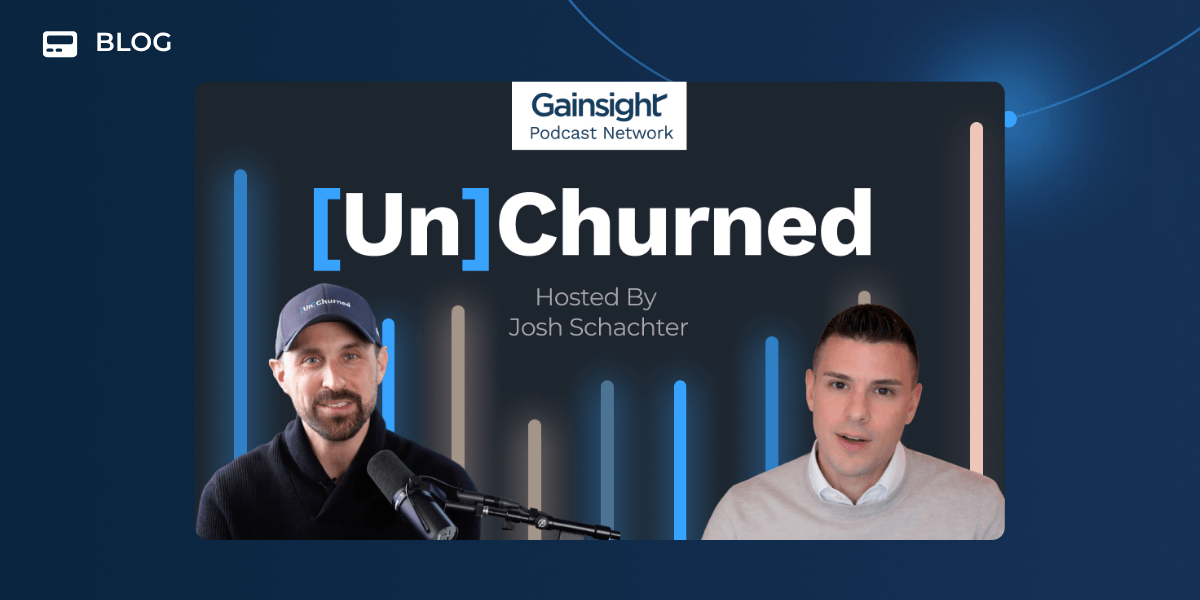
Brad Casemore, Chief Customer and Growth Officer at PartsSource, has a clear answer. Nine months ago, he combined the CCO and CGO roles at a 750-person healthcare tech company where equipment downtime can halt care. On a recent [Un]Churned episode, he explained how he built his team, what he learned leading growth, and how one business segment improved retention from the low 90s to 99.6%.
Key Takeaways
- CS already owns the post-sales revenue motion. Renewals, expansion, and NRR live in CS. The question is whether the org structure reflects that or works against it.
- The CCO/CGO role merger isn’t just a title change. It requires a mapped lifecycle, an attribution discipline that connects CS activity to revenue outcomes, and a proactive operating model underneath it.
- CS teams are leaving attribution data on the table. Sales and marketing track which touch points drive conversion. Most post-sales teams still don’t apply the same rigor to customer outcomes.
- Shifting from reactive to proactive is the lever that moves retention. One part of PartsSource’s business went from the low 90s to 99.6% after making that shift.
The conversation about CS and revenue has graced many conference hallway conversations, but the org design is still catching up. Most SaaS companies still treat retention as a CS outcome and growth as a sales outcome. They have two separate motions with two separate owners. But this outdated model doesn’t fit the world we live in today. With NRR being the north star of company health, retention is the revenue motion. CS isn’t adjacent to growth; it’s the engine of it.
Brad’s structure at PartsSource is what that looks like in practice. He rebuilt the org around the idea that delivering customer value and driving revenue growth are the same job.
Putting the Revenue Debate to Rest
When Sales and CS manage different aspects of the customer journey, it’s easy to assume that revenue growth happens when the deal closes, and retention happens afterward.
Brad’s experience running both functions at PartsSource as CCO and CGO shows that the old assumption doesn’t hold up when customers buy more because they see real value. “When you drive customer value, growth just comes,” he said on [Un]Churned. “Customers are bringing more problems. They want more of your help, which ultimately drives growth.” If that’s the case, the person who delivers value should also drive growth as part of their CS role.
What Changes When CS Has a Revenue-Focused Leader
Brad now oversees sales engineering, sales operations, sales enablement, Customer Success, onboarding, and account services at PartsSource. He ties them together through what he calls “commercial excellence”: a single, clear view of the customer journey from first contact to renewal and expansion.
The biggest change for Brad was focusing on attribution. Sales and marketing have always tracked which campaigns and outreach methods work best. But post-sales teams usually just look at customer health and churn, without digging into which actions actually drive results. Brad’s time leading growth changed his approach. “Are we continuously evaluating all of our touch points with customers?” he asked. “Are we understanding what’s driving value, what’s driving outcomes, what’s driving the best ROI? I don’t think I’ve traditionally gone to that level.” Now he does, and he believes CS teams are missing out on valuable attribution data that could help them set better priorities.
CS leaders thinking about this model should first develop a way to link CS activities to customer outcomes, just like sales links outreach to pipeline.
Is your post-sale revenue slipping through the cracks? See where opportunity is hiding in The Revenue Leak Repair Manual.
What Happens to Retention When Revenue Growth Sits In the Customer Success Org?
Brad’s results speak for themselves. On [Un]Churned, he shared how in one portion of the business, his team moved from reactive customer service to proactive outreach, using Staircase AI to focus on higher-risk accounts. Retention in that segment rose from the low 90s to 99.6%.
Switching from reactive to proactive might sound like a small change, but it’s actually a whole new way of working. Reactive CS waits for things like support tickets or missed renewals. Proactive CS looks for early signs and acts before issues arise.
Because of these results, Brad is rolling out the model across the business. He’s using AI agents to process renewals at scale, allowing his team to focus on proactive engagement with thousands of accounts. The agents handle the tasks, but his team is still responsible for the results.
CS Already Delivers Outcomes. Does Your Org Reflect That?
CS already owns the post-sales revenue motion, including renewals, expansion, and NRR. So, your org structure should reflect that accountability, not obscure it. New business acquisition is a different motion with different skills, and nobody is suggesting CS take that on. But when CS executes the post-sales motion without owning the revenue number, accountability gets split. The team delivering value and the leader tracking revenue growth are measuring different things, and that gap is where expansion and retention targets quietly slip.
What Brad’s model actually requires is harder than the title change. You need a mapped lifecycle before you restructure, so pre-sales and post-sales are genuinely pulling in the same direction rather than just reporting to the same person. You need an attribution discipline that connects CS touch points to revenue outcomes, the same way sales connects outreach to pipeline. And you need a proactive operating model underneath it, because the real shift comes with how your team spends its time.
When customers buy more because they’re succeeding, the person best positioned to drive growth is the person who owns their success. Most CS leaders already know this. Now it’s time to make sure your org chart tells the same story.
See How Leaders are Reinventing Retention
Every week on the [Un]Churned podcast, host Josh Schachter talks with post-sales leaders working on retention, expansion, and the shift to agentic CS. Listen to the full episode with Brad Casemore of PartsSource and more from CS leaders here, and subscribe to the [Un]Churned Substack for weekly deep dives delivered to your inbox.
