
Ever notice how some teams try new software, but only a handful of people actually use it after the first week? Real value happens when user adoption goes beyond the login screen.
If you want your product to stick, you need a strategy that turns first-time users into loyal champions. Here’s how to make user adoption the secret engine behind your company’s long-term growth.
Main Takeaways
- User adoption is when customers use your product to create real value in their workflows.
- Effective user adoption strategies require identifying key activation points and creating structured, personalized onboarding experiences.
- The best adoption metrics show which actions lead to long-term success.
- Alignment between Product, Customer Success, and Operations helps spot churn risks early so teams can take coordinated action.
- Combine data insights, real-time feedback, and a mix of automation and human help to boost product adoption.
What Is User Adoption?
User adoption is when customers begin using your product regularly to bring real value to their business.
Acquisition gets people through the door, and onboarding shows them around, but adoption is when they decide to stay. It’s the difference between a trial user and a loyal customer who advocates your product.
Why User Adoption Matters for Your Business
User adoption is one of the first significant milestones in the customer journey. This makes it central to any recurring revenue business model.
Successful user adoption has major downstream effects on customer success metrics, like:
- Net revenue retention (NRR)
- Churn
- Net Promoter Scores (NPS)
The more users engage with your product, the more open they’ll be to upsells and expansions. In enterprise SaaS, adoption trends often signal renewal risk, appearing months before contract decisions are made.
A strong user adoption strategy and continuous measurement help you spot trouble and intervene before customers churn.
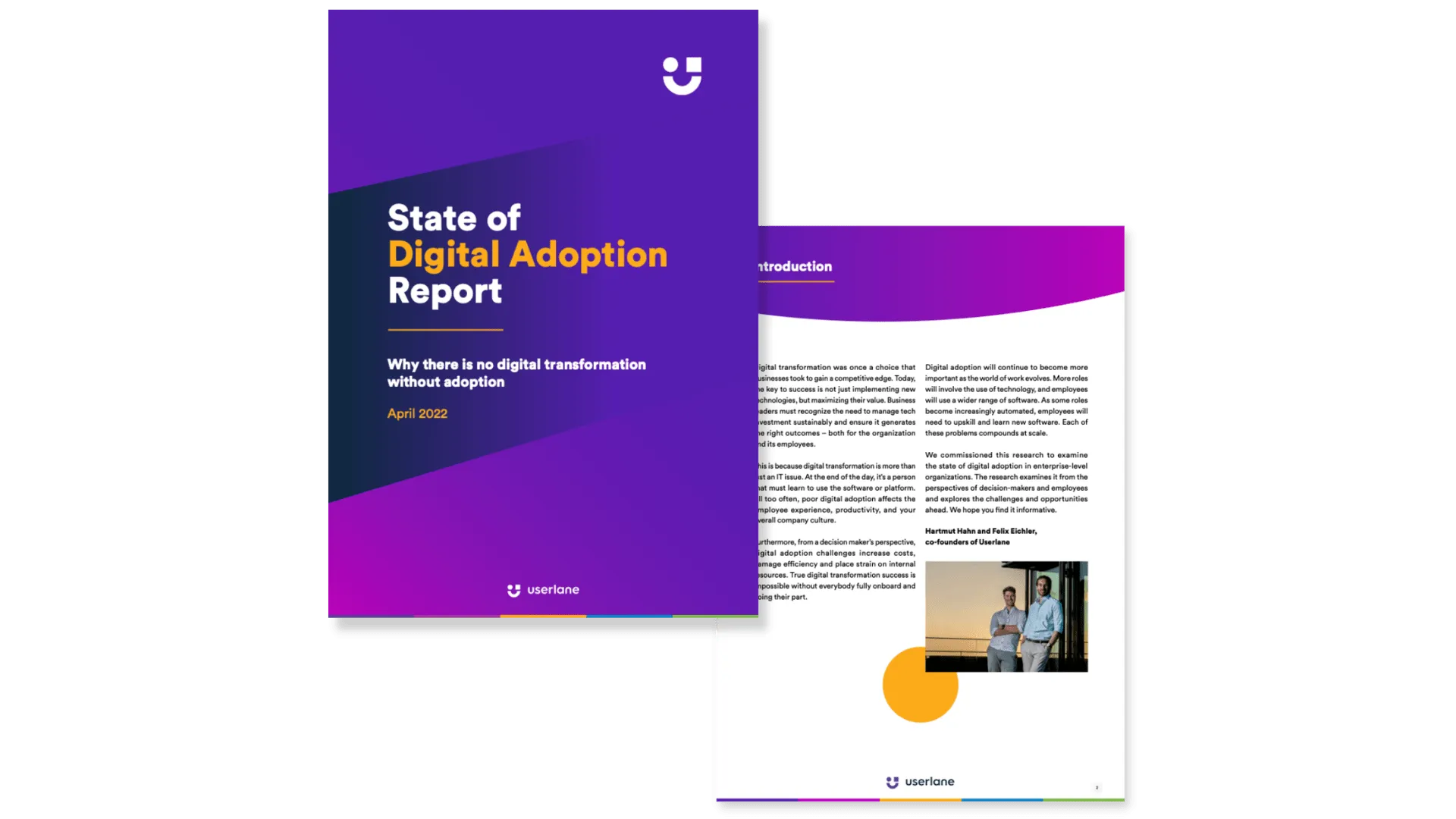
Did you know? 96% of businesses have faced challenges due to poor digital adoption, according to a Userlane study.
Want Real-World Examples of Adoption Done Right?
If you’re building a user adoption strategy, it helps to see how other teams turn adoption signals into retention, expansion, and durable growth. Explore Gainsight’s customer stories to see what strong adoption looks like in practice.
What Metrics Should I Use When Measuring User Adoption?
Knowing which product adoption metrics to track starts with understanding the basics of your product.
First, identify user key actions. These are customer behaviors that signal regular product usage and real value.
Then look at:
- Time to First Key Action: How long it takes a user to perform a key action after initial onboarding.
- Onboarding Completion: How many users finish the product’s introductory tasks.
- Active Daily or Monthly Users: How many users you have at a certain point in time.
- Average Time in Product: The average length of time spent using your product during a single session.
- Usage Frequency: How often someone uses your product.
- Time-to-Value (TTV): How long it takes for users to get value from your product. This requires identifying the desired outcome or action that represents the value.
Next, look for links to broader customer success metrics like NRR, NPS, and customer lifetime value (CLV).
Tying these together will help you get a sense for how user adoption milestones affect the business. It can also highlight opportunities to improve your user adoption rates.
Who Owns User Adoption?
User adoption is a shared responsibility, but it improves when ownership is explicit. Here’s who influences adoption at each stage:
- Product teams create the in-product experience to boost repeat use and ease workflows.
- Customer Success ensures users reach value after onboarding. This is achieved through enablement, user adoption training, and ongoing support.
- RevOps and Operations define user segments, lifecycle stages, and reporting standards. These keep adoption metrics consistent and actionable.
The best results come when Product, Customer Success, and Operations review signals together and act in coordination.
Your teams should align on:
- What “activation” and “successful adoption” mean
- The thresholds for healthy vs. at-risk adoption
- Defined playbooks for intervention when adoption drops
The 7 Pillars of a Winning User Adoption Strategy
Building effective user adoption strategies requires a structured approach. These seven steps will help you create a platform adoption strategy that drives lasting engagement.
1. Map the User Journey
The adoption journey has distinct phases:
- Onboarding
- Activation
- Habitual usage
- Expansion
Start by mapping the key milestones users should hit to get value at each stage. Identify leading indicators, or early signals of success, as well as lagging indicators, which are outcomes that show up later.
For example, completing a setup wizard is a leading indicator. Weekly active usage is a lagging indicator that confirms adoption has taken hold.
2. Define Meaningful Activation Points
Activation is specific to your product’s value proposition—it’s never just “logged in.” Identify the 1–3 early actions that predict long-term retention.
Look at your most successful customers and work backward. What did they do in their first week that others didn’t?
These actions are your activation benchmarks. Calibrate them based on correlations with retention or expansion data.
3. Build a Structured Onboarding Flow
A strong onboarding flow guides users toward their first “aha” moment. Depending on product complexity, these include:
- Self-guided tutorials
- Tooltips
- Checklists
- In-app guides
The key lies in sequencing actions that quickly lead users toward value.
Track onboarding completion rates and identify where users drop off so you can optimize those friction points. The smoother your onboarding, the faster users reach adoption.
4. Create Personalized Engagement Paths
One-size-fits-all outreach fails because different users have different needs. Segment your audience by persona, plan type, job role, or use case. Then tailor your adoption flows accordingly.
User engagement strategies for product adoption include:
- Milestone-based triggers that celebrate progress
- Behavior-based nudges that surface helpful features
- In-app prompts that guide users toward their next action
- Targeted email campaigns based on usage patterns
Personalization creates a sense of relevance and support that drives faster user adoption of new technology.
5. Use Data to Drive Adoption Decisions
Data from product analytics, session behaviors, and feature usage show how people use your product. Having real-time visibility into who’s thriving and who’s struggling shows you where to focus your efforts.
Build dashboards that tie adoption signals to business outcomes. Then share adoption insights across teams so everyone can act quickly when usage drops or new opportunities appear.
The most effective user engagement solutions in product adoption leverage this data. And know that social behavior also affects user adoption, as reported by UX Collective.
6. Close the Loop With Customer Feedback
Usage data tells you what users do, but feedback tells you why. Use in-app surveys, interviews, or polls to gather feedback at key moments, like after onboarding, or at regular intervals.
This feedback reveals what users love and what’s holding them back. Pair it with your usage data to refine onboarding flows, feature design, and support resources.
The combination of data and feedback creates a complete picture of your adoption health.
7. Measure Success Consistently
Choose a core set of user adoption KPIs and track them over time:
- Activation rate improvement: Are more users reaching key milestones?
- Time-to-value reduction: Are users getting value faster?
- Feature engagement: Are users exploring beyond basic functionality?
- Retention among adopters: Do active users stay longer?
- Expansion velocity: Do engaged users upgrade or expand faster?
Review these metrics at consistent intervals. This data turns insights into action, so you can optimize your user adoption strategy.
Turn Adoption Into a Repeatable System
A strong adoption strategy needs consistent workflows across Product and Customer Success—not one-off saves. Gainsight helps you monitor adoption signals, orchestrate the right interventions, and scale product adoption across segments.
Common Adoption Measurement Pitfalls to Avoid
Even with a solid strategy, it’s easy to make mistakes that derail user adoption. Here are the most common pitfalls and how to avoid them:
- Measuring activity instead of value: Logins and pageviews don’t prove users are reaching value. Focus instead on key actions and outcomes.
- Starting measurement efforts too late: Adoption signals appear early, so begin measuring during onboarding and early usage.
- Ignoring segment-specific behavior: Different personas and roles adopt differently, so customize your approach.
- Collecting data without acting on it: Dashboards are useless without clear owners and playbooks for when adoption dips.
How to Improve Adoption With Automation and AI
User adoption software like Gainsight makes it easy to scale strategies and leverage metrics. For example:
- Smart prompts based on intent and usage patterns can guide users to their next action automatically.
- Predictive adoption signals help you identify at-risk users before they churn.
- Health scoring and journey orchestration enable automated, personalized adoption paths.
Automation supports your adoption efforts by:
- Personalizing onboarding flows based on user attributes
- Triggering in-product guidance and nudges at the right moments
- Running automated engagement campaigns that respond to behavior
- Surfacing insights that help teams prioritize outreach
Automation should scale consistency, but high-risk or high-value accounts still need a human touch. Sometimes, a personal conversation is what turns a struggling user into a successful one.
With the right tools, staying on top of user adoption is easier than ever before.
Adoption Health Checklist
✓ Have you defined your key adoption metrics?
✓ Do all teams see and use adoption data?
✓ Is onboarding mapped and measured?
✓ Are you acting on drop-offs and feedback?
✓ Are automations in place, but not replacing humans where needed?
Ready To Improve Adoption at Scale?
If you want to connect adoption signals to retention outcomes—and act before churn risk shows up—Gainsight can help. Schedule a demo to see how it works for your team and your customer journey.
Turn Adoption Signals Into Growth With Gainsight
Creating an effective user adoption strategy takes effort. However, it pays off in higher renewals, stronger advocacy, and durable growth. Treating adoption as an ongoing, data-driven priority builds user loyalty and drives real business results.
Gainsight helps teams proactively guide users to value and centralizes adoption signals across Product, Support, and Customer Success. Increase user engagement with personalized, timely interactions and omnichannel outreach.
Curious to learn more? Schedule a demo to see how Gainsight powers user adoption success for teams like yours.