Dell Tech's CCO and new VP of AI Strategy explain how Claude cut dev time 60% and why they built a brand-new role to unify AI across CX teams.

199. Claude Code Cut Dev Cycles 60% Then Forced an Org Redesign ft. Margo Martin & Jason Goldsmith (Deltek)
Show Notes
Deltek’s CCO Margo Martin and newly-appointed VP Customer Strategy & Services at Deltek Jason Goldsmith reveal how Claude turned three siloed post-sale teams into one AI-first machine and why they built a brand new executive role just to keep up.
Deltek didn’t just adopt AI. They restructured around it. After Claude and Claude Code cut documentation timelines by 80% and dev cycles by 50-60%, CCO Margo Martin realized her three post-sale orgs (implementation, CS, and support) were quietly duplicating AI work. Her fix? A brand-new “AI convergence” role . And she picked an internal boomerang employee to run it.
In this episode, you’ll hear exactly how they built the business case, picked the right leader, and what’s next on the roadmap.
—
Want the playbook, not just the conversation?
Subscribe for deep-dive, actionable breakdowns from every episode at unchurned.substack.com.
—
What You’ll Learn
– The tradeoff between touchless implementation and long-term customer stickiness
– How Claude Code cut custom implementation timelines by 50-60%
– Why Deltek reduced customer documentation & training time by 80%
– How to spot “AI silos” forming across your org before they cost you
– What it takes to build (and pitch) a brand-new AI strategy role internally
– Deltek’s build-vs-buy framework for AI tools
– How CX leaders are using personal AI “chiefs of staff” day-to-day
– Why Deltek is rebuilding its entire customer journey around AI
– How to balance automation speed with customer stickiness
Timestamps
0:00 – Preview & Intro
1:50 – Meet Margo Martin & Jason Goldsmith (Deltek)
2:45 – What Deltek does & org structure
6:40 – How Claude Code changed everything
10:23 – Duplicate AI efforts & the new VP of AI strategy role
14:45 – Why Jason was the pick
19:10 – Jason’s 30/60/90 day plan
24:10 – Predicting the first team to join Jason’s org
26:45 – Personal AI chiefs of staff
28:28 – Build vs. buy: Deltek’s AI tooling philosophy
32:56 – KPIs and metrics for AI transformation
Featuring

Josh Schachter, Host
SVP, Strategy & Market Development @ Gainsight

Jason Goldsmith, Guest
VP Customer Strategy & Services @ Deltek
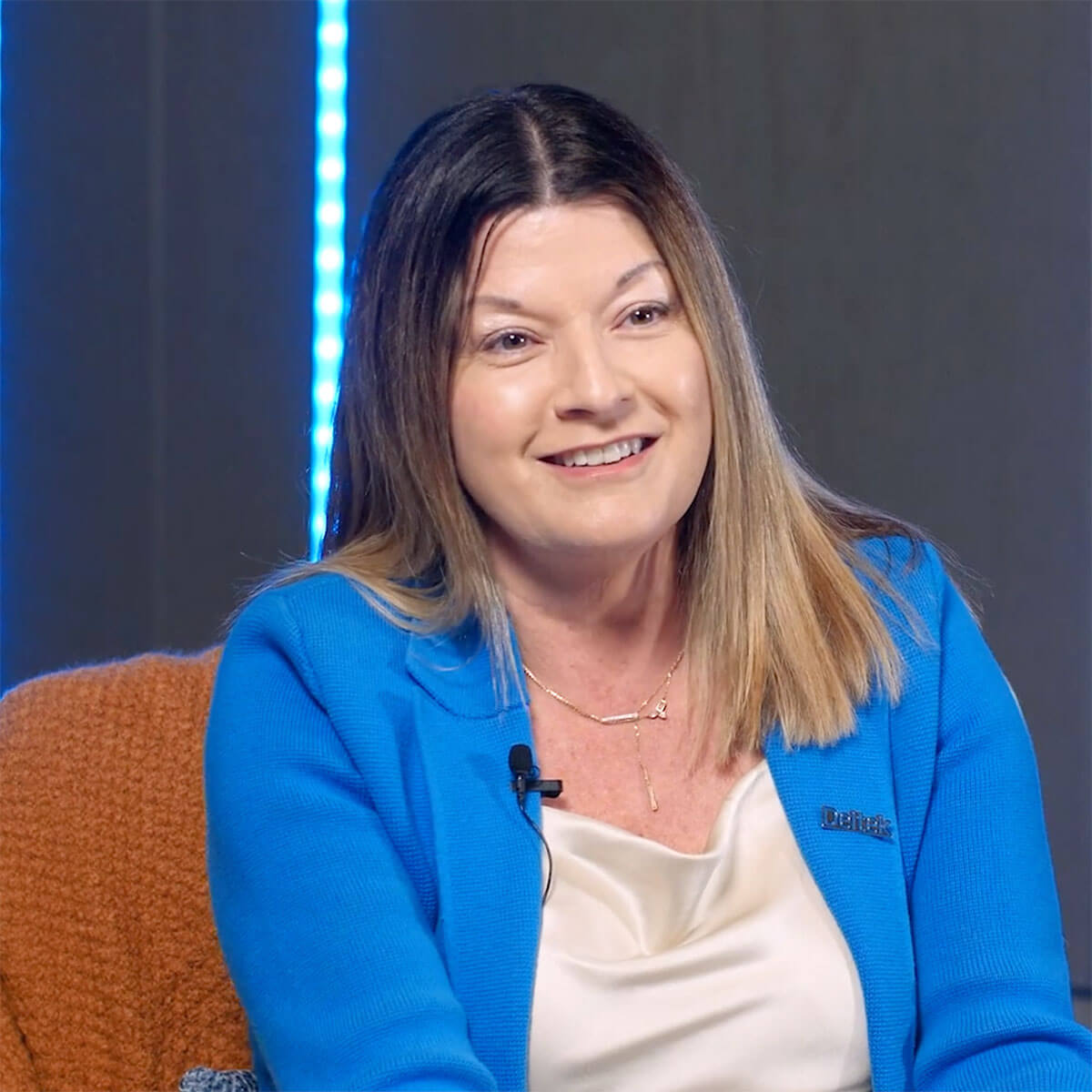
Margo Martin, Guest
CCO @ Deltek
Transcript
Jason Goldsmith:
Before, you know, and then they’re coding everything the old fashioned way. It would take 6, 8, 10, 12 weeks to go through a cycle to develop, you know, an integration. Right. And with cloud code, all of a sudden those timelines were collapsing.
And not just like a little bit, but dramatically like 50%, 60%, depending on the complexity of what they were building. Being able to collapse that timeline oftentimes by half or more, you know, just, just really was a game changer for us within the services organization to be able to accelerate the time that we were delivering solutions to our customers.
Margo Martin:
And I think these, these aha moments will just continue to happen. So. But we were able to reduce documentation and training by 80%.
Josh Schachter [Host]:
Training of your, of your, of your people or training of your customers.
Margo Martin:
Customers. Taking it from months to weeks, reducing that by 80% to days. Right. So we just saw these massive improvements in time savings for ourselves. And, you know, we also realized that part of the plan we put together last year was almost obsolete. Right. And that we, because we could go faster, that the things we thought were going to take five years, maybe six years to roll out, we were starting to roll them out this year.
Josh Schachter [Host]:
You’re listening to Unchurned, brought to you by the Gainsight podcast network. Margo Martin has spent 28 years at the same company. Long enough to recognize what was coming. This time, as chief customer officer at Deltech, she watched AI quietly dissolve the walls between her teams. The people who onboard a customer support them, renew them. So she created a brand new role for a future that doesn’t have an org chart yet. And handed it to Jason Goldsmith today. What it takes to build the job before anyone knows what to call it.
Josh Schachter [Host]:
I’m Josh Akter. This is Unchurned. Subscribe to our substack@ Unchurned.Gainsight.com where we go deep on every episode. Like how one post sales team at cloudbeds built over 150 AI agents. That story and more at unchurned.gainsight.com hello everybody and welcome to this week’s episode of Unturned. I’m your host, Josh Schachter, senior vice president of strategy and go to market development at Gainsight. Thrilled to be here today with two amazing professionals. Margo Martin, the chief customer officer at Deltek, and her colleague Jason Goldsmith, the vice president of customer strategy and professional services at Deltek.
Josh Schachter [Host]:
Margot and Jason, thank you so much for being here. Welcome to the show.
Margo Martin:
Thanks for having us.
Jason Goldsmith:
Yeah, thanks for having us.
Josh Schachter [Host]:
And actually, you know, this is like this is the third time that Deltec has actually been featured on Unchurned. We had Christine Boermeister about a little over a year ago, maybe a year and a half ago at this point. And then Margo, you and I caught up at Pulse in Las Vegas in 2025. And now here we are again, adding Jason as the new face to this. So I don’t know, you guys might be setting records here for.
Margo Martin:
I hope so. If not, you know, we’re very competitive at Deltech, so if not, we’d be happy to do another one.
Jason Goldsmith:
So.
Margo Martin:
Yeah. Yeah.
Josh Schachter [Host]:
All right. So tell a little bit about Deltec. Just, just to get context going for folks, you know, you’re competitive in what, what does Deltec do?
Margo Martin:
Right. So Deltech is the leading provider of project based ERP systems for government contractors and professional services companies. Construction consulting services. We provide software that helps them cost their projects and try to improve their time to value and, and save money and make more money for their company.
Josh Schachter [Host]:
Sounds good to me. What does the structure of the org look like?
Jason Goldsmith:
That.
Josh Schachter [Host]:
That sits beneath you as the cco?
Margo Martin:
Sure. So I’m responsible for everything. Think of it post sale. Right. So day one, after sale, I’m responsible for onboarding, implementation, services with Jason’s team. Customer success all the way through the renewal and, and then support. So business as usual. Like, you know, when you need help with our products or you need assistance, our global support organization comes in.
Margo Martin:
So. So three main pillars. We also have the documentation training team which has recently been transitioned in with the support organization. So we responsible for the customer from day one after sales through the rest of their life cycle.
Josh Schachter [Host]:
With Deltech, how many people do you have approximately underneath you?
Margo Martin:
We have about 1100 people at this point across the world. So we’re a very global company.
Josh Schachter [Host]:
In your org or at Deltech Total
Margo Martin:
just in my org. And then in Deltec, we’re about 4200 people.
Josh Schachter [Host]:
Wonderful.
Margo Martin:
Yeah.
Josh Schachter [Host]:
So. So Margot, you’ve been at Deltech Amir 28 and a half years. Yeah. I’ve seen other, you know, Christine, I think what is. She’s probably somewhere around like 20 plus. Okay, I was gonna say 15, but yeah, 20 plus. You’ve got other colleagues there I know that have been there for a long time as well. And when I first came across Jason’s profile on LinkedIn, it said he’d only been there for two and a half years.
Josh Schachter [Host]:
I was like, oh, he’s, he’s a Deltec puppy. But. But then you reminded me that Jason is a boomerang. He was at Deltec Already for about eight years before the two and a half years. So he’s already over that decade mark as well. And then you said Margo. That actually is pretty common. There are several Deltec boomerangers.
Josh Schachter [Host]:
What is it? This is not an advertisement for Deltec, this show. Although as a gainsite customer, maybe it should be. But what is it that is boomerangable about Deltec?
Margo Martin:
It’s just something honestly special about Deltec. And you know, people always wax poetically about people, culture, growth. Right. But like, I’m a testament to that. Right? So I’m like the 160th Deltech employee. I never in a million years thought I would stay at a company for that long. I was like a five year kind of person prior to working for Deltech. I worked for two Deltech customers.
Margo Martin:
So it’s, it’s like the only thing I’ve ever done since college.
Jason Goldsmith:
Right.
Margo Martin:
Is be in the Deltech family. But we don’t. It’s just not words on our wall. I mean, the culture here is really, really great. We collaborate well together. We, you know, we bought many companies, I think over 20 over the years I’ve been here. And so the company just changed and evolved like every five years. So instead of me thinking, oh, I’m getting a little antsy, I should go probably look and see what the market is like, something new came along and you know, it was like, hey, Margot, go, go do this, go do that.
Margo Martin:
You want to run that. And so there were just opportunities within the organization that made it very important. It made it very exciting. Right. And made me want to stay here. So. And I think when people do think about leaving Deltec, they’re like, oh, you know, probably shouldn’t stay here forever. Right.
Margo Martin:
I should probably, you know, grow my resume and, and go see what’s out there. And inevitably many of them come back. Right. And they say I can’t replicate the relationships I have, the culture, the growth opportunities and just the overall company. And so they come back. So Jason’s a boomerang. Gosh. I have several boomerangs on my team, on my leadership team as well.
Margo Martin:
So Teltech’s just a great place to work.
Josh Schachter [Host]:
Yeah, interesting. So I’m hearing it’s the free lunches.
Margo Martin:
I’ll tell you, since COVID we haven’t been able to get people to come back into the office as much. But if you feed them, they will come. So there’s a lot of people in the office this week because there’s quite a bit of food floating around. Here.
Josh Schachter [Host]:
So let’s take a little bit of a before present day and then later framework. I don’t know if that’s the best way of framing it here, but let’s look back, Margot, to the beginning of this year and understanding where you guys. We’re going to go straight into AI. Just spoiler alert for everybody on the episode, right?
Margo Martin:
Big surprise.
Josh Schachter [Host]:
Big surprise. Yeah, shocker. So, so where, what were your goals when it came to AI? We’re going to talk about that and then I want to talk about this transitional move for Jason, you know, who’s, who’s at the core of this all now. And then I want to talk a little bit about the goals that you’re setting for the team and how you’re going to get there. So take me to your annual planning end of last year. Coming into this year, what are the goals, what are you promising around all things AI for your post sales Org?
Margo Martin:
Yeah, I think for last year, you know, we were still in that how can we go faster? What can we do more quickly? Go learn it, right? Go, go, go, go play with it. And we had a plan, right? Like we wanted to reduce certain areas of our business. We wanted to get our customers live more quickly. We wanted to reduce the number of reasons for our customers to have to call support, right? We wanted to improve, improve our self service. We wanted to make our training and our documentation get it out faster, make it easier to consume. And we had all these really big goals and the individual groups were kind of like, focus on AI, that’s your number one priority this year. And then I would say Claude came out, right? And so, and sure, you know, we were using other, other products and we were using, we were making progress with AI. But I think for us and our customer organizations, Claude just became, I would say, a game changer for us.
Margo Martin:
It made us realize we could go much more quickly, we could do things on our own that maybe we didn’t need like a team of engineers to go try to figure out how to do it. We could build agents. Jason is the Claude guy, so I’ll let him answer some of those.
Jason Goldsmith:
Yeah, I mean even, even on my team. So I have a lot of people on my team who do, you know, technical aspects of implementations. They’re, they’re building extensions, they’re building integrations, they’re building all this custom work for, for our customers to make the solution a little bit more tailored to what they need. And before, you know, when they’re coding everything the old fashioned way, I’ll call It, it would take 6, 8, 10, 12 weeks to go through a cycle to develop an integration. Right. And with cloud code, when we first started to experiment with it, all of a sudden those timelines were collapsing, and not just like a little bit, but dramatically like 50%, 60%, depending on the complexity of what they were building. And so being able to say, okay, we can, you know, the custom work is often the long pole in the tent of an implementation. And being able to collapse that timeline oftentimes by half or more, you know, just, just really was a game changer for us within the services organization to be able to accelerate the time that we were delivering solutions to our customers.
Margo Martin:
Yeah, we had a huge backlog in that area of our business. And I remember, I don’t know, when it was a couple, it was at the beginning of the year, all of a sudden Jason said, yeah, we’re all caught up. And I’m like, what? How can you be caught up? Right. And so things just started to move very, very quickly for us this, this year once Claude, cloud code, cloud work came out. And sure, the other models are now offering, you know, similar things, and it’s just going to be a constant competition between, you know, the, the three big ones and as, and they’ll all get better. And I think these, these aha, moments will just continue to happen. So. But we were able to reduce documentation and training by 80%.
Margo Martin:
Like, like rolling out new documentation for a new version, you know, 80%, that’s just incredible.
Josh Schachter [Host]:
Training of your, of your, of your people or training of your customers.
Margo Martin:
Customers. Customers. So producing training on a new version, right. Taking it from months to weeks, reducing that by 80% to days. Right. So we just saw these massive improvements in time savings for ourselves. And, you know, we also realized that part of the plan we put together last year was almost obsolete. Right.
Margo Martin:
And that because we could go faster, that the things we thought were going to take five years, maybe six years to roll out, we were starting to roll them out this year. So it also made me realize that I have three awesome groups that are doing incredible things with AI. But because I see these roles maybe blending with AI, like you may at some point, with an ERP system, have the same person onboard, you implement you, support you, and maybe even do your renewal.
Jason Goldsmith:
Right.
Margo Martin:
And so how do we get to that, from these three, four separate orgs, to what is this beautiful experience going to look like? And if everybody’s building their own AI and building their own tools and doing all this amazing stuff, are we duplicating efforts. Right. And so we had a leadership meeting where we started talking about do we need like a chief of staff, right. On our team or do we need someone, a VP of strategy that can take the vision that our leaders are thinking and coming up with and really help us march toward that vision. Right. And march towards that strategy. So I’ve got all the leaders to buy into this kind of VP of strategy role. And then I, and then, and then one of my leaders said, well, does anybody want that job? Right.
Margo Martin:
And in my mind, I had a couple people in mind that I thought might be interested because honestly, taking someone that’s already knows our businesses, knows, knows our processes, knows our procedures, knows the players and the, and the, the three separate organizations that we have, it’s going to be a lot easier to do that. Right. Than to bring someone in from the outside and have to teach them that. So lucky for me, Jason kind of after thinking about it, probably for a weekend said, I’m in, I want to do that. Right. So hence how our, how this new role has evolved. He just officially stepped into it two weeks ago. Two weeks ago.
Margo Martin:
So yeah, really excited and our leaders are really excited and they can’t wait to see what we’re going to come up with here.
Josh Schachter [Host]:
So, so Margo’s saying lucky for me, but I think Jason, you’re probably saying lucky for me, right? You’ve just future proofed yourself you’re not.
Margo Martin:
That was the idea.
Jason Goldsmith:
That was, that was motivating fact.
Margo Martin:
He did.
Jason Goldsmith:
It’s also an exciting opportunity.
Margo Martin:
It really is.
Josh Schachter [Host]:
What were Margo like specifically what we’re. Before we go into Jason’s role. And by the way, I also want to learn from you what made Jason, you know, the, the best pick for that other than maybe being voluntold. But what were some of, what were some of the signals to you? The symptoms, I should say that. Told you we should have somebody to cohere this strategy, set that vision, set the structure for it.
Margo Martin:
Yeah. Two things that come to mind. So I, you know, I see the writing on the wall. I do my AI research about these like blending of these roles. Right. And convergence.
Josh Schachter [Host]:
Convergence, I like to call it.
Margo Martin:
Convergence is even about. Right. And I could see that and I, and I knew it couldn’t just be me trying to figure that out, what that was going to look like, kind of dictating that down to these three, you know, individual orgs. But more importantly, as I was having one on ones with my leader of support, my leader of customer success, leaders in professional services, I realized that they were talking about all this AI goodness. And all the things that they were talking about were amazing. One, how do I share that with the other leaders coherently so that we can all, you know, drink the same Kool Aid and. But two, a lot of the things they were talking about were the same as, as my other leaders, right? And so I started to think and realize that I’ve got these amazing leaders that are all doing AI and they’re building a lot of the same things, right? Because we told them to do that, we told them to learn, we told them to go faster, we told them to, you know, break down barriers and go, go, go, go, go. And then when we got together as a group, right, with all the groups, we started realizing that even at a lower level, our directors were building things that were the same as the directors in all of our orgs.
Margo Martin:
Our managers were building things like there was no inventory of all the good AI goodness that was going on within our organization. And I realized that we were just going to continue to go down these three siloed paths if we didn’t find someone to kind of pull it all together, go find out, dig onto the rocks and figure out what is happening, where it’s happening, what was built and really kind of lay out a roadmap. And you can’t lay out a roadmap, a five year roadmap right now with AI it’s just you may as well lay out a three month roadmap because everything is changing so rapidly, right? So we needed someone that is going to think about this, live this, wake up every morning and figure out if we’re still going in the right direction and then help us figure out like how are we going to get to this convergence? What is that going to look like without worrying about like where’s my name going to go on that org chart, right? We need somebody kind of helping us build like the bigger picture, the bigger strategy. We’ll figure out the oratory later.
Josh Schachter [Host]:
Why Jason? Why Jason? And the reason I’m asking why Jason is not just to butter him up here for expansion sales.
Margo Martin:
No, no. But I think other companies should think about that, right?
Josh Schachter [Host]:
Other company, other leaders should think about what they should look for. And, and, and by the way, there’s lots of people who want to be Jason right now. Well, let’s just say everybody wants to be Jason, right? Like so, so what, what are the other leaders looking for? Both to help the other leaders structure their thoughts and to help the other potential Jason. Jason’s understand how to position themselves for this role.
Margo Martin:
Right. You know, it’s funny, I was having a conversation when, when I was talking to our CEO about this was something that we were thinking about doing. And he said, yeah, you need like, somebody that’s done, like, you know, worked at PwC or management consultant that can think strategy and big picture and then how to implement and lay out a plan.
Josh Schachter [Host]:
Has no idea about your actual business.
Margo Martin:
Exactly, exactly. Right. And. And then he said, and it’d be great. And then I said, yeah, it’d be great, but if they knew our business, right? If they knew, like, what we do and everything. And then I left that conversation and I was thinking about it over the weekend and I thought, oh, my gosh, I have someone on my team that was trained by PwC, was an IBM managing consultant, right. And I was like, oh, he’s like sitting in my yard already, right? I just need to, like, convince him to take this big.
Josh Schachter [Host]:
You have your reports doing your yard work.
Margo Martin:
Yeah, exactly. He also does my yard work. Right now he doesn’t. We don’t even live in the same state. But I was like, jason has that background, right? So ideally, he was like that candidate because he was like the perfect candidate that had that kind of background that we were looking for. He’s an incredible strategist. He’s really good at kind of reorgs and like taking and building really good teams and. But.
Margo Martin:
But he’s also very, very AI forward. And I have a couple of people on our team that are like super AI forward, but he’s like one of the top. And I was like, okay, if a lot. And it’s not just AI that’s driving kind of this transformation, right? But those are all the things I needed and, and what else is driving the transformation? AI is definitely the biggest, right? But like, right now in these three orgs, we have three separate operations teams. We have three teams that are doing enablement, we have three teams that are doing AI transformation. Right? And there’s probably an opportunity to merge those together. And, and that’s why I think I sweetened the pot for Jason. I’m like, look, this is going to end up you going to be a team of one for a while, I think, as we figure out what this looks like and what we want to evolve and what the strategy becomes.
Margo Martin:
But eventually I see morphing those, like, those operational roles right, into one big, like, operational team, because I think there’s a lot of synergies and economies of scales that we can take advantage of by doing that, so that’s also driving, driving part of us.
Josh Schachter [Host]:
Jason.
Margo Martin:
So Jason was the perfect candidate on paper. I just had to convince him that. Well, I still haven’t convinced him to give up his current role. Right. So I’m allowing him to have like nine months and, and then we’ll see how it goes. Right. But because this is a big deal, right, in a big job and I think he’s going to find out pretty quickly that I don’t know if he can do both, but he has a really strong team behind him and so we’re confident that they can pick up some of the slack While.
Josh Schachter [Host]:
Jason, Jason, as it relates to AI, what do you think you were doing? Well. What was your. Not even well. What was your involvement with AI prior to the role?
Jason Goldsmith:
Yeah, so I think it was a couple of things. One, I was really just pushing my teams who have a much more practical application of AI, especially in the world of technology, to really go out, explore, experiment, like just make mistakes. Right. You know, once, yeah, once we got cloud available, you know, beyond cloud code, but cloud AI, I was just encouraging everybody in my team to go out there and get it and just, just play with it, like, see what you can do with it. Try to figure out where can this make your day to day better? How can we make our, the lives of our customers better by deploying AI within our, you know, internal teams. And then two, you know, I was doing that myself so, you know, we had like a dashboard that would get sent out for this was on first using Copilot, like who is using Copilot the most, you know, and it, whether the measurement was, was right or, or not, it was, you know, a measurement of engagement with Copilot. And my name was up there on the top of the, of the, the leaderboard. And so just kind of leading by example there and showing, okay, look, you know, you can use, sure, you can use it for summarizing your, your recorded meetings and doing transcripts and that’s great.
Jason Goldsmith:
Where do you take that next? How do you apply that to, you know, not being in a meeting? How do you, how do you, you know, make all your other aspects of your roles, you know, more efficient? And how does that actually ultimately benefit the customer? Because that’s, you know, ultimately whether it’s an internally focused AI initiative or something that’s in our product or something that’s in how we work with our customers, it ultimately has to benefit the customer. It can’t just be an internal efficiency move. Right, that’s, that’s great. But ultimately we want to have this show value for our, for our customers. And that’s where I was getting people to focus and make sure that, you know, experiment, play, but then make sure this is helpful for our customers. At the end of the day.
Josh Schachter [Host]:
Do you have a 30, 60, 90 day plan? Did Margo make you do it?
Margo Martin:
Pretty much, yeah.
Jason Goldsmith:
Yeah, yeah. So there’s some low hanging fruit. Just, you know, one of the things that Margo talked about was the fact that we do have three different organizations who are taking three different approaches to AI and all the other, all the, all the great stuff that we’re doing. And really, you know, first step there is figure out what all that is. Right. Because, you know, I don’t even know what everybody on my team, extended team is doing on a day to day basis with AI and I want to get a handle on that. And then doing that across the entire organization is, you know, started to do that actually recently, last week I pulled together at least the, you know, the 65 to 100 initiatives that our three organizations are working on. Pull that all together, you know, and at least have it in, I have it in one place now at a PowerPoint.
Jason Goldsmith:
Right. That’s, that’s not where it needs to live. It needs to live in a dashboard. But we’re all looking at that and seeing and understanding, okay, you know, somebody on my team is working on this or somebody on Gary’s team is also working on something similar. Well, we should probably pair those people together and see if there’s something we can do together and kind of leverage that, that common effort. So that’s, that’s really kind of the basis here. And then it’s looking at, okay, you know, we know we have friction between our groups in terms of, you know, a customer goes through implementation, then we hand them off to customer success and support. And there’s just, you know, there’s always, there’s always been friction there.
Jason Goldsmith:
Right. And even as we became one organization under a chief customer officer, we still have that friction. And so it’s okay, how do we eliminate that friction going forward, but how do we, you know, how do we use AI to do that instead of just having, you know, AI powered friction in the background. So those are the initial things that I’ll be looking at to try to, I will say address, I won’t say resolve right away, but certainly, you know, chip away at that, you know, those friction points and making sure that we’re, you know, addressing those in the, in the most efficient and customer friendly way as Possible.
Margo Martin:
Yeah. And then I think the next biggest project is like, we’ve gotta, we’re gonna have to rebuild this journey right from start to finish from day one of sale. And what is that gonna look like? And we sell a lot of products. Right. And so will it be the same journey for all our products? Do we need slightly different journeys or which products do we start with? Do we start with this SMB segment? Do we start, where do we start? Right. And the journey that we created, I don’t know, 10 years ago is, is not the same journey that it, that these customers are going to experience because AI is going to change that massively. So that’s our, probably our biggest project here. Once we get kind of an inventory where we’re at, we get, we stabilize the current handoffs and then we move towards what’s this futuristic journey going to look like and what kind of amazing experience can we offer our customers.
Josh Schachter [Host]:
And is that under Jason’s remit as well? Or is that a cross functional project?
Margo Martin:
He’ll lead it, but it’ll be cross functional for sure.
Josh Schachter [Host]:
Yeah, because it’s, I mean, journey transformation now is AI transformation in many parts.
Jason Goldsmith:
Right?
Margo Martin:
Exactly, exactly.
Josh Schachter [Host]:
You know, it’s fun having like a boss and, and a report sitting next to each other on the same video stream in this podcast. I don’t think I’ve ever had that before. Jason, what, what resources is Margo giving you to do all this?
Jason Goldsmith:
People, it’s me and it’s, you know, Claude and I working late into the night. No, it’s a no. I mean, so right now it is.
Josh Schachter [Host]:
By the way, is she cutting you off at number of tokens? Is she giving you at least.
Jason Goldsmith:
No, I have an unlimited plan. He does. Don’t tell her. IT department, but I have an unlimited plan.
Josh Schachter [Host]:
They’re going to come after you soon.
Jason Goldsmith:
They, they probably will. Probably will.
Margo Martin:
They. They came after us this week, but it ended up not being the person that blew tokens on our organization. So I got, I got off the hook. So it was kind of nice.
Jason Goldsmith:
Yeah, no, I mean, I, you know, one of the, one of the great things about our team across, you know, all of Margo’s organizations is that we all work really, really well together. And so while I don’t have a team focused on this new part of my role right now, you know, I’m able to, to go to, you know, my peer VP’s and say, hey, look, can I get your help with this? Can I get somebody, your team to help with that? And you know, that’s that’s not going to be something that I’m worried about being able to leverage other people on the team to help, you know, help me execute what will plan and execute what we need to do to move all these initiatives forward. So I’m very fortunate in that respect that while I don’t have an army to work with at the moment, I can adopt one as needed through other people in the organization that are more than willing to help out.
Margo Martin:
But what I did tell Jason is naturally this is going to become a team, right? And we decided not to merge all the operations teams and enablement teams yet because there’s so much that we need to do. Create a structure and create process and dashboards and stuff. Let’s get all that done first. And as we go into planning next year, let’s look at what this looks like. But I also told Jason, I think. I think there are naturally people within our organization across these orgs that are going to most likely end up within Jason’s organization that we are going to, like, build. And so I’m like, you know, let me know who you want at some point, right, and who you think makes the best transition into these new. Into this new role.
Margo Martin:
And I think, I think companies are going to have to figure that out, right, Is it’s almost creating a whole new line of work and, and, you know, whole new departments, right, with the AI strategy. And so we’re gonna figure it out as we go. We plan to have a couple workshops, just Tim and I, to kind of strategize kind of what this org might look like and then bring in our leaders to help us, you know, figure out who. Who would move and who wouldn’t move and what these orgs are going to look like. So.
Josh Schachter [Host]:
Well, let’s jump in now. Let’s jump ahead a little bit. Let’s play a little bit of like the bridal shower game here. So take a moment. I want you each to think, respectively, what. Who would be the. Not the person, but what would be the first role that sits underneath Jason, let’s say within the next three months, right? Three months from now. I don’t know, whatever the timeline is for you guys, but what’s that first role that sits underneath Jason? Margo, I want you to think about it.
Josh Schachter [Host]:
Jason, I want you to think about it. And then, I don’t know, whoever wants to go. Margo, why don’t you go first when you’re ready.
Margo Martin:
I think we’re probably thinking about the same person, if I had to guess
Josh Schachter [Host]:
so Exact same person. Good. Well that’s a good start. Your mind melded.
Margo Martin:
Right. So Jason’s services, the services business is also going through kind of a transformation. They built a technical center of excellence and now they’re building a. I can’t remember what the name of it is.
Jason Goldsmith:
No, we don’t have a formal name for it yet, but its own transformation office type of. Type of structure with the services engineering and AI architecture, you know.
Margo Martin:
Yeah.
Jason Goldsmith:
Domains I’ll call them. I hesitate to call it an organization yet but. But something along those lines.
Margo Martin:
So if I had to guess, that would probably be the first team that would. Would transition to Jason would be proserve
Josh Schachter [Host]:
is what you were saying or did I catch it right?
Margo Martin:
Like a trans Transformation office. Transformation office. So yeah, that’s. That’s probably the first team I would see would end up. We probably also need. Go ahead.
Josh Schachter [Host]:
So, so, so like an office of the President, office of the AI transformation type of thing.
Margo Martin:
Yeah, kind of.
Jason Goldsmith:
Yeah, yeah, yeah. Tasked with and you have.
Josh Schachter [Host]:
And you both think, you know one the person for that as your first chief of staff, basically.
Jason Goldsmith:
And that person raised.
Margo Martin:
Raised their hand as well.
Jason Goldsmith:
So which is good.
Josh Schachter [Host]:
It’s been also.
Margo Martin:
No, no, I have a. But he will do totally voluntary, totally volunteer. It’s interesting. As we. As we started to talk about this, we weren’t sure how this role would be perceived one with the leaders, although they bought in really quickly. But at the next level down. Right. We were worried that people would be like what are you doing? What do you mean? Blending converging like that people would be start to worry.
Margo Martin:
But we got the opposite. We got incredible feedback. Like I’m so excited about Jason’s new role. I definitely think we need that for. From all of the orgs. Like we had an all hands and I heard from so many people after that they were excited and a lot of people raised their hands and said I’d be interested in maybe being on that team at some point. Right. So I thought that was awesome.
Margo Martin:
I thought we were going to have to like, you know, people would be like stay out of my org. I don’t need your help. Right. And what do you mean you’re going to converge? And we got a lot of really positive feedback and people that were excited to maybe do something different, maybe AI proofed their job a little bit, you know. So it was, it’s. It was exciting for both of us I think. But we’re probably thinking about the same person that we think ultimately goes probably first. I do think we need A project manager, though, too.
Margo Martin:
Some type of chief of staff almost that can help Jason, like, get some of this stuff done. Although we’ve all been building Chief of staff Claude agents, so that are helping us manage our day to day and which are awesome. Like Jason, one of my other leaders that built some competing chief of staff dashboards that are pretty cool. So. But yeah, I think it’s evolving.
Josh Schachter [Host]:
What’s the most valuable thing? Because you mentioned it earlier too. What’s the most valuable, valuable thing, Margo, that your chief of staff, your AI Chief of staff does for you lets
Margo Martin:
me not forget things. Right? Like, oh, Margo, you haven’t answered that email that you flagged to respond to in two weeks. Right. I think we’re spinning. Most leaders, right. I think are spinning and getting caught in the tyranny of the day. A customer escalation or a product issue or, you know, AI. Right.
Margo Martin:
And so it’s my little chief of stuff keeps me on track every day. Like, these are your meetings. Like yesterday it was like you got your podcast with the gainsight unturned Brown. I was like, totally forgot about that.
Jason Goldsmith:
Right.
Margo Martin:
So it definitely keeps me more aware and more prepared so that I can be, you know, ready for the week, but also helps me not forget, like a customer I was supposed to follow up with or something I was supposed to send out. Right. So, yeah, my chief of staff kind of keeps me on task, I would say, more importantly.
Jason Goldsmith:
Yeah. And mine, you know, one of the other things it does besides everything that Margo just mentioned was it’ll get invited to so many meetings. I can’t attend every single one and I can’t look at every single recording or transcript. And so I’ve got one that just goes and looks at yesterday’s meetings and says, okay, this is what you needed to pay attention to that you didn’t hear directly.
Margo Martin:
Right.
Jason Goldsmith:
You need to follow up on. On this or be aware of this. And so having that, you know, call it my yesterday recap, like, look at, look what I missed yesterday. What do I need to plan for today and through the rest of the week, really, like Marco said, just helps keep. Keep me on task and focused on the things that matter most to be able to get through the day and get through the week and kind of ignore some of the background noise that I don’t necessarily need to pay attention to.
Josh Schachter [Host]:
Yeah, super important. Build versus buy. Buy and build, as our CEO would say. What’s your approach? How are you going to tackle it? Where are you now? What’s coming in the next six months.
Margo Martin:
Yeah, I guess it was probably three years ago now. Right. But we were trying to figure out what we were going to do from a support standpoint to like, you know, add AI capabilities. We’re going to build something, we’re going to buy something, and we built something. And we also at the same time looked at buying and we did them in parallel, which was a really interesting exercise. And what we built was good. Right? And it was, and it was working and it was, it was solid and we could have rolled that out. But what we realized we could buy basically the same thing.
Margo Martin:
And then we didn’t have to worry about keeping it up to date. Right. The models were changing. We didn’t have to have a team of people that was going to keep that up and running. So we ended up buying. I think along the lines we’ve taken a look at that in many different areas of the business and like we’ll try to build something or we’ll hypothetically think about building something. I would say for the most part though, buying has been kind of what we’ve ended up doing. We built some stuff, but companies like Gainsight, right.
Margo Martin:
And you know, other companies, they’re just further along and they have teams of people that can go work on this. And that’s the problem. Like you’d have to build a team of people to keep some of this stuff up and running. Right. And so I think we, we’ve leaned more towards buying ultimately, but we still play around with building to some extent. Yeah, Jason?
Jason Goldsmith:
Yeah, I mean I think it’s definitely, it’s a combination. I mean, from a services lens, one of the things that we’re doing, we are building our own tools to do automated configuration and things like that. But we’re, but we’re not building the agents that do that. We’re buying the agents that then we use to do the auto configuration. And so it’s, it’s definitely a blended model where we’re doing both and kind of taking the best of all worlds where we can do that and leverage pre existing capabilities that we can buy or have from our Deltec parent that we can go and pull from. But where it makes sense to build something on our own, we’re experimenting with that too.
Josh Schachter [Host]:
What would be top of your list to build? I mean, you guys use Gainsight to build on top of cs. What would be the top of your list, Jason?
Margo Martin:
Well, for cs I would say, I mean, moratorium information. Right. You know, automated digital CSMs, you know, digital renewal agents. Right. I mean if you didn’t have to. To really touch a renewal. And it just kind of happened. Right.
Margo Martin:
And so we’ve looked at. We looked at Staircase. We’re really interested in your bespoke version as well. So a lot of excitement coming out of Pulse from our team that went. So I’m just waiting for the ask to cut, for them to come to me and say, all right, we want to pilot this or we want to pilot that. So we want it.
Josh Schachter [Host]:
Yeah, this, here’s. This is. Consider it the ask. You have us in recording. We want you to pilot Atlas, our AI native services.
Margo Martin:
We would love to pilot Atlas. We also are looking at Skill Jar. We had another tool that we implemented and they decided to go in a different direction now. So our, our leader of our training and documentation team is all over Skill Jar, so we’re looking at that right now as well. So. And that would be something that we would definitely buy. I wouldn’t want to. I would not want to tackle trying to build that ever.
Josh Schachter [Host]:
So, yeah, I love when I ask my guests what they’re going to build and they turn it around and say, we’re going to buy more gainsight. That’s cool. That worked out really well. I was giving you guys, like, the whole, like. Like, let’s just be transparent. Let’s talk about how we’re building our own csp and you went the whole opposite direction. And my team’s going to love that.
Margo Martin:
We’re probably building more tools on Jason’s side, I would say, and maybe on the support side, like support AI Assistant, right, Where that we can actually give to our customers so they can use the same thing our support assistance, our support team is using. That’s imminent. That’s coming, like, any day now. Just right now, there’s so many AI projects like, you have to get in line with when it can roll yours out. Right. So. So we’re just waiting. We’re finalizing that.
Margo Martin:
I would say, on Jason’s side, like, tools like to get our customers more live more quickly. You could buy the agents like you said, but, like, knowing our data structure and the tables and like what you need to move, that would be hard for someone to build for you. I think our, our systems are very complicated because they’re ERP systems. They’re not. They’re not simple systems. Right. They’re not apps. They’re not things that anybody could come in and learn very quickly.
Margo Martin:
So we’ll be building those type of tools to get our customers live faster, to implement, to pull data from one database into another to merge. Our companies love to buy each other and there. So there’s a lot of M and A in the industries that we work in. And so how do we merge their data better together and building tools to help them get through those types of cycles much more quickly. A lot of that I think makes more sense for us to build ourselves.
Josh Schachter [Host]:
Jason, do you have any KPI, KPIs or OKRs for this year? I don’t know, whatever system you guys use. But do you have like a specific North Star metric that you’re aiming towards?
Margo Martin:
Moonshots. Moonshots this year?
Jason Goldsmith:
Yeah, you know, it’s, it’s.
Josh Schachter [Host]:
Is that quantifiable?
Margo Martin:
Yeah, yeah.
Jason Goldsmith:
No, I mean, it is, it is a bit of a challenge to quantify them because we, we don’t have great consistent data for say, how long does this type of implementation take?
Margo Martin:
Right.
Jason Goldsmith:
From a, from a service perspective, we have, you know, we can, we can look at it and track it, but our, you know, admittedly, our probably our data in this area is not as clean as it should be or as consistently captured as it should be. And so, you know, we know that for an implementation, for vantage point, for X number of employees, it should take around eight months. We’ll just throw out a number. What we’ve done is design a new, you know, a new version of our kind of offering at that level of customer where we say, okay, it used to take eight months. We’ve been able to add AI here and do some automation here. Now we’re taking that down to four. And so the, we’ve, we’ve packaged that we are set. We actually sold our first.
Josh Schachter [Host]:
But you’re reverting yourself, you’re reverting back to, to the old Jason. You’re or the, the only, the half of Jason that’s still working on professional services. Right. I want the Jason that’s the, the VP of AI transformation. What are his North Star metrics for this year?
Jason Goldsmith:
They’re, they’re in, in development. But you know, one of the things I’ll say is that it’s all going to be around, you know, accelerating the time, making sure that as we do that we’re enhancing the stickiness of our customers because we could develop something that is a touchless implementation that doesn’t actually give the customer what they want or provide them a great experience and then they’re, you know, immediately a churn risk at their next renewal because they’re just like, okay, I’ve got the system, but I don’t I don’t have a. That connection to Deltec and the people there. And so we need to really balance what that looks like in terms of, you know, how, how we’re applying AI and then how it ultimately leads to a happy, sticky customer that renews and renews and renews and renews until, you know, they buy the next product. Right?
Margo Martin:
Yeah. And across the board, I think that’s important. Right. Because I mean, like, we could automate support. Right. We could get down to just, you know, AI agents. And I don’t think our customers are going to love that. Right.
Margo Martin:
So we, we talk like gainsight does. Human in the loop. Human on the loop. Right. Where’s the balance? We know they want us to go faster, but like how fast and at what point do they just want to talk to someone? Right. And, and the same with customer success. I mean like better, better data on usage and, and what a customer is doing and why they dropped their usage this week and then digging in there and are there more products they can use? So the data is the king. Right.
Margo Martin:
And so our metrics next year will be much more designed around moving the needle. Like obviously we have some metrics on like improving mean time to resolve and meantime to close for support cases. Right. We have implementation our KPIs and, and then know, getting our renewals finished earlier in the quarter. Right. And, and higher obviously, like reduce churn. Right. We, we have a very low churn rate, but still.
Margo Martin:
And so. And growth. Right. How do you get customers to use more of your product? So we’re looking at AI and, and trying to figure out what metrics we’re going to use. The metrics seem to be changing to some extent too. Like we’ll start with one metric where we’re like, that one’s kind of useless. Now let’s change to this one. Right.
Margo Martin:
Just because AI is changing so much. Right. So it’s kind of wild, wild west a little bit. Still on the metric side.
Josh Schachter [Host]:
Yeah. I think that’s just the maturation curve. We’re all learning that stuff together right now.
Margo Martin:
I think so too.
Josh Schachter [Host]:
Margo Martin, Jason Goldsmith. I had a lot of fun. I hope you guys did as well.
Margo Martin:
We did too.
Jason Goldsmith:
We did too.
Margo Martin:
Yeah, absolutely. Thanks for having us.
[Un]Churned is the no. 1 podcast for customer retention. Hosted by Josh Schachter, each episode dives into post-sales strategy and how to lead in the agentic era.
Browse Series
Subscribe on