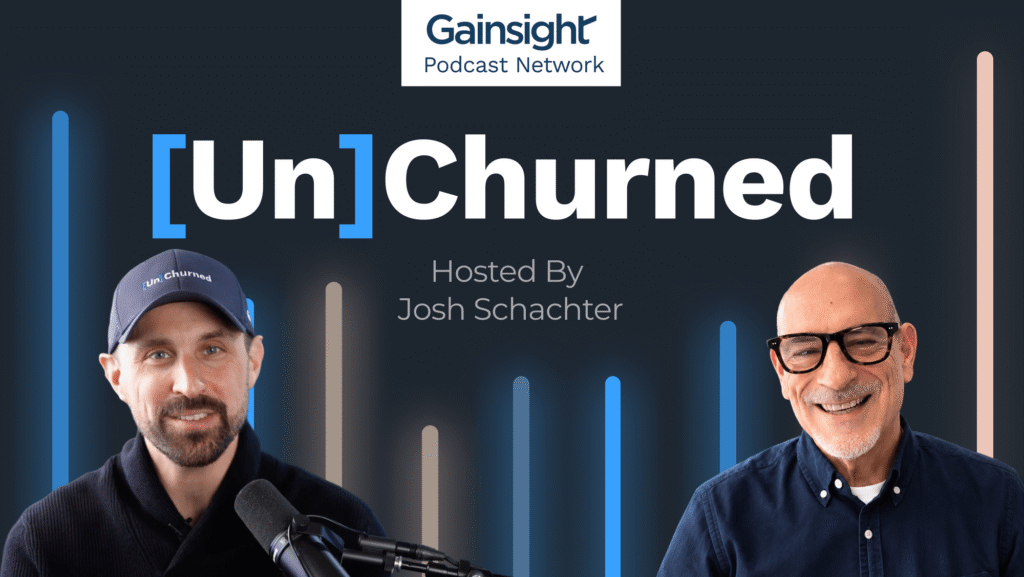
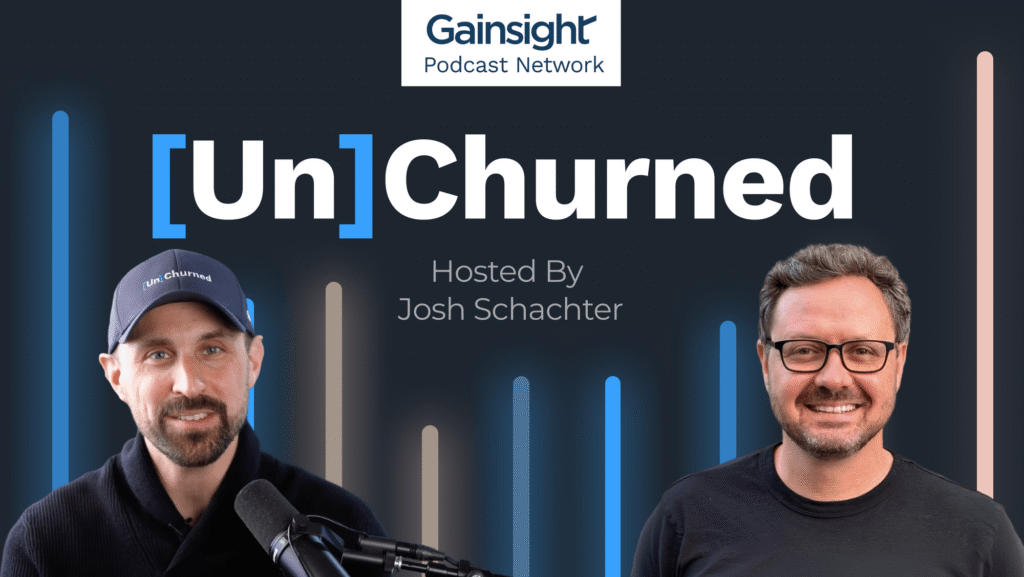
Jim Richmond, CCO at Smartling, shares his 2026 playbook on GRR, scaling 4x, AI-driven support, role specialization, and leading with professional empathy.

165. This CCO Won’t Ask His Team What He Wouldn’t Do Himself (And Why) ft. Jim Richmond (Smartling)
Show Notes
Jim Richmond is the Chief Customer Officer at Smartling, an AI-powered translation company doing AI “before it was cool” since 2009. Leading 50 professionals across support, services, and customer success, Jim shares his 2026 playbook: why GRR is his North Star, how he’s building systems to scale 4x, and why role specialization beats generalization in the AI era.
Jim reveals how AI bots eliminated single-touch support tickets at Smartling, why he still carries his own book of business as a CCO, and his career advice for aspiring leaders to build the professional empathy that makes them an authentic partner.
—
Want the playbook, not just the conversation? Subscribe for deep-dive, actionable breakdowns from every episode at unchurned.substack.com.
—
Timestamps
0:00 – Preview & Introduction
1:25 – Meet Jim Richmond
1:50 – Smartling Overview
4:33 – 2026 Priorities: GRR as the North Star metric
6:30 – Building a four-quarter forecast
9:40 – Building systems for 4x growth
12:24 – Forecasting to eliminate surprises
14:55 – Will AI make CSMs more generalized or specialized?
18:32 – How AI bots eliminated single-touch support tickets
21:42 – What it’s like being a first-time Chief Customer Officer
23:38 – The rule of thirds: How a CCO allocates time
25:10 – Why this CCO still carries his own book of business
25:52 – Seek out a diversity of experiences
What You’ll Learn
- How to build a four-quarter forecast that eliminates revenue surprises
- Why role specialization creates more operational leverage than generalization
- How AI bots eliminated single-touch support tickets at Smartling
- Why leading from the front means carrying your own book of business
- How to build professional empathy by seeking diverse experiences across sales, CS, and services
Featuring

Josh Schachter, Host
SVP, Strategy & Market Development @ Gainsight

Jim Richmond , Guest
CCO, Smartling
Transcript
Jim Richmond:
Good or bad, right? You want to do what you say you’re going to do. That predictability leads to stability, leads to trust and good financial metrics as you grow.
And so that’s the primary thing that you get by having a really solid command and understanding of your business and what’s coming and what that allows you to do. Like the downstream effect of that, that actually gets to the levers of GRR is that it allows you to allocate your resources very, very effectively. Right. Ultimately, that’s the job of a leader, of a manager.
Josh Schachter [Host]:
You’re listening to Unchurned, brought to you by the Gainsight podcast network. Jim Richmond has done almost every job in the customer journey. He spent years as a seller, making cold calls and facing rejection. He worked as a technical account manager before customer success was cool. He led teams across solutions, consulting and professional services. But that journey, those thousands of rejections, those frontline experiences, those gave Jim something rare. Professional empathy for everyone in the post sales motion. Now, as chief customer officer at Smartling, an AI powered translation company, Jim’s putting that empathy to work.
Josh Schachter [Host]:
He’s still carrying his own book of business, still working support tickets alongside his team, still leading from the front. For Jim, you can’t ask people to do what you wouldn’t do yourself. This is Jim Richmond’s story on this week’s episode of Unchurned. Hey, everybody, and welcome to this week’s episode of Unchurned. I’m your host, Josh Schachter. I’m the senior vice president of strategy and market development at Gainsight, and I’m excited to be here this week with Jim Richmond. Jim is the chief customer officer at Smartling. Jim, thank you so much for being on the program.
Jim Richmond:
Thanks, Josh. What a treat to be here. I really appreciate the invite.
Josh Schachter [Host]:
A treat to have you. So let’s start out with. Tell us about Smartling.
Jim Richmond:
Yeah, Smartling is an AI company that does translation localization. So if you’re a company that goes to market in a lot of different geographies, for example, each of those geographies has different languages that they speak. They might have different regulatory and compliance needs that they have. And historically, that was a pretty expensive proposition. You had to go out and find a bunch of linguists, either hire them or go through an agency, and we take all that challenge away. So we built a bunch of AI tools. We were doing it before, it was cool. We’ve been in business since 2009, and we provide dramatically higher quality translations for companies that want to enter new markets or adhere to the law in a way that leverages that human linguist component to deliver much higher quality at a much lower cost and speed.
Jim Richmond:
And we’ve been growing really rapidly for, for a long time now. And it’s, it’s, it’s just a real treat to be able to work with, with all those professionals and support them as we go out and, and help people understand each other better.
Josh Schachter [Host]:
Amazing. Okay, so you’ve been around for a little while, which is awesome. You’ve been AI native, AI first, AI specialized for a while as well. And you’re helping bring superpowers to localization and translation. I love it. How big is the company? You know, whatever you can share. Just again, like set context for our listeners.
Jim Richmond:
Yeah, we’ve achieved revenue in the hundreds of millions of dollars. We have several hundred employees. We are headquartered in the United States, but we’re remote first, so people are really spread out all over the place. The customer engagement organization that I support is a team of about 50 professionals all over the United States and Latin America and Europe. And that encompasses support, professional services, managed services, and customer success. Those are, those are the four big functions. And that’s most of the post sale customer journey for people who buy smartly.
Josh Schachter [Host]:
And which is your favorite function?
Jim Richmond:
You don’t have to answer which one. That’s okay. Which one is my fans program?
Josh Schachter [Host]:
That’s fine.
Jim Richmond:
They’re all important. You can’t get along without all of them.
Josh Schachter [Host]:
That’s right. That’s right. So let’s talk a little bit about what your priorities are at smartlane. I should say that you’ve been in this seat now for, you know, a little over half a year as chief Customer Officer. This is your first CCO role. I want to talk about that transition. Personally, I think that would be really interesting to people. But before we talk about your transformation, your evolution, the transition, and the lessons for other folks, let’s get into, as I like to call, the big rocks.
Josh Schachter [Host]:
You know, for this year, we’re at the start of the new year. What’s on your mind right now? What are the top priorities for you as the post sales leader?
Jim Richmond:
Our focus in FY26 is going to be on grr. On gross revenue retention. We’re a company that’s been growing very rapidly for a long period of time and that appears to continue off into the future. And I really want us to focus on protecting our current book of business. Make sure we’re serving our existing customers as beautifully as we possibly can so that we have a very solid foundation for for. For growth as we move forward. So that’s our, that’s our new northstar metric for, for the year. That’s.
Jim Richmond:
That’s what we, we really want to be focused on. Nrr. Net recurring revenue is important too. Right. We want to be, we want to be great neighbors for, for our partners in sales and, and, and generate a lot of leads and business for them to follow up on. But we have to make sure that we’re retaining customers at, at as close to 100% as we possibly can. So that’s, that’s the, that’s. That’s the biggest one.
Jim Richmond:
The second big rock North Star metric behind that is all around this idea of operational leverage, which is going to allow us to grow sustainably over time as we double and triple and quadruple our business. We don’t necessarily want to double and triple and quadruple our headcount. Right. And so how do I make these professionals that are in the seat more efficient and more effective at their specific jobs using systems and processes is, is what I really want to knock down this year in FY26.
Josh Schachter [Host]:
And the operational leverage probably goes hand in hand with the grr, right? Because the better operational you get, then hopefully that’s a factor into your grr. And within Gainsight, what we’re focused on this year and others that I’m speaking to out there, it’s very consistent with what I’m hearing. GRR is the term of 2026. I almost said 2027 because oddly enough, Gainsight is in our fiscal. We’re entering our fiscal for 2027. Don’t ask me how I came up with that, but in any case, yeah. So within GRR as the, the, the North Star there, what are some of the, like, the ways that you’re tackling that? What are some of the projects that are going to map to that GRR growth?
Jim Richmond:
One of, one of the big things that’s like close to my heart that I’m passionate about. And you know, I went on a very similar journey to this one when I was a. Of VP of customer success over at sprinklr. If any sprinkler folks are listening to this, I wish you very well. And they were in a similar position where we had this wild west period of really dramatic growth. And we found ourselves in a spot where it was a little bit hard to control. Like, it was hard to know what was coming around the pike, what was our GRR gonna be in any given quarter. And we had to sort of take a deep breath and really focus on fundamentals.
Jim Richmond:
And the same thing is true at Smartling where we want to run a four quarter forecast. Right. I want to have a target for, for every quarter between now and, and Jim from a year from now and really have a good idea of what are the things that I need to do to get to my goals in any one of those fiscal periods and to do that and to identify that those challenges far enough out that I still have time to, to fix them, whatever the challenge might be and, or to build buffers so that when, you know, the inevitable black swan surprise comes along, it’s not an emergency, we know how to handle it. We can do a horse trading exercise and get from here to there. So having that, that discipline around forecasting and cadence and really just operationally understanding the business is, it’s not sexy, but it is really important to, to being able to achieve and accomplish those particular goals.
Josh Schachter [Host]:
I’m going to ask you a dumb question here. For somebody that’s never been a CSM or a CS leader, what’s the, Yeah, I mean what’s the, what’s the value of proper forecasting? Or what’s the impact of poor forecasting?
Jim Richmond:
Yeah, the impact of poor forecasting is surprises. And I’m not a person who really loves surprises, both personally or professionally. I know my board of directors doesn’t. Right. Like they want it good or bad. Right. You want to do what you say you’re going to do. That predictability leads to stability, leads to trust and good things as good financial metrics as you grow.
Jim Richmond:
And so that’s the primary thing that you get by having a really solid command and understanding of your business and what’s coming and what that allows you to do. Like the downstream effect of that, that actually gets to the levers of GRR is that it allows you to allocate your resources very, very effectively. Right. Ultimately, the job of a leader, of a manager is to apply each person on the team to their highest and best purpose. I always say that there’s an unlimited quantity of important work to be done at the company. You can work on important stuff 24 hours a day for the rest of your life. Josh, and never finish it all. And so the task of a great leader is to help people figure out what’s the most important thing they should be working on.
Jim Richmond:
And when you understand the financials of the company and where you’re weak and where you’re strong, then you can put your best people on those things and, and, and have, and have things work out in your favor.
Josh Schachter [Host]:
So how do you create better forecasting, more consistent forecasting at smartlang is it people process product a combination of all like what, what are you like let’s unpack that.
Jim Richmond:
Systems and systems and processes. Right. So I, I, I say to my team most of the time when we get on our, on our staff calls, look around, look at the Brady Bunch zoom boxes. This is the smallest this team will ever be. We’re on this really exciting growth trajectory and so we have to build our systems for when we’re 4x the size that we are right now. If it’s not going to work when we quadrupled, then we probably should invest our time and treasure building it today. And so that’s all about dashboards and visibility that give me the numbers I need to write my board deck, but also that give individual contributors the understanding that they need of what’s my bonus going to be and what are the accounts I really need to dig in on in order to solve this particular problem and accomplish my goals. And so we have to build those things for scale in a way that really works.
Jim Richmond:
The other thing that is relevant and important is this concept of role specialization that I don’t want CSMs to be generalists. I want them to be really excellent at. The things that directly impact are core metrics. And historically which is true I think for a lot of companies that are making that transition from scrappy startup to disciplined process oriented execution enterprise plays. When you’re small and scrappy, you gotta be willing to do everything right to be a one woman band and play the accordion and do some juggling and paint a painting at the same time. And that would, and the CSM equivalent of that would be doing an annual business review and then hanging up the phone and doing a deep dive technical troubleshooting configuration conversation and then switching to another customer and doing an onboarding conversation. For example. Like you have to do that when you’re little and you’re still sort of proving yourself in the marketplace.
Jim Richmond:
But as we transition to being front footed and an enterprise localization play, the only real way to get operational leverage is to specialize those roles. So to have great people who just focus on crushing onboarding and getting our customers to value as quickly as possible and deploying the tools that get you to value as quickly as possible, having a tech team that really deeply knows the platform and can very efficiently go out and knock down issues as they arise and then having a value team that’s very focused on commercials, on renewals, on articulating Value to the right way, to the economic buyers of our solution and so on. Does that make sense?
Josh Schachter [Host]:
I want to go. It does. I want to go back to forecasting. I want to understand. You talked about some of the dashboarding and the incentives for, for that stuff, like how do you. Bottoms up. How do you create more accurate, more universal forecasting? And then I do want to talk about the role specialization, because that’s something I hear a lot about and there’s different opinions on that.
Jim Richmond:
So from a forecasting perspective, we. It works like a funnel. Right. So it’s very difficult to say what’s going to happen in December of 2026 right now. Right. That book hasn’t been written yet. Now I can go to my CSMs and they generally can feel in their stomach this customer’s really happy. That one’s got some challenges.
Jim Richmond:
This one I’m not sure I haven’t. We’re behind on the cadence, whatever it might be. And so it starts out being a pretty broad strokes of just what is the book that we need to renew in a given fiscal period? How, how much is out there, what’s our goal? And, and, and having that on the scoreboard. And then we’ll go through and ask the individual contributors to give it their best take. We’re going to retain 100 of that revenue. I’m not sure about this one. Let’s call it a coin toss right now, and so on. And then there’s a process of quarter over quarter.
Jim Richmond:
We refine that, we get it tighter and tighter and tighter and as the renewal gets closer and closer, so it might just be a broad guess a few quarters out, but as we get closer and we, and we run our operational cadence, so we talk to our customers and ask them about, ask them about their plans for next year and we, we understand what their capacity is and how many, how many words they needed localized last year versus what are they, what do they expect to do next year? And then we start to build our bid. Right. For what, what, what are they going to need in the next term? And, and so that we get much, much closer to dollars and cents, like, here’s what’s going to happen and, and here’s what we need. And so that’s, that’s what I hope for, strive for and expect is a forecast that starts kind of a little bit ugly. Right. Because people tend to want to surprise bad, not surprise or they want to surprise bad. Yeah. Like they won’t.
Jim Richmond:
They, they’ll call a number that’s lower than what they really think because they want to look like a hero rather than a goat, which I, I completely understand. I’m the same way. And so as we get closer and we sort of take a lot of that bad surprise out, we expect to see our grr number rise until it gets to something that’s very close to what we’re actually going to deliver.
Josh Schachter [Host]:
Yeah. Yeah, that’s helpful to hear.
Jim Richmond:
Okay.
Josh Schachter [Host]:
Role specialization. You know, I’ve heard from a lot of folks around that going in the other direction with AI, that there’s this possibility that CSMs become more generalized because, you know, AI kind of can give them the superpowers within any of the different vectors, you know, that are out there. But you’re talking about this in a little bit of a different light. So tell me why you think that, that, that becoming more specialized is the future direction.
Jim Richmond:
Yeah, I have a, I have a perspective on this one. I’m glad you asked that one, Josh. I think that the, the big broad frontier LLMs, the, the clods and chat GPTs of the world can do an awful lot of things and have an enormous and broad base of knowledge to draw upon. But what I don’t see in the marketplace is anybody going out and like, vibe coding their own erp, Right? Like, yeah, you pay a lot of money to SAP, but nobody’s going out and saying, you know what, I can work with Cursor and build my own inventory management system or whatever. Right. It just doesn’t work. The risk and the benefit are not really in line. There’s just no way that you’re going to be able to build a very highly specialized piece of software in a way that works better and is cheaper and is easier to maintain than one that’s off the shelf.
Jim Richmond:
And I think the same logic and thinking is going to apply to the AI marketplace as well, that a lot of the big winners that are going to be out there over the next few years are going to be AI application companies. Smartling is one of those, by the way. Right. Like, we are an AI company, but we don’t do everything. We’re just very, very good at localization. We do it a lot better than any of the traditional approaches that were out there that we’re out there disrupting. And so I think I expect similar things to happen inside of the success ecosystem and in the support ecosystem and all that. As the support vendors are going to be really good at configuring AI for specific use cases, or the onboarding software companies are going to get really good at just Automating the things that are really important to onboarding and because those problems are smaller and much more tightly controlled and there’s plenty of data around those to use to train models.
Jim Richmond:
I think you’re going to see outsized returns from those people that are able to. Instead of saying this hammer pounds in every nail, every screw, every bolt, every rivet to be able to say I have the world’s most effective rivet gun and it goes ding, ding, ding and and I’m knocking down work a lot more quickly. I, I think the latter is, is probably where, where most of the benefit is going to be.
Josh Schachter [Host]:
I, I think, tell me if I’m paraphrasing this correctly. You’re talking about specialization at the app layer, you know like Smart Link and others and CS apps, right? And products not really like gainsay because we’re a little bit more of that ERP but, but at the app layer becoming more specialized and then you’re saying that, that the role of the CSM will be to most effectively use that specialized app and so kind of the role will follow the, the go to market trajectory or product fit of the app. I’m mumbling my words, but that’s okay. Do you see what I’m saying? See what I’m saying? I guess that right.
Jim Richmond:
I think our support team is going to be focused in on using an application that’s very focused on just support conversations. How do we make those very efficient? Our onboarding team is going to be working with a different piece of software that’s really focused on workflow automation, on customer onboarding, on how do we capture those requirements, get the platform configured as quickly as possible, get it documented as quickly as possible and move on. I don’t think there’s one single solution that that’s. And by the way like those things used to be sort of all within the realm of what we expected the CSM to do. And I think that by breaking those roles out we’re going to allow those, it’s an old phrase but best of breed AI powered applications to really deliver a lot of benefit for us.
Josh Schachter [Host]:
But is the human behind the applications or are you saying that the application actually substitutes the human in that sense?
Jim Richmond:
What we’re seeing and so we’ve rolled out, you know, an LLM powered bot for some a lot of our support interactions we encourage and a lot of customers we find they actually want to talk to the bot first. They’re curious, they like to self serve especially, especially our more technical users in the base. And so we put it not mandatorily, but it’s in front of the main, the main support workflow. When you have a, when you have a question, a technical question about the platform and we found very strong adoption and in fact what happened is that the number of multi touch tickets that we have is through the roof because the bot has completely removed all the single touch tickets. The how do I where is the bathroom equivalent kinds of questions that we get, those are solved and those are kind of gone. So we still need our support professionals in fact more than ever and we’re going to continue to grow that team and the things that they’re working on are by and large more complicated, more interesting, meatier and more valuable to our customers as well. Right. Like they’re trying to do something that is novel or complex in some way and need a little bit of assistance doing that, that generally means it’s a more valuable use case.
Jim Richmond:
It’s stuff that we want to know about and we want to be engaging with them on and making sure they have a really smooth and wonderful experience. And so it’s kind of both like we’ve seen our ticket volume taper off because automation has taken away a lot of it. But it’s the low value stuff that’s getting skimmed off by the machine and that’s, that’s, that’s all good as far as I’m concerned. Like that’s, that’s the promise that we, that we kind of hope to achieve there.
Josh Schachter [Host]:
Yeah, remove the busy work.
Jim Richmond:
Same thing can potentially happen for onboarding and for, and for you know, value interactions and everything else as well.
Josh Schachter [Host]:
Yeah, that makes sense. I mean, listen, I think that you’re going to have a lot of specialized applications just like you’re saying you’re going to have your onboarding application and some of the others. I actually think that the CSM is going to become a little bit more generalized and that there, if you think about like the T chart, the horizontal line of the T for the csm you know, is going to become more wide. Right. They’re going to go more end to end. The vertical part of the T, the depth of the specialization for each CSM actually becomes how to use the full toolkit of all the specialized AI tools. But it’s interesting, you know, a lot of people are kind of trying to speculate on what’s going to happen.
Jim Richmond:
I hear what you’re saying in terms of the co pilot kinds of applications that are emerging allow you to have a much broader depth of knowledge at your fingertips than was previously. Possible. Right. And so from that standpoint, I totally agree. Right. I think one person is going to be able to do a lot more. What I’m after from an operational leverage standpoint is efficiency. Right.
Jim Richmond:
I want people to be able to cover a lot more accounts because they’ve got a very clear picture of exactly what they need to do and tools to do that very, very efficiently.
Josh Schachter [Host]:
Yeah, that makes total sense. Okay. So yeah. You joined Smartling 7, eight months ago and congratulations, you’ve had an illustrative career. You mentioned sprinklr, you at Wrike. This is your first CCO seat. What’s it like being a chief customer officer at a growing company?
Jim Richmond:
I was remarking to my wife the other day, I’d been gone for a week and she had asked me how things were and I said the majority of my role I absolutely adore. Right. I like being empowered to make changes. I like being at the center of things. I love working with our customers and getting to work with them and thank them for what they’re doing and to generally be, be responsible for all that feels really, really good. On the other hand, there is also enormous responsibility and weight that comes with that. Right. Of, of when an escalation happens, when something, when something does go wrong, everyone makes mistakes.
Jim Richmond:
It’s okay, that’s on me. And, and so it’s, it’s, it cuts both ways. I really enjoy the role. I am ready for the responsibility but, but it’s a big responsibility too. I think the other thing that I’ll say that that as stood out to me over the last six or seven months is that this opportunity that we have to make great customer experiences, I think, I think in smaller roles it’s much more about influence and how do I get everybody to kind of work together. And the great thing about having the chief customer officer role, and by the way, this is the first time Smartling has had one of those is that I get to optimize the customer journey across a bunch of different functions and set that North Star of we gotta do what’s right for the customer. Like they have to be at the center of things and it’s their experience that we’re ultimately trying to improve. And so being able to bring that very broad cross silo perspective to the conversation is a lot of fun and I think it’s going to unlock a lot of value for our customers and for our investors.
Josh Schachter [Host]:
What’s the biggest difference in where you’re spending your time now that you have that seat?
Jim Richmond:
I try to spend a third of my time in customer interactions and a third of my time in doing administration. Right. Making, making the machinery work well and about a third of my time doing recruiting and focusing on growth. That’s, that’s kind of the goal of, of how I want to balance things in order to continue us on our trajectory. I don’t think I’m terribly successful at that. It’s pretty lumpy from week to week because I kind of do these junkets and I’ll go and get on a plane and try and see as many customers as I can and sort of ignore some of the other things. And also I think that as we focus on, like I was talking about earlier, that, that system and process thinking, there’s, there’s a lot of administration that needs to get done there in terms of making investments in tools, in terms of changing processes, in terms of refactoring how the teams think about their metrics and, and, and what they want to accomplish. So it’s a little, there’s a little bit more administration happening right now than I want to have happen in the, in the long run.
Jim Richmond:
And also I, I personally like my, my biggest joy is being with our customers and listening to them, hearing their problems, thanking them for their business and, and, and be being there for them. Like that’s, that’s what I want to do. I’m very much a lead from the front kind of person. I want to be out there. I, I’m, I’m csm. I have my own book. And, and, and so it’s important to me to kind of stay sharp. And you do engage with other folks.
Josh Schachter [Host]:
Yeah.
Jim Richmond:
Oh, yeah. I, I’ve always said that.
Josh Schachter [Host]:
Oh, that’s wonderful.
Jim Richmond:
That for me as a leader, I am unwilling to ask someone to do something that I couldn’t or wouldn’t do myself. And so I want to model those behaviors for my entire organization. I spent a long time as a consultant traveling and, and working on requirements documentation. I do sit downs with our support team and work on tickets. And I want to be able to say I have my own book, I have my own GRR number and it works or it doesn’t.
Josh Schachter [Host]:
I love that. I love that. Leading by example. Now that you’re sitting at this side of the aisle, you’ve got a lot of people listening to this episode who want to become a chief customer officer ultimately in their career. What is something again from this side that you would, that you’ve learned that maybe you didn’t know when you were, before you were CCO that would help them to grow into this role, one.
Jim Richmond:
Of the things that I would advise other people to do is to seek out a diversity of experiences that if you look at my resume, like I was saying, I’ve. I’ve been a seller, I’ve led teams of sellers and owned a forecast. I’ve been a success professional, we call them technical account managers. Back then, that was before success was cool. But I’ve done that. I’ve led teams of success professionals. I’ve done solutions consulting, I’ve done professional services. And I think part of the reason why this role is such a great partnership with Smartling is because they value that diversity of experience that I have a lot of professional empathy for everybody in every function, including all my partners over in sales.
Jim Richmond:
I know how hard it is to make 10,000 cold calls and get hung up on 9,999 times. Right. And I have a lot of love and appreciation for that. And I think, I hope that makes me a more authentic partner for those folks. And so I would encourage everybody to go out and get that kind of diversity of experience because it makes it a lot easier to speak the language of the people around you in terms of what do they actually care about? What is their life like, how, how can you help them? So that’s, that’s probably where I would start. I think the other thing that has been important and impactful for me over my career has been deeply caring about the people doing the actual work. That, and I’m not saying I don’t do actual work, but I. But at an individual contributor level is critically important that people feel like they belong, that, that they’re respected, that they have room to grow and that, and that they’re understood.
Jim Richmond:
And so for me, as in 20 years as a leader, that’s one of the most important things that I’ve been able to cultivate is this idea of meeting everybody where they are and helping them understand how what they’re doing on a day to day basis boils up to really great accomplishments for the company as a whole. And that drives that sense of belonging, that sense of rewards, that sense of understanding of why do I keep turning the crank every day. It can’t just be for a paycheck, right?
Josh Schachter [Host]:
That empathy, the fact that you’ve been in their shoes or even you still are in their shoes, carrying your own book of business.
Jim Richmond:
Jim, this is great.
Josh Schachter [Host]:
Awesome. Thank you so much for sharing your experiences as you guys are continuing to ramp up at Smartling. Lots of things for people to learn as everybody else is figuring out their top priorities for 2026. Really appreciate you being on the show.
Jim Richmond:
Yeah, this was a fun conversation. Josh, thanks a lot for, for having me. And, and thanks for the time. I hope this was useful for, for your listeners out there. Absolute sa.
[Un]Churned is the no. 1 podcast for customer retention. Hosted by Josh Schachter, each episode dives into post-sales strategy and how to lead in the agentic era.
Browse Series
Subscribe on