Diane Wu of Google Cloud Security on how AI is replacing knowledge as the CSM's edge — and what context-driven customer success looks like in practice.

181. Inside Google’s AI-First Post-Sales Playbook ft. Brady Bluhm (Gainsight) & Diane Wu (Google)
Show Notes
Heading to Vegas this May? Join Josh at Pulse 2026 and come say hi—your oversized fluorescent daiquiri is on him. No catch.
Grab your ticket at gainsightpulse.com and use code UNCHURNED for a special rate.
Knowledge used to be the CSM’s edge. Not anymore.
Diane Wu, Global Head of Customer Success & Experience at Google Cloud Security, operates where every touchpoint is mission-critical — and standing still is falling behind. In this episode, she sits down with Brady Bluhm & Josh Schachter of Gainsight to unpack what the CSM role actually becomes when AI handles the knowledge layer. The answer: context, curation, and hyper-personalization at scale.
Diane shares how her team is using NotebookLM and Gemini to compress hours of customer research into minutes, why her best CSMs were the hardest to get onto new AI tools (and why that makes complete sense), and what two-phase AI adoption really looks like on the ground. Brady brings a builder’s lens — talking about juggling AI agents, closing 2-year-old CTAs with one prompt, and why the traditional product UI might not survive the next two years.
If you lead a post-sales team or work in customer success, this conversation will reframe how you think about productivity, coverage models, and the human role in an AI-first world.
—
Want the playbook, not just the conversation? Subscribe for deep-dive, actionable breakdowns from every episode at unchurned.substack.com.
—
Timestamps
0:00 – Preview & introduction
1:40 – Meet Brady Bluhm (Gainsight) & Diane Wu (Google)
3:00 – Diane’s role: Google Cloud Security & the post-sales mission
5:25 – The shift from access to curation
8:28 – Brady: how AI is changing CSM onboarding and memory
10:55 – Are you saving time or just doing more?
12:34 – How AI changes coverage models and the 1:many CSM ratio
18:00 – Diane’s tactical playbook for running parallel customer analyses
22:05 – Brady’s “can I do this with AI?” framework and skill-building loop
24:00 – How much time should you spend tuning your AI setup?
26:31 – Why your top CSMs are the hardest to get on new AI tools
31:21 – LLMs will become the new workspace
32:59 – Two-phase LLM adoption and why the UI is going away
34:15 – Closing 2-year-old CTAs with one prompt
37:47 – Hyper-personalization at scale for Google Cloud
What You’ll Learn
– Why knowledge is no longer the CSM’s differentiator — and what replaces it
– How Diane’s team at Google Cloud Security uses NotebookLM as a living customer notebook
– Why your best CSMs resist AI adoption the most
– How AI is reshaping CSM coverage models and the 1:many ratio
– Brady’s two-question AI habit that keeps him ahead every week
– What the Gainsight MCP unlocked — and what it means for the future of CS tooling
– Why the traditional application UI may disappear — and what replaces it
– How to create “wow moments” that actually drive AI adoption across your team
Featuring
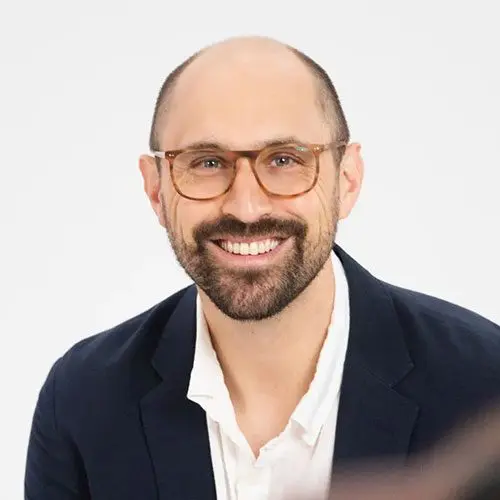
Josh Schachter, Host
SVP, Strategy & Market Development @ Gainsight

Diane Wu, Guest
Global Head of Customer Success & Experience at Google Cloud Security

Brady Bluhm, Guest
Senior Product Manager - Staircase AI
Transcript
Diane Wu:
LLMs will become the new workspace regardless of the backend, you know, application that you might need. And you know, from an adoption standpoint, it’s going to be an interesting thing, right? It’s going to be interesting.
I think there’s the two phase adoption of hey, people have to get used to using an LLM first understanding how to validate and ask intelligent prompts and questions and then understanding what an MCP is and how it unlocks the power of multiple tool sets underneath it to then start thinking about you don’t need 10 tabs open, you only need one. And your interface is much more in natural language than it is visually, at least today. And that might change in the future very quickly. That is a powerhouse for any csm.
Josh Schachter [Host]:
You’re listening to Unchurned, brought to you by the Gainsight podcast. Network knowledge used to be the edge. Know more than your customer, more than your competitors, and you win. That’s not the game anymore. Diane Wu runs post sales for Google Cloud Security, where the customers are defending enterprise infrastructure in real time and the bar for what valuable looks like keeps moving. She and Brady Bloom of Gainsight get into what the CSM role actually becomes when AI handles the knowledge layer and the only thing left to compete on is context. I’m Josh Schachter. This is Unchurned.
Josh Schachter [Host]:
Subscribe to our substack@ Unchurned.Gainsight.com where we go deep on every episode. Like how one post sales team at Cloudbeds built over 150 AI agents. That story and more@ Unchurned.Gainsight dot com everybody. Welcome to this episode of Unchurned. I’m your host, Josh Schacter, senior vice president of strategy and market development at Gainsight and and I am here with two people very important today. The first is Diane Wu. She is the global head of customer success and experience at Google Cloud Security. Diane, thank you so much.
Josh Schachter [Host]:
Welcome to the show.
Diane Wu:
Great to, great to be here. Thank you for having me.
Josh Schachter [Host]:
And the next person is Brady Bloom, Gainsight’s own Brady, who is senior product manager of Staircase AI and so many other things. Isn’t that right, Brady at Gainsight?
Brady Bluhm:
Yeah, yeah, I guess that’s right. It’s always a pleasure to be on with you, Josh. And I’ve never been called Gainsight’s own Brady before and I kind of like that title. That’s fun.
Josh Schachter [Host]:
We’re claiming you, man. You are the citizen builder, citizen AI tinkerer and pioneer at Gainsight Former csm, which gives you really interesting perspective as you’re building out staircase. And we want to riff today with the two of you guys on AI transformation. I’m going to stay out of the way for the most part because I am the least educated person on this topic in the room. So Diane, get us started by Everybody knows Google. Not everybody knows Google Cloud security or security cloud. So tell us a little bit about your org.
Diane Wu:
Sure, yeah. The global Customer Success organization covers basically the entire post sales motion for our enterprise security portfolio. So our products are security information and event management. So siem, soar, cnapp, we love our acronyms here. So there’s a lot of products within the Google Cloud suite. And my role is essentially to to ensure that when a customer and enterprise business trusts us with their core security architecture, they achieve the operational outcomes they expect. Right. That’s what post sales value realization is really about.
Diane Wu:
And it’s a distinct challenge where we live in the product ecosystem for CS because we’re working with very technical customer teams who, who are actively defending their front lines of their enterprise business right in the cybersecurity space. And so everything we touch and our CS team touches is really tied to a mission critical need. So you can imagine the velocity to stay ahead with our customers. The technical acumen that’s required of our post sales team is at a notch higher than I would say is typical of sort of a CS organization, a post sales organization and B2B.
Josh Schachter [Host]:
And just for quick context, you’ve got about 50 CSMs globally plus a digital experience team and you’ve got about 40 more on the technical side, right?
Diane Wu:
Yeah, yeah. There’s a pretty wide scope related to sort of the post sales organization.
Josh Schachter [Host]:
And now you’ve kind of got Wiz. Right? You guys acquired Wiz a little over a month ago and they’re working on integration of those two bodies coming together.
Diane Wu:
Yeah, we’re very excited about that. It’s an exciting time to be part of security at Google because we now now have some traditional security products in the SIEM and source space that I mentioned really around infrastructure, management and platform. And then now we have Wiz, which is part of the cloud security space, cnapp, which is a huge extension onto our existing portfolio. So it’s really exciting.
Josh Schachter [Host]:
We’re just going to jump right in. Before the show you said. I think I jotted it down in my notes wrong. I’m having trouble reading it after 2. Knowledge is no longer the differentiator. What did you say? I’m not cutting this out of the clip here. We’re going to keep going what did you say, Diane? I think I probably prompted your mind, right? What did you say before the show? I want to talk about that.
Diane Wu:
Yeah, well, you know, so thinking about the team, our product suite, our customers, right? Being a very technical product and platform and where AI supports and shifts the skills of our CS teams, right. Both the technical and the CSM side is dynamically changing. Right. I think I had a conversation with Brady a few months ago and we were talking about how is AI changing the post sales supportability ecosystem. And this concept actually came to me when I was researching the impact of AI on our children’s education system. Right. I’m a parent of twin toddlers and I’m thinking about, hey, how is AI going to change what they learn in school and how they’re going to learn in school? And as I was doing a bunch of research on that, which I’m sure many parents are probably thinking about as well right now, is how the access to knowledge as a differentiator is, is changing. Right.
Diane Wu:
So before your access to knowledge, do you have the best source materials, textbooks, literature was how well an individual performed. Right. But now with AI, knowledge is, is really no longer gated by access. It’s defined by and differentiated by, you know, curation and context. So, you know, tying that back to the csm, right. It’s, it’s less about you as a csm, have access to some best practice guides that you know your customers or your partners don’t have and you have to just share that information. It’s really about how do you curate the context associated with that customer’s specific use case to add that differentiated operational value. And so that AI shift really evolves into, in my mind, right, the role of the technical csm, the role of an AI supported CSM and how that changes, right.
Diane Wu:
The human role changes and the relationship with an AI or an agentic AI changes.
Josh Schachter [Host]:
This is our mantra at Gainsight for this year is the industry and the function of CS is moving from just software as a service, providing that to retention as a service. Really kind of CS teams digging in and helping to drive outcomes. Not just sharing knowledge, but actually being very outcome driven. So you’re kind of speaking our language one to one on this, Brady. How are you seeing this play out in your relationship with different customers, CS teams?
Brady Bluhm:
Yeah, extending off of what Diane said, like knowledge is no longer so like having been a csm, I, it always took me like six months to feel like I knew what I was doing in my role and then 12 months to feel like I was really good at it because I had to collect knowledge. I had to, I had to know what I was talking about. And it took me time to know that. I think like, enablement of new CSMs can be way faster because that knowledge is at their fingertips. They can get the answers to questions so easily. They don’t even have to know who internally to ping to get the right understanding and questions. And so it changes the internal team management and project management. It changes the.
Brady Bluhm:
The project management as well. For customers. I think memory is also something that has been like a superpower. People who had great memories and could remember all the different things and everything like that. It’s like that’s. I have a pretty poor memory, so that is not one of my superpowers. And God, am I grateful for meeting transcripts now. Right? Like meeting transcripts are my memory.
Brady Bluhm:
I have perfect recollection of all meetings I’ve ever been on now and going forward. And I can recall that and use it. All I have to remember is that, oh, I talked with somebody about that. I can even ask the AI who did I talk with about this? And it can find that for me and it can pull it up and get me the exact quotes. So as a product manager, that’s changing how I work. But also as a csm, it changes in a way. As a product manager, I feel like a CSM of all of my customers still, to be honest, of all the people that have my product. So I see the roles shifting a lot.
Brady Bluhm:
And so what are the new capabilities? Where do I find myself spending my time? It’s in. I’m juggling agents a lot of the time. Agents are chats at least, right. And different chats. And I’m juggling context and I’m having. I’m setting off one agent to work on context and do research and find this information for me. And then I immediately jump to another chat window and I’m working in that chat on my next thing that I’m doing. So it’s still task management, it’s definitely project management, but I think it’s just changing what the scope of that is and how we do it and the speed at which we can do it too.
Josh Schachter [Host]:
Brady, has it saved you time or are you actually working long more hours now because of this? Because you are in more chats, you can do more and it’s driving more valuable output. But is it actually saving you time?
Brady Bluhm:
So saving time is maybe not the right metric because it’s definitely saving me a ton of time in every task that I’m doing like absolutely. It is saving me time. What I am finding is that I’m also more capable and so more tasks seem to find their way to me to do because I do them quickly, I do them effectively and I knock and I can knock it out and I can do it. And so I accept more tasks from people and internally and externally because I know it’s going to take me 15 minutes to do it where it used to take me four to five hours to do some of these tasks. Right. And, and the work that it would take me to do. So I will say like I’m working harder than I’ve ever worked. I think the speed of the industry is also a part of that too and just how quickly things are changing and how, how much there is to do in that sense.
Brady Bluhm:
But it is one of my personal goals for me and also honestly for customer success managers or post sales teams with the software that I focus on is to like, I still believe in human first AI and I want AI to give people time back and bring sanity to their lives and not just add even more complexity on top. So I, I would love to work a four day work week. It’s not the truth right now but that is a personal goal of mine to be able to get there.
Josh Schachter [Host]:
If only we could all be Tim Ferriss.
Diane Wu:
Yeah, I think that more tactically and how we do it, which is an interesting concept that Brady had outlined, right. Is as CS leaders, we’re always thinking about traditionally coverage models, right. We’re thinking about, hey, you have one human csm. What’s the maximum load of coverage you can have? And you have your sort of enterprise level high touch CSM at a 1 to 10 or maybe 1 to 20 if you’re a highly productive model. You have your mid tier and then you know, you have your digital tier which I think a lot of CS organizations are now starting to really have and embrace. And I think AI really changes that ratio. Right. How we think about what a human can cover and the number of accounts they can cover drastically changes with the support of AI and then in the future agents and I’ll give you some tactical examples of how my team has started to build that productivity internally.
Diane Wu:
Right. So obviously at Google we have access to amazing tools and so some of the easiest things, low hanging fruit that we’ve done immediately in the last six months to a year is turn on transcripts and recording and Gemini notes for every call if the customer permits us. Right. We also work in cybersecurity. We’re Also very cognizant of if a customer doesn’t want to be recorded, we obviously respect that and don’t. But for customers that are okay with it and, and you’d be surprised, a lot of customers have really embraced this because they recognize that having these transcripts and action items means that we’re able to consolidate their context and needs more effectively. So that’s one thing is very easy, low hanging fruit, everybody I think can do today. And then the second piece is Notebook lm, right? So I don’t know if you all had a chance to sort of play around with it, but it’s, it’s an incredibly powerful tool that is different than your typical Gemini, you know, ChatGPT sort of chat interface LLM.
Diane Wu:
It really is great as a research tool consolidation because it’s really focused on the source data that you provide it. So the way that I’ve had my, my CS team use it is every customer, you should have a Notebook LM around. So every presentation slide, every transcript of every call, every technical office hour, notes and action items you’ve had, put that into NotebookLM as your source file and you can have that updated consistently by itself, right? If you build a script to do that. And then instead of having your physical notebook, which I think a lot of people still hold on to, myself included, you have a dynamic virtual notebook that has all the history and context of every single conversation and then you can also cross collaborate on it, right? That’s been the most amazing thing is most of my CS team, if they’re not talking to customers, they’re talking to product managers and engineers, right? Because we’re always translating customer needs to feature requests or business requirements and having that notebook with all the curated context and sharing that readily to a PM or an engineer when they’re trying to troubleshoot a bug or try to figure out what a use case is that a customer needs, has an outsized impact, right? So it makes highly productive CSMs, it makes highly productive internal communication on customer context. And these are just very easy things that you can start adding into CS workflows. I will say, like, in reality, it is challenging to get people to adopt these tools, right? And that’s what I’m learning firsthand, is that, you know, even though we work at very advanced technology companies, not every individual CS person is going to readily embrace these new AI tools. And so how do we as leaders sort of drive the importance and the value of this not as a replacement of a human csm, but as an additive complementary component to a csm And I think the other point that Brady made right. Is it’s not just about because I’m finding my own use case with AI similarly as well.
Diane Wu:
Right. I’m actually doing more in less time, but I’m not saving time, but I’m unlocking all these things. Like, you ever work on a project and you’re like, man, if I had another full workday, I could do that really cool idea. But right now I got these five fire drills and I just got to focus on that. And then that one idea just kind of becomes a note in your notebook and then you never get to it until six months later. But now with Gemini and AI and Notebook lm, I can spend the time on that other idea and all of these fire drill items that are probably more your rinse and repeat very similar. You can start, you know, outsourcing that in some capacity.
Josh Schachter [Host]:
Can you, Dan, can you think of something? A vivid activity can be one offer recurring that you’ve completed through AI where it’s just giving you those superpowers. I’m putting it on the spot.
Diane Wu:
Yeah. You know, I think, I think one piece of it definitely is around customer research. Right. I spend a lot of time digging into our dashboards and spreadsheets to do data analysis. And I have like multiple tabs open. And what I’ve started doing with Gemini in particular, because it’s so much more powerful now with analyzing numerical data sets, which as I think previously it was a little bit more challenging and I think that’s for all models. But really being able to do these deep dive customer analysis and use case analysis that I’d have to do in separate data sets in sheets, I can now do it with AI. So what I end up having is, let’s say I have to do that insight into five customers because five customers have issues that I need to look into.
Diane Wu:
It used to be old Diane would pull up one customer, spend a couple of hours extrapolating across data sets, doing some analysis. Now I have one prompt because it’s all kind of the same things I’m looking for. Add that into one Gemini chat and then add up another set for another. And then I have in parallel running three to five customer data sets that are getting analyzed. That takes me a quarter of the time and obviously I have to go back and tweak it. I think that’s the piece that I think people have to understand is that when you use an AI tool, never ever take it for face value. Right. And that’s where the human in the Loop really comes in around curation and context.
Diane Wu:
The AI is great as a knowledge resource. It can provide copious amounts of raw information and analysis instantaneously. But the person and the CSM or the CS leader needs that sort of intellectual curiosity and technical fluency to prompt it the right way, get it to understand the right discovery questions to get to that differentiated value. So I think my time spent, in short, going back to the original question is less on doing the data analysis and more on curating the insights at a much faster speed.
Josh Schachter [Host]:
Yeah, yeah, yeah. Brady. The idea of massively unlocking value and helping people do customer research, that sounds like a product I know of.
Brady Bluhm:
Yeah, no, absolutely. I want to speak Notebook LM first. Diane I remember we have these calls internally called AI4All that I’ve helped lead at times with colleague that used to work here, Seth Wiley. And I remember it was like one Friday, Seth sent me this link to a Notebook LM podcast episode that he had taken all of the transcripts of all of our AI for all calls that we had been running for a year and a half, dropped them all in, and then he, he created a podcast for each of the individuals that had come on to say, like, tell me about that person. Like, what are they curious about? Tell me about their traits. Like, just from the conversations that we had had, I, I haven’t felt that seen in a long time, honestly, especially in a work environment. I was like, oh, wow. And it was, it made me feel really good.
Brady Bluhm:
It helped me see a lot of positive traits in myself. And like, you don’t hear that very often at work. So huge fan of, of Notebook LM in that sense. And speaking also to, like, what you were saying as far as the hesitance of teammates to get involved or to like, start to learn AI and AI fluency. And the truth is, learning in general, like, it. It’s scary to start something new always because you suck at it at first, is the truth. Like, you’re not very good at using it. Luckily, AI is pretty easy to use nowadays, a lot easier than it was like a year and a half ago to get a, an output that’s valuable, but it is a little bit scary.
Brady Bluhm:
And one of the things that we would always aim for with those AI for all calls is to help people have their wow moment that is always like a transitional shift that people can experience is when they’re doing something that impacts them and the way that they work or something in their life, and it helps them to be seen or, or solve a problem in Their life or something like that. They have this wow moment of oh, what? What else is possible? That starts to spark that curiosity. Right. That I think is necessary for. For learning is. Is being curious about it and starting to get creative about how you’re using it. I know for myself. Like, I.
Brady Bluhm:
Whenever I’m doing anything, I ask, can I be doing this with AI? And then once I’ve done it with AI, I say, is this something I’m going to need to do again? Should I turn this into some type of repeatable process? Should I train an agent on it? Should I train a skill on it so that the next time I have to do this task, it’s easier, faster to get to the output that I want? Because, like you said that first time it takes like, I have to curate the context, then I have to like, sculpt it and the output I have to like, say, I don’t like this, I don’t like this. And I have to like, give it a lot of feedback. Once I get the output I want, then it’s like, how do I codify this? How do I make this so that I can reuse it?
Josh Schachter [Host]:
But you’ve been out there really kind of one step ahead in using the latest and greatest. How much of your work week would you say is devoted to tuning your machines, so to speak? Right. To curating the context and grooming the context and grooming the skills and the gems and those sorts of assets that are working on your behalf? Because I think that there is something that we all agree on, which is this will become the role across any function.
Brady Bluhm:
Yeah, yeah. And Diane and I chatted a little bit about that in. In our call we had a couple months ago. Um, so how much of my time? There’s at least a few hours every week that I’m spending during my work days, like tuning some it. It’s usually to do something though. So it’s like I’m in the process of doing work and like, whatever my mechanism is I have in place right now isn’t getting me there as fast as I want it to. And so I’m doing tuning as I go in the work that I’m doing explicitly, like working on my like, AI brain setup and like hierarchy of folders. Because I’m working in a CLI tool now for myself because I just feel like it unlocks more for me in where I want to be working.
Brady Bluhm:
But all the interfaces are like moving towards that also the user interfaces. So if you’re not like tech technically inclined or don’t don’t like get super excited by like opening up your terminal, then wait like six months and you’ll have it, I guarantee in the chat services too. But that said like, I also do spend like nights and weekends time building stuff for work. Sometimes I build some personal stuff, but most of my use cases are work related because I’m just trying to like get ahead and like and, and drive. Drive more through and not learn, not feel like. Yeah. And, and learn in that sense. So I have a lot of very valid use cases with work to build with.
Brady Bluhm:
And honestly, it feels like play. And so truthfully it’s like, would I rather watch this show by myself in my theater room or would I rather build something that’s going to help me? And I usually opt for the build something that’s going to help me most of the time these days.
Josh Schachter [Host]:
Join me at Pulse this May in Las Vegas. I’d love to meet our listeners. Come say hi. And your daiquiri in that tall fluorescent cup is on me. Seriously. Use code unchurned for a special rate@gainsightpulse.com Diane, I want to go back, if we can, to you made a comment around adoption of AI at Google. My impression of Google is it is the best technical people in the world, some of the best technical folks in the world always kind of pacing ahead on the latest trends in technology. What are some of the ways that you are trying to smooth adoption, increase adoption within your team and those existing workflows?
Diane Wu:
Yeah, the wow moment that Bray mentioned is it really resonates, right? I mean there’s, there’s a learning curve with everything and especially any tool. Right. In particular because there’s a known path that you create. And I think this is especially relevant in, in the CSM world and the CS world, right. Where things are not as rigorously defined in post sales as they are in a like a sales cycle. Right. And so your best CSMs are building their own paths to get to successes for their customers and operational productivity. And having people change that path of how they do things with a tool is very challenging.
Diane Wu:
And an interesting insight that I had as I was getting the team to start using NotebookLM and embracing it. Right. My initial assumption was okay, you have your, your sort of top of the line, highly productive CSMs. My assumption was, oh, these are the top of the line, best of your class CSMs. They’re going to embrace the notebook element AI immediately. Right. And what I found is actually it was almost the opposite because your, your most productive and best CSNs have built and curated their own internal playbook of how to drive operational success that works for them through a lot of institutional knowledge, through a lot of, you know, their own curation of their tools and their spreadsheets and their, you know, things. And it’s really worked effectively for them.
Diane Wu:
And so now having this new tool change something that has been working very effectively for them, that they’ve built over time, is very difficult right now. If you take somebody who is maybe a brand new csm, doesn’t have their own institutional playbook and how they’ve been doing things, you give them a Notebook ln and say, hey, leverage this. They’re like, oh my God, this is amazing because I didn’t have anything before this. Right. So your adoption curve is less steep. And so I think it’s a very tactical thing to think about as a CS leader. And you think about driving transformation. Right.
Diane Wu:
It’s, it’s, it does, it almost has nothing to do with the technical skills of any individual. Right. It’s, it’s really about how much of what they’ve been doing in the past is going to be dynamically changing and how do you step them across that chasm? Right. And you have to do it with small wow moments. Right. I think the easiest adoption that we’ve had is with Gemini notes and transcripts. Right. And put that first into a Notebook lm.
Diane Wu:
Right. And think of it as a chat space for all of your history and your conversations. And that has been getting a lot higher adoption as a concept than using NotebookLM for more advanced use cases, like building a success plan template off of a template. Right. Or building slides for an executive business review, which the Notebook LM is capable of now. But that’s a far more advanced use case that would disrupt a lot more institutionalized behaviors than just looking at notes and capturing insights from notes. So hopefully that gives a little bit of a tactical. Like these are the challenges that we have in product and AI adoption.
Diane Wu:
And it’s really about breaking down the components that are relevant to each individual and how they use it and how they need to change, change their behaviors. It’s really a change management component.
Josh Schachter [Host]:
You know, Gainsight, we recently announced our McP for our CS data. We’re all very excited about that. We think that’s the future of, you know, meet people where they are, that it’s going to open up just the world of possibility on what they can do with all the structure that Gainsight’s platform delivers, that’s going to be change management for people to be going and prompting inside Gemini and in their gems based on the relationship and the McP with gainsight CS. But I know it’s something that you’re excited about. So what’s your prognostication on that? Do you think we’re going to get some good adoption from folks that they’ll be willing and able and excited to change their ways of working in that sense?
Diane Wu:
Yeah. I mean, I was really excited when I saw of the initial proof of concepts of the model and what Brady had shared. And I think I had my own internal moment of just looking at the screen and saying, like, this is going to change how CSMs engage with their tools day to day, right? In the old world of multiple tabs, multiple different tools, to just get the context that you need is going to go away, essentially. And I’m a believer of the traditional application UI is going to eventually fade and go away and LLMs will become the new workspace regardless of the backend application that you might need. And from an adoption standpoint, it’s going to be an interesting thing, right? It’s going to be interesting. I think there’s the two phase adoption of, hey, people have to get used to using an LLM. First, understanding how to validate and ask intelligent prompts and questions and then understanding what an MCP is and how it unlocks the power of multiple tool sets underneath it to then start thinking about, you don’t need 10 tabs open, you only need one. And your interface is much more in natural language than it is visually, at least today.
Diane Wu:
And that might change in the future very quickly. But it’s very exciting. I mean, it’s unlocking a level of connectivity in the back end of context enrichment. That’s really what I think about in MCP and what it unlocks, right? It’s context enrichment because you have access to so many more data sets sitting in different places and then you layer AI on top of that. That is a powerhouse for any csm.
Josh Schachter [Host]:
Yeah, yeah, yeah. I’m very excited, Brady, go for it.
Brady Bluhm:
I had an existential product or product manager existential moment right in January when I first started playing with our staircase mcp. And my thought after playing with it for just a day or two was, in a year and a half or two years from now, why is anyone going to want to log into my product? Like, what is. Is my UX ui? Like why, like why? Why do I even need to build for UX right right now? I do, because not everyone’s in this space of working in LLMs all the time. But in two years from now, I think that’s going to change because the LLMs themselves evolve so much faster than any other product will too. Right. As far as the intelligence and the exponential curves that they’re really on. So, um, and then yesterday I got to play with our Gainsight mcp. We have the Gainsight CS MCP open internally now.
Brady Bluhm:
And I was kind of testing the limits on it and oh my gosh, like, Gainsight has so many APIs, and so, like, so much is accessible to me as a user. And I actually found, because I was a CSM here at Gainsight before I moved to this role, I found five CTAs that were still open that I had opened in Gainsight a couple of years ago. And. And my LLM found it with the mcp. And then it’s like, what do you want to do? I was like, yeah, close those, please. And it’s able to close them.
Josh Schachter [Host]:
You finally close them? You finally got them closed?
Brady Bluhm:
I finally got them closed. And it was all. It was my AI that did that. And so it can. It brings it in for context, but there’s also the ability to write, to timeline and to do this. So as a product manager, I am thinking about, like, how do we build the bones of this? And like, Gainsight has some really strong bones, which is a huge benefit, right. To its structure. That actually as a csm, I had felt some pain points around of like CTA fatigue is.
Brady Bluhm:
Is a known thing with Gainsight, right. And like, keeping your CTAs up to date. But it’s also a very useful project management structure for me to actually prioritize things with status and all of this that can act as like, functional operational bones of our organization that I think. Now some of those pain points that I’ve felt or heard around Gainsight, I’m like, oh, I think those will actually just go away because the LLM will be able to take care of a lot of things and help with it. So that’s really interesting. Just alone how the software is going to change. And then I think there’s the role behavior change too, of, okay, now how do people start working differently as a result of this? Because it is challenging, Diane. Like, people are like, we’re creatures of habit and especially if we know what we’re doing has an impact and works well and we’re good at it.
Brady Bluhm:
And it’s. It’s been working forever in that sense. If I’ve been here for years, right. It’s hard to make those Shifts and changes. And so how do we start to nudge people and where are the places they need to shift first? Right. To get a lot of value not only for them, but and not only for your organization, but especially for the customer. Like that’s the point. It’s customer success.
Brady Bluhm:
Right. And so how do we make sure we’re driving value to the customer faster because of this new tooling that we have?
Josh Schachter [Host]:
Yeah. Gainsight MCP finally closed those CTAs. How’s that for a slogan? You’re the one in entertainment. Diana, I want to end the episode back with you and Google. What does success look like? Looking at the end of this year now, nine months or so from now, what’s success for your group?
Diane Wu:
Yeah, yeah, that’s a great question. You know, I think about going back to the the term customer success. Right. I don’t think of it as just an organization. I really truly think of it as how are we driving success for our customers and how do we do that more effectively, accurately and faster. Right. I mentioned in the earlier side of the call is the velocity is incredibly high for our security customers. Right.
Diane Wu:
Everything they do is mission critical. And so everything that we do to support these customers has to also have that level of criticality and velocity. And when I think about how I internally measure success of our organization and how we are able to drive operational value for our customers more and more, it’s how do we start building hyper personalization for our customer needs? Right. I think we as an organization, with the proliferation of our product portfolio right now with the acquisition of Wiz as well, we have customers that are using eight, nine products that we have across the whole suite. Right. And that’s just insecurity. But think about Workspace and think about Google Cloud and think about Looker and Apogee and all these other products that we have in our broader Google Cloud portfolio, how do we deliver customer success in a tangible way that isn’t diluted because we have so many products, but is actually hyper personalized? And so if we can crack that, I think we’ll be incredibly effective and successful as a CS organization. And I think that with tools like Gainsight and MCP and sort of all the advancements in AI and Gemini, we could do it at a scale a lot faster than we could have even imagined, you know, two years ago.
Diane Wu:
And that’s what I hope to achieve. Right. Higher scale hyper personalization and more specific use case value unlock for our customers.
Josh Schachter [Host]:
Guys, this was great. Diane Wu of Google, Brady Bloom of Gainsight thank you so much for being on the show.
Diane Wu:
Thank you, Josh. It’s great being here.
Brady Bluhm:
I was great chatting. Diane and Josh,
[Un]Churned is the no. 1 podcast for customer retention. Hosted by Josh Schachter, each episode dives into post-sales strategy and how to lead in the agentic era.
Browse Series
Subscribe on