Why Your Customers Are Already Shopping Around (And How to Catch It Early)

Two men appear on a graphic with the text "Lost Before Renewal?" and a G2 logo between them, highlighting customer retention. One wears glasses and a dark shirt; the other has a beard, headset, and hoodie. The dark blue background features "BLOG" in the corner.

Churn doesn’t usually come with a warning. When a customer skips a QBR, stops responding on Slack, or sends the dreaded “we’re evaluating our options” email, their decision is often already set. The signs showed up months before, but you missed them. Eric Gilpin, President of Go-To-Market at G2, has spent 25 years building two-sided

5 Questions That Will Make or Break Your Post-Sales Strategy

Podcast cover for "[Un]Churned," hosted by CS Leader Josh Schachter, featuring two men against a dark background with blue and pink vertical lines and the Gainsight Podcast Network logo.

The traditional Customer Success (CS) model was built for a different era of software companies. The shift to usage-based pricing, the rise of non-technical users, and the rapid expansion of AI tools are forcing CS leaders to rethink the fundamentals: who owns what, how teams are structured, and what “delivering value” actually means now. Replit

Why Scaling Customer Success With AI Doesn’t Mean Scaling Down Human Contact

A blog post image shows a woman and a man with microphones. Text reads "CS Is More Commercial Than Sales," highlighting Customer Success, with logos for monday.com and Gainsight Podcast Network.

The conventional wisdom around AI and Customer Success (CS) goes something like this: automation handles the repetitive work, and CSMs get to focus on higher-value activities. Fewer manual tasks, more strategic conversations. Efficiency scales up, but headcount doesn’t have to. The most forward-thinking CS leaders are taking it a step further by asking a harder

Making AI Stick: A Human-First Approach to Adoption

A promotional banner for a Gainsight podcast shows a smiling woman and a man in a cap with a microphone. Text reads: "[OpenAI's Secret] AI Adoption Engine." The OpenAI logo is between them, highlighting a human-first approach to making AI stick.

Most companies treat an AI rollout the way they’d treat any other software deployment: buy the licenses, enable the accounts, send the onboarding email. Then they wait for adoption to follow. But what happens when it doesn’t? Christina Meng has watched this play out across some of the world’s largest enterprises and shared her insights

Digital Customer Journey: 5 Stages and How to Map It

If a customer asked, “What happens next?” would every team give the same answer? After the demo. After the contract. After onboarding. After the first login. In many SaaS companies, each team owns a piece of that story. Marketing owns awareness. Sales owns purchase. Customer Success owns onboarding and renewal. Product owns adoption. Community and

Your AI Assistant Doesn’t Know Your Customers (Until Now)

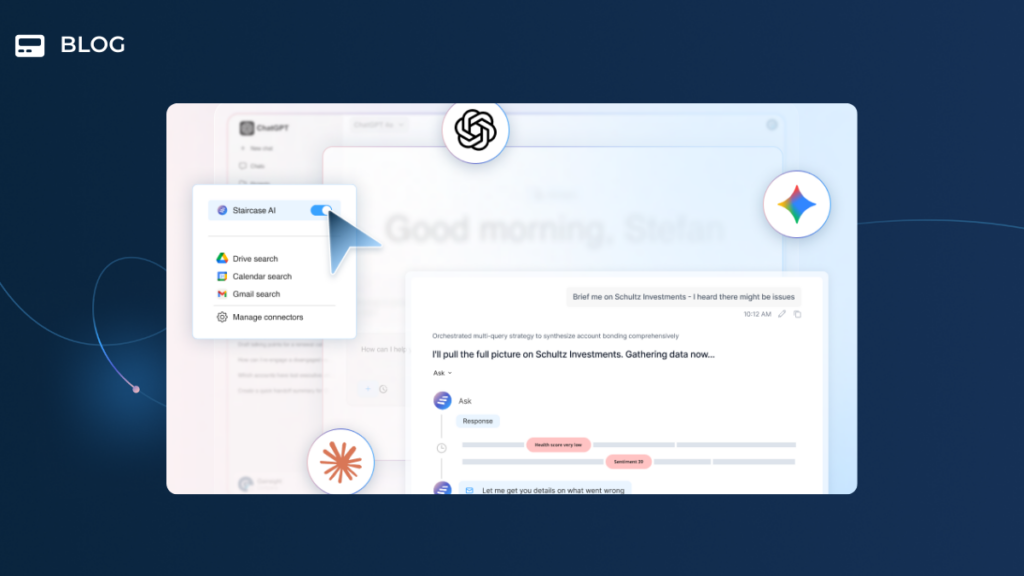
AI is powerful, but without real customer context, it’s just guessing. Most AI tools can draft emails, summarize notes, or answer generic questions, but they don’t understand your accounts. They don’t know which relationships are weakening, which stakeholders just changed roles, or where renewal risk is quietly building. And they definitely don’t see the full

User Adoption: How To Build a Winning Strategy in 2026

Ever notice how some teams try new software, but only a handful of people actually use it after the first week? Real value happens when user adoption goes beyond the login screen. If you want your product to stick, you need a strategy that turns first-time users into loyal champions. Here’s how to make user