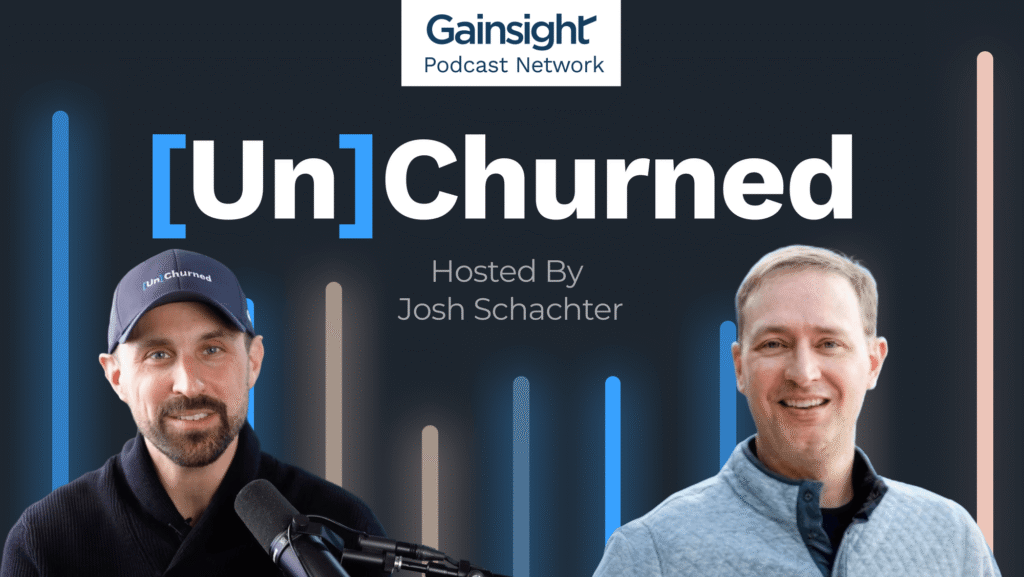
AI won't replace human relationships. It will amplify them. In this episode of UnChurned, Gainsight CEO Chuck Ganapathi shares why he's optimistic about AI and why the future isn't humans vs. agents, it's humans and agents working together.

189. Why Selling Software Isn’t Enough Anymore ft. Chuck Ganapathi (Gainsight)
Show Notes
Most companies think selling software is enough, but the real shift is owning the outcome.
In this episode of the [Un]Churned Podcast, Josh Schachter sits down with Chuck Ganapathi, CEO of Gainsight, live from Pulse 2026 at Caesars Forum in Las Vegas, to unpack why the next era of SaaS isn’t about selling seats, it’s about delivering results.
Chuck shares the thinking behind Gainsight’s biggest strategic shift in 15 years, why the build vs. buy debate is a false choice, and how agentic AI is finally making it possible to serve every customer, not just the top 20%.
You’ll Learn:
– Why outcome-based services are the future of enterprise software
– The “build, buy, or hire” framework redefining customer success
– How the long tail of customers has been silently ignored and why that’s changing
– What human-agent collaboration actually looks like in practice
– Why your smallest customers today might be your most strategic accounts tomorrow
If you’re leading a SaaS business, scaling customer success, or trying to understand where agentic AI is actually creating leverage, this episode is a front-row seat to the next evolution of this category.
—
Want the playbook, not just the conversation? Subscribe for deep-dive, actionable breakdowns from every episode at unchurned.substack.com.
—
Chapters
00:00 – Intro to Chuck Ganapathi
01:45 – Chuck Ganapathi on Taking the CEO Role at Gainsight
04:10 – Why Chuck Is an AI Optimist in a Room Full of Doomers
07:18 – The One Question Every CEO, CFO & Board Is Asking Right Now
09:15 – The False Choice Between Build and Buy
11:40 – Announcing Atlas: Gainsight’s First AI Native Service
14:05 – Why SaaS Has Always Struggled to Prove ROI
18:45 – Build, Buy, or Just Hire Gainsight
22:50 – The Long Tail Problem Nobody in SaaS Wants to Talk About
27:00 – What Humans Actually Do in a Human-Agent Collaboration Model
Featuring

Josh Schachter, Host
SVP, Strategy & Market Development @ Gainsight
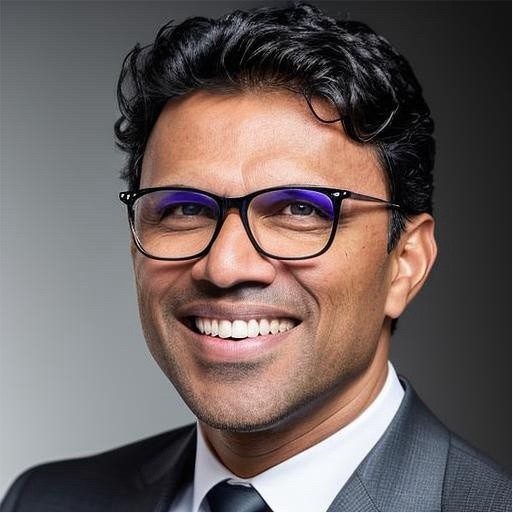
Chuck Ganapathi, Guest
CEO @ Gainsight
Transcript
Chuck Ganapathi:
A lot of concern and fear about AI and a lot of doomerism around AI. I have a lot of hope that I think AI and agentic AI in particular is really going to change the future of work. Retention is an existential thing for companies now and has always been, but never more so than now.
One of the challenges that we’ve had, the ROI has to be owned and delivered by the customer themselves. You have to be willing to own the outcome. That was not possible even a year ago. Agentic technology wasn’t there, and now it’s there.
Host:
You’re listening to UnChurned, brought to you by the Gainsight Podcast Network. Subscribe to our substack@ UnChurned.Gainsight.com where we go deep on every episode. Like how one post sales team at cloudbeds built over 150 AI agents. That story and more at UnChurned.gainsight.com
Josh Schachter [Host]:
Hey, everybody. Welcome to this episode of UnChurned. I’m your host, Josh Schacter, senior vice president of strategy and go to market development. This is a very special episode of we are here at Caesars Forum in Las Vegas for Pulse 2026. I have by my side here our CEO Chuck Ganapathi. Chuck, thanks for doing this with us.
Chuck Ganapathi:
Of course. Excited. Excited to be here.
Josh Schachter [Host]:
Okay, so this is your first Pulse Us? Yeah, we were over in Dublin earlier in the year, in the fall of last year. And so we had a great pulse there. This.
Chuck Ganapathi:
But.
Josh Schachter [Host]:
But Pulse Us, it kind of rings a little different, right? Like, this is the. This is the big one. Last year, maybe there were a few. I’m hypothesizing here, maybe there were a couple people that knew that Nick was going to hand things over to you. I think you may have known that what was going through your mind at Pulse just about a year ago in Las Vegas, as well as you were preparing for this moment coming up for yourself.
Chuck Ganapathi:
Yeah. It was here the first time we made it official. Nick and I were having coffee at Caesar’s palace, and that’s when he said he’s made the decision. We’d been talking about it for a few months.
Josh Schachter [Host]:
Oh, but it was. It was because you were at Pulse last year.
Chuck Ganapathi:
We knew it was going to happen. We didn’t know the exact time, but that’s when he said, hey, I’ve talked to my family, I’ve talked to the board. This is when we want to do it. That kicked off a series of steps that led to him leaving the CEO post and me stepping in in September of last Year, you know, it was a mix of emotions, sadness for not being able to work with Nick. And that last one was going to be Nick’s last pulse. He knew that. I knew that except the two of us, no one else did. So that made me a little sad.
Chuck Ganapathi:
But also excitement coming into this role two years ago, into the company two years ago and then stepping into the CEO role. I’ve seen the change that has happened in the company and the excitement around agentic AI is falco build within the company and so it’s a great time to be at gainsight and I’m super excited to be part of this journey. I’d say the last emotion as I come into this pulse is one of hope. There’s a lot of concern and fear about AI and a lot of doomerism around AI. I am an AI optimist. I have wako that I think AI and agentic AI in particular is really going to change the future of work. I mean, I think it’s going to have far more impactful things happening outside of work as well the society. But I think in the work environment, in the way we do our jobs, every day is going to change so much for the better with AI.
Chuck Ganapathi:
So I’m very hopeful for the future.
Josh Schachter [Host]:
So we’re about 15, 16 hours from you hitting the stage for the keynote tomorrow. If I ask you one emotion that you’re feeling right now, would it be hope?
Chuck Ganapathi:
Oh, absolutely. Hope. I think there are a lot of things in our industry that feel impossible right now. And one of my favorite slogans, ad slogans of all time is the one from Adidas from the year 2004 and it was inspired by the greatest boxer of our time, Muhammad Ali. And it’s Impossible is nothing. And so I’m very, very excited to be on stage tomorrow talking about all the things that seem impossible and how I think we as a company, as a community, as part of polls, have a broader customer success community. I think we have a lot of, a lot of great things to hope for in the future.
Josh Schachter [Host]:
Heading on stage tomorrow. There’s always a big review. There’s always, you know, something, what’s, what are false announcing tomorrow we’re going to
Chuck Ganapathi:
have some fun things going on. Obviously there’ll be, there’ll be a good video in the beginning that’s going to be fun. You’ll have to watch it.
Josh Schachter [Host]:
An amazing video, not just a good video. I mean, this thing is groundbreaking. I hope people like it.
Chuck Ganapathi:
It’s going to be a lot of fun. So we’re Keeping that on the down low. And I think in terms of product and innovation, look, there’s a lot happening in our industry right now, and we’re listening. We’ve heard from our customers over the last year. We’ve learned a lot from Pulse in Vegas last year. And so we’ve really put all of those learnings into action. And the way we think about it is like the seminal question that everybody is asking, all of our customers are asking, which is, how do I drive higher retention with agentic AI? Right. There are a lot of things, you know, people are, people are struggling with, grr.
Chuck Ganapathi:
The budgets aren’t coming, you know, there’s no more headcount. There are a lot of things that feel impossible, like I said before. But the one question that everybody’s asking, CEOs, CFOs, board of directors, everybody’s asking is, how do I use agent AI to, to drive higher retention? Retention is an existential thing for companies now and has always been, but never more so than now. And so how do we use identity AI to improve retention? That’s the one question we’re really going to be focused on. And we think there are three ways that question can be answered. And I’ll start with what people are thinking about today, which is, you know, the false narrative, the false choice that people are being made, faced with is do I build myself or do I buy? Right. Do I have to buy this inflexible piece of software that’s not tuned to my business or do I, you know, read the latest blog and watch the latest YouTube and get inspired and say, I’m going to go vibe coat? This sounds like a lot of fun until you realize what happened and I’m stuck maintaining it. And then it’s.
Chuck Ganapathi:
It’s a, it’s a. Both fun and it’s painful. Yeah. But it’s exciting to be able to build, which you in a way that you could have never done before, but it’s a choice I have to either build or buy. We think that’s a false choice and we think that the right answer is that you should be able to build and buy or can’t you have your cake and eat it too? And so that’s the future we’re building for at Gatesight.
Josh Schachter [Host]:
Chuck, you’re about to go onto stage and make a major announcement about a transformation for Gainsight. Tell us more about that.
Chuck Ganapathi:
I am thrilled to announce Atlas, our very first AI native service for managing renewals in the Long Tail.
Josh Schachter [Host]:
Amazing, right?
Chuck Ganapathi:
So we are selling services that’s Right, that’s right. Gainsight is no longer just selling software. We are selling software plus services. Services that deliver on the amca, the actual outcome for the customer. And in that case, in our case, it’s renewals. It’s a first service we’re launching and for the first time in this category, you can now hire Gainsight to do the work and to deliver on the arc.
Josh Schachter [Host]:
Wow, that’s amazing. We’re not selling seats in that. We are selling the actual housekeys, getting the work done for our customers.
Chuck Ganapathi:
That’s her.
Josh Schachter [Host]:
This is big news. Gainsight has been a software company for 15 years. What made you decide that this is
Chuck Ganapathi:
the moment for us to go into the services business? So I’ve been in the SaaS business for a long time and one of the challenges that they’ve had is why even though at the beginning of the project you have a real business case for roi, ultimately the ROI has to be owned and delivered by the customer ourselves. We’re just delivering the software and we’re saying that’s rest of it is up to you. Now, of course we surround it with customer success and all the things that Gainsight does, but at the end of the day, the outcome is still owned by the customer.
Josh Schachter [Host]:
I mean most, most SaaS companies have struggled. Exactly. Get to that ROI. Correct? Yeah.
Chuck Ganapathi:
It’s hard to prove ROI of any SaaS product because ultimately, you know, when the rubber meets the road, it’s the customer that owns that outcome. With the services model, as you know, the outcome is the product and that’s always been the case for services. And I think in this day and age, with what we can do with Agentix software, we need to move beyond just giving the technology that the humans and our customers have to go execute. We should be prepared. The role of Magentix software should be to actually deliver the outcome for the customer. We believe that’s going to be the future of software and now is the perfect time to do that because the services business, you know, is a low margin business. If all the work had to be done with humans, it’s a low margin business. And you know, already happens with BPOs for example, that outsource work for you.
Chuck Ganapathi:
It’s been done for many years, for many decades. What’s different now, what makes it interesting for Kingsight now is agentic AI. Because with agentic AI we can deliver this service and deliver the outcome at a significantly different margin profile than what a traditional outsourcing company can. Because in our case what we’re doing is not labor arbitrage is we’re doing value creation by humans and agents working together, collaborating to develop on the outcome.
Josh Schachter [Host]:
And this is a trend that we’re seeing now in Silicon Valley and beyond, you know, quotes and things here. Sequoia recently published Services the New Software. It was a report in march that hit 3 million views. I know you’re close to Jake Saper, general partner at Immersion Capital, and they’ve made claim that they want to be the most informed on AES and the top investor of AINS AI native services in the field. He was quoted recently as saying, in an AI native service business, having domain expertise is even more important than in a software company, because in software you’re selling the product, in AI native services, you’re selling yourself. And he goes on to talk about, you know, the key investment criteria that he looks for when companies are deploying this is their domain expertise that they have a technology platform that it can live off of and a willingness to own the outcome. 100% score, give me gainsight score.
Chuck Ganapathi:
100%. This is exactly why we are at a perfect time and we’re the perfect company to be launching this, this new service. Jake is absolutely right in terms of domain expertise. Gainsight has been in this business for 15 years working with companies of all sizes, trying to drive customer success, improve retention. We worked with companies like IBM, SAP Workday, some of the largest global companies on the planet, as well as the hottest companies on the planet, including Notion and Anthropic. And we’ve learned a lot from that and a lot from this community and all of that domain expertise makes it possible for us to deliver this service to our Atlas customers. The second thing is the technology platform. As you pointed out, we’ve been working on the Atlas Agentic platform for a little over a year now, and we have had great success with our pilot customers, including PartSource, Okta and Infoblox.
Chuck Ganapathi:
They’ve been running our Atlas service. And you’re going to hear as part of this keynote, Ed Daly, Chief Customer Officer of Okta, describing his experience with Atlas. And the last part is willingness, the only outcome. Because this cannot be sold like traditional software. You have to be willing to, to own the outcome and get paid on the outcome. Very exciting and a very different model for our industry.
Josh Schachter [Host]:
Are we sticking our neck out there, owning the outcome, getting paid on the outcome? I mean, tell us, tell me a little bit more about what that actually means.
Chuck Ganapathi:
That’s what it’s all about. I mean, if you’re not willing to own the outcome, you cannot be a services business. And I think this is what customers expect today. And you know, what we’ve learned over the last year working with Atlas customers, the pilot customers that have been part of our program, is that everybody wants to use agentic AI to drive these outcomes. But the answer is not as clear.
Josh Schachter [Host]:
Right.
Chuck Ganapathi:
People don’t have the right data. People don’t know how to get agents and humans to work with each other. Where does the agent stop? When does the human pick up? There are so many things that you have to figure out. And if you ask customers, hey, I want to automate your renewals with our renewal agent. What’s your playbook? In the long Tail, there’s no playbook. Those customers are being ignored. So many customers are just not ready for this. That’s why we decided this is a perfect time to launch Atlas as an AI data service.
Chuck Ganapathi:
Because we can bring all those together, our domain expertise, our people, our playbooks, all of the data that’s in the Gainsight platform, already bringing it all together and delivering that as a managed service I think is just way up the future.
Josh Schachter [Host]:
We’re also launching two other pillars of our agentic product platform.
Chuck Ganapathi:
Tell us a little bit about those. Well, the easy button is if you want a higher Gainsight to run your adults, okay, not a problem. We can take care of that for you and we’re super excited to launch that. But for certain other workflows, you still want to be able to build agentic AI workflows. And you know, the reality is the market has been framing this as a false choice or I think is a false choice, which is you either have to build or buy. Now what we can do is a comp is bulked. You can have your cake and eat it too. You can build agents on our platform leveraging our permissions, our security, our governance, the performance and reliability, the pre built data models, the insight, all of that baked in and you build the fun stuff on top or you can buy our pre built agents or you can do both, you can buy our pre built agents and then build on top of those as well.
Chuck Ganapathi:
So we want to be able to give customers the choice and the flexibility and the freedom to pick from any one of these pillars. Build, buy or just higher gains like
Josh Schachter [Host]:
across the spectrum, break down the build and the buy a little bit more.
Chuck Ganapathi:
For me in terms of the technologies that we are releasing as part of this pulse in the build category, lots of exciting things. Gainsight mcp which was launched about a month ago with a couple of our products now all of our products at Gainsight, CS Staircase, Community Education, PS all of them have an MCP interface so you could work in your favorite agentic tool, whether It’s Claude or ChatGPT or Gemini. And you can use Gingsight without ever having to log into gainsight. That’s very powerful and exciting for our customers. The second thing we’re announcing is Gainsight CLI, which allows customers to administer and configure Gainsight without never having to log into Gainsight. Because you just have the Gainsight admins, CSOPs can now use their coding agents, whether it’s Codex or Claude code. And have those agents code on top of Gainsight makes their job significantly easier, gives them a ton of power through the English language. Just prompt you away and build a JO program or configure gainsight.
Chuck Ganapathi:
The other part of Build is something that we’re very excited about. It’s brand new. We’re launching Gainsight Agent Studio and that’s also powered by Claude. And this is really targeted for those companies that have not yet standardized on an agentic platform outside or they’re worried about security and they want all of this to be delivered to them in a package, not having to go through a whole new rig of a roll of bringing another agent tick tool into the picture. We want customers to work where they want to work. And if that’s inside a Gainsight, the same power of those agentic tools should also available to you inside a Gainsack. And that’s what Agent Studio is. Think of it like cloud cowork.
Chuck Ganapathi:
If you’ve used CLO core, but it’s running inside a gang site, you can build all of your agentic workflows on top of it, whether you’re an end user or you’re an ad. All these things give you the power to build on top of our foundation, our platform that has security permissions and all of these other great things that we built over Lasko teams with the
Josh Schachter [Host]:
Headless integrations be part of that as well. I mean, now we’re going to have Arvind Jain on Unturned on stage on Thursday and the CEO founder of Glean. And you can, you know, we have our data integrated into Glean right now and WatsonX and Asianforce. So I’m imagining that Headless, you know, meet people where they are for us, part of this.
Chuck Ganapathi:
Absolutely. I mean, we’ve been working with WatsonX, our IBM, which is one of our. They’re one of our largest customers and we integrated gainsight into WatsonX and into Salesforce and so now their CSMs and sales teams, their entire revenue team has access to gainsight through WatsonX and it’s a great outcome for them. Same thing with Gleam. Many of our customers use Gleam today and now they have access to all the gateSight data with AgentForce. We’re one of their launch partners for Agent Exchange, which is their thing with their app Exchange for agents that are built on agentforce and Gainsight. Now available on that as well. That’s awesome.
Josh Schachter [Host]:
That’s awesome. Okay, so that’s Bill. Yeah, we have the first, the first third of the different programs that we have now. Yeah, Buy. So that’s the buying piece of the.
Chuck Ganapathi:
Which is where this all started. SaaS was mostly, you know, the beginning. You bought software and you could have, you know, people bought Gainsight CS and Staircase and a bunch of these other products and you know, we’ve sold productized software, opinionated software for 15 years in this space and we’re continuing to offer that to our customers. So you know, for those customers that say, look, this build is great, I’m not ready for that yet. I just want to buy the pre built agent that already has the expertise and the thought process that Gatesight has put into it. The learnings from all the thousands of companies that we’ve had over the last 15 years, you know, built right into the, into the agent. That’s what we offer. We started with Staircase about two years ago, you remember that.
Chuck Ganapathi:
And now we have a whole slew of agents, everything from a risk agent to an expansion agent and to a handoff agent. Or you can do pre sales to post sales handoff. Our expansion agent can identify upsell, cross sell opportunities for you and give it to you right inside a Gainsight or sales course. Lots and lots of exciting capability that have been built into our pre built agents and it’s not just for customer success. Our digital customer hub products also have pre built ages. For example, if you’re a community builder and you want to have a moderation agent, we have that as well. If you have an academy and you want to have an agent that acts as a tutor for your learners, we have that now as well. So we’re excited to be unveiling all of these new pre built agents right here tomorrow at the, at the Pulse.
Josh Schachter [Host]:
So on the build piece like you were discussing earlier, you know, talk about MCP and headless, you’re, you’re relying on, let’s say you’re and you’re, you’re pushing our data into Claude. It’s, it’s the Claude and Anthropica, the alloy and behind the scenes it’s whatever you use locally within your own enterprise and environment. On the buy piece, this is embedded intelligence that we have accrued and have refined through the years that we’ve been doing.
Chuck Ganapathi:
So is that a fair. That’s exactly right. But you see, these are not two divergent paths. People want to buy our platform, buy our agents, but also build on topic
Josh Schachter [Host]:
because you don’t need to necessarily build an expansion agent if you gainsay.
Chuck Ganapathi:
Right.
Josh Schachter [Host]:
We’ve already been doing this for two years and we fine tuned it and we’ve done all the things that’s right. Build something that is maybe unique to
Chuck Ganapathi:
your organization or, or if you say oh, the expansion agent that we have gets you 80% of the way.
Josh Schachter [Host]:
Right.
Chuck Ganapathi:
But you want to have some additional factors that you want to, that you want to add on to that. Well, you can do that now because you could be inside a plot and from Claude using our MCP staircase MCP call our expansion agent Expansion agent comes back and gives you 80% of the answer and then your specific workflow in CLAUDE can add, can take, take it all the way to the function.
Josh Schachter [Host]:
It’s not just the raw data structures at all. On top of agents.
Chuck Ganapathi:
Agents on top of agents. Exactly. You know, these are called mix. You know, you can have mixture of experts essentially, right. I think of each agent as an expert in one thing. And you know, it’s like instead of hiring a, you know, just a, a PhD in, in one area, you don’t, you don’t have to have an agent that’s a PhD in every field. Right. So think of our staircase expansion agent as you know, has the PhD in expansion, but this general grouper’s agent called Claude can call that and say hey, give me everything you know and then layer in a couple of more extra data points to tell us exactly how to go after this process.
Josh Schachter [Host]:
Or if you’re using Glean, let’s say it’s okay. But you know what, but Glean knows everything about my company. You know my financial reports, you know my, my org chart. So build an expansion analysis to overlay that with what you know about my company or my vertical or what my industry, those sorts.
Chuck Ganapathi:
And it can be third party data. You know, you could have data that’s either proprietary to your company that gives you some white space analysis that you can marry with the insights generated from our expansion agent or you could go out to the SEC or to a Zoom info or any of these or LinkedIn or any of these third party sources and then marry that insight with the insight that staircase gives you to give you something that’s truly yours. That’s the beauty of bringing build and PI together.
Josh Schachter [Host]:
Let’s go back for a moment to eans to the anim services. We’re now going into the business of work. What does this mean for the future of jobs for customer success?
Chuck Ganapathi:
Look, I think for our customers have always had, you know, high touch customers or large enterprise customers. And then there’s the long tier, right? This is true for every company and usually the Pareto principle applies. 20% of your customers dry 80% of our revenue and the remaining 80% of your customers drive 20% of your revenue. And what we believe in this new world, you can now focus your best people and your internal resources on your high touch customers, your most strategic, your large customers. And you can leave the long tail to us. We can run that renewal motion for you. And you know, this part of the business has been ignored. Most companies do nothing with their long tail and those customers are silently churning.
Chuck Ganapathi:
And the reason for that is it’s just uneconomical to put a lot of bodies, a lot of people, a human heavy motion in the long term because the math doesn’t work. You know, just that the contracts are too small, the number of customers, the number of renewals you have to do is too great. And if you try to do that with the human workforce, it’s impossible. So what most people do is ignore the long tail and then accept a 60 or 70% churn. And we think that’s just a huge waste. Even though the long tail may only be 20% of your ARR base. If you can make a 10% improvement in renewals in your long tail, that is a 2 percentage point improvement. Improvement in your overall GRL.
Josh Schachter [Host]:
That’s huge. And I mean, I think going back to the last pulse, let’s say we’ve been talking about treating every customer like it’s your best customer. Before, as an industry, we kind of expected for the long tail just to be on auto renewal. It’s lower contract volume and cost and we just kind of expected to have them recycle and renew automatically with that assumption. But now there is consolidation, there are more headwinds for SaaS companies. And so really you have to treat every customer and you have to manage those accounts not just for that reason.
Chuck Ganapathi:
Of course. Retention is existential now more so than ever before. And you have to treat every customer like your best customer, even if they’re Your smallest. But there’s another reason for that. Your smallest customers are your growth engine for the future. You have to invest in them as well. And so in this new world where new logo acquisition is harder than ever before, you have to be able to go back to your base and sell them more. And your small customers, your long tail may actually be a great source of pipeline.
Chuck Ganapathi:
So giving the long tail some TLC is very important. The problem has been that it’s uneconomical to do that because if you throw bodies at the problem, it’ll never work. But now with ATLAS and AI native services, we will set up a renewal plot that has agents and humans that we can unleash upon your long tail and drive higher retention. And that was not possible even a year ago. Agentic technology wasn’t there and now it’s there and now we can deliver that fully as a managed service.
Josh Schachter [Host]:
I like what you’re saying though about it’s forward thinking to think that, you know, your long tail, it might be your long tail today, but those are going to be your bigger accounts in the future. They’re going to grow. I mean the world that we’re living in right now, again, some of those highest companies are the AI native companies and they might be small today in raw volume, but their growth rate is sure proving that they will be the premier accounts for many SaaS companies or many companies in tech in the future. Talking about stuff like that. So okay, talk about the pod. A pod of humans and agents in this world, in this behind the scenes, as part of Atlas, as part of this eating system, what did humans do?
Chuck Ganapathi:
Well, look, at the end of the day, we’re the business of customer relationships and we believe that human connection will always be at the center of customer relationships. That doesn’t change AI or new AI that’s never going to go away. People like doing business with other people. And we think that the role of the human in this new AI native service with our parts, for example, will be that the humans will drive the judgment, the oversight, the strategic intervention when things go wrong. Because agents are probabilistic software and they’re not going to get everything right perfectly. And having humans in the loop allows us to bring the reliability of these systems to where we can accurately predict what they’re going to do. And then we can put guardrails around their operation because they, these aren’t our customers. We’re talking about real revenue here, real dollar numbers.
Chuck Ganapathi:
So the tolerance for mistakes are very low. Right. So we have to be able to Use the human intervention, the human judgment to make sure our agents are doing the right thing.
Josh Schachter [Host]:
The tolerance for mistakes is very little, but there’s always going to be learning. So when you’re creating those guardrails, we’re always going to be refining those guardrails and reinforcing.
Chuck Ganapathi:
And that’s why we call it humanate and collaboration. These learning loops that happen with agents, you know, driving the scale at that massive long tail scale that’s needed and the humans providing judgment and learning from each other. Humans training agents, agents helping humans. I think that is a virtuous cycle that makes all of this possible.
Josh Schachter [Host]:
We’re going to sit somewhere next year before Pulse. What is Gainsight going to look like? What’s your vision for Gainsight a year from now?
Chuck Ganapathi:
Look, at the end of the day, we want to help our customers answer the most important question that’s being asked right now of them, which is, how does agentic AI help you drive higher retention? Everyone is asking this question. We think the answer is very clear. You should have the freedom and the choice to be able to build your own agents on top of our foundation. Buy three built agents that are, that are, you know, that capture all of the expertise that we’ve built over the last 15 years or just simply hire Gainsight to do the work for you and deliver the outcome. We think that is the way of the future. And we think with the announcements we’re making at Pulse, we can make that a reality over the next 12 months. That’s my hope and desire for future.
Josh Schachter [Host]:
Last question for you, Chuck. We’ve got a team get together tonight before the keynote. Tomorrow morning, Tuesday evening, we’re going bowling. What’s your bowling score?
Chuck Ganapathi:
Oh, my God. Not great. Not great. My kids usually end up beating me at bowling. So you’re sticking a tire? Too embarrassed to say. And yes, I’m sticking tennis.
Josh Schachter [Host]:
Chuck Ganapathi, CEO Gainsight. Thank you so much. And get some good rest in it.
Chuck Ganapathi:
Thank you!
[Un]Churned is the no. 1 podcast for customer retention. Hosted by Josh Schachter, each episode dives into post-sales strategy and how to lead in the agentic era.
Browse Series
Subscribe on