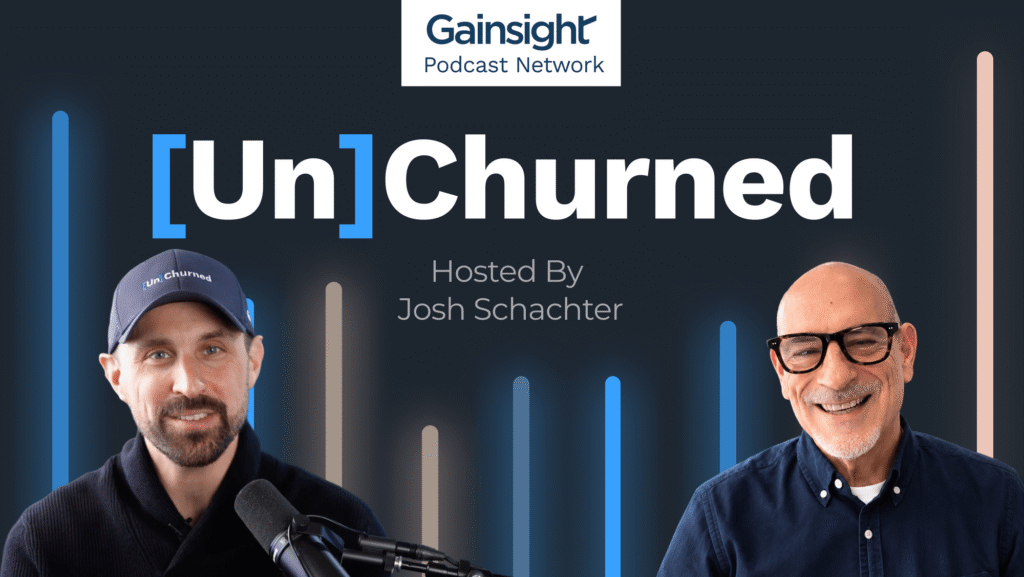
Chris Catania & Erica Kuhl on why community is a strategic advantage rivals can't copy, plus the Benioff feedback story that changed everything.

195. How to Sell Community to a CEO Who Doesn’t Care About Community ft. Chris Catania (Esri)
Show Notes
Most leaders treat community as a marketing channel. They’re leaving the real advantage on the table.
Chris Catania , Head of Community at Esri built community from a love of live music. Lately, he wrote the playbook. In this episode he joins Erica Kuhl, who scaled Salesforce’s legendary Trailblazer community, and Josh Schachter to make the case that community isn’t a nice-to-have. It’s a strategic operating system competitors can’t copy.
From Lego’s near-bankruptcy turnaround to Marc Benioff, CEO of Salesforce, demanding harsher feedback, this episode reframes what community can do for a business.
—
Want the playbook, not just the conversation? Subscribe for deep-dive, actionable breakdowns from every episode at unchurned.substack.com.
—
What You’ll Learn
– Why community is a service to every team, not a marketing channel
– The importance of speaking each executive’s language
– The “fake flowers vs real flowers” test for authentic community
– Why community-driven companies build an advantage rivals can’t catch
– The three E’s: enablement, experience, evaluation
– How to set a North Star while delivering ROI in small wins
Timestamps
0:00 – Preview & Intro
1:56 – Meet Chris Catania
6:27 – Three founders, one music origin story
10:17 – The Lego turnaround that saved the brand
14:25 – Fake flowers vs real flowers
17:28 – Why nobody likes the word “community”
22:05 – The Marc Benioff feedback story (CEO of Salesforce)
24:24 – Is Voice of the customer underleveraged?
31:47 – Erica ran Salesforce’s first Twitter handle
33:22 – Community as a service and the unfair advantage
37:20 — One takeaway: the three E’s
Featuring

Josh Schachter, Host
SVP, Strategy & Market Development @ Gainsight

Chris Catania, Guest
Head of Community @ Esri

Erica Kuhl, Guest
EVP & GM @ Gainsight
Transcript
Chris Catania:
Community’s been around for a long time, but the idea of seeing it as a service and as a driver and having leaders understand that at scale is relatively new.
But the thing is that if you’re building a company and you don’t have Community in your DNA or you don’t have it in your strategy and your competitors do, we’re getting to a point now where those that do are going to accelerate faster.
Josh Schachter [Host]:
You’re listening to Unchurned, brought to you by the Gainsight Podcast network. Chris Catania’s best business idea didn’t start in a boardroom. It started at a concert, watching fans who do almost anything not to miss a song. He’s the head of community at esri, and his book makes one claim. The loyalty you feel at a great show is the same force that makes a company impossible to copy. With me to put that to the test, Erica Kuhl, who built one of the most famous communities in software at Salesforce, and now she’s leading Gainsight’s digital customer hub. Today is Community the last real advantage? I’m Josh Schachter. This is Unchurned.
Josh Schachter [Host]:
Subscribe to our substack@ Unchurned.Gainsight.com where we go deep on every episode. Like how one post sales team at cloudbeds built over 150 AI agents. That story and more at unchurned.gainsight.com everybody. Welcome to this very special episode of Unturned. I’m your host, Josh Schachter, senior vice president of strategy and go to market development. And I have with me today a very special co host, Erica Kuhl. Erica is the general manager, the executive vice president of our digital customer hub at Gainsight. Erica, thank you so much for joining me on the program.
Erica Kuhl [Co-host]:
I’m so happy to be here. Couldn’t miss this one.
Josh Schachter [Host]:
Of course, this is a big one. This is a big one. And our guest today is Chris Catania. Chris is the head of community at esri. That’s his day job and he wrote a book on community called the Community First Advantage: How Modern Leaders Use Community to Drive Growth, Cut Costs and Compete in a Changing World. Chris, congratulations on the book. I know it’s recently been published. I know it was a lot of work going into it and so kudos to you on that effort.
Chris Catania:
Thank you. Yeah. Excited to be here.
Josh Schachter [Host]:
Yeah. Tell us a little bit about the origin, you know, what you do at esri, your job at head of community, and then what inspired you because we’re going to talk about your framework in the book and Some examples and talk with Erica about that as well. She’s part of the book as well. She was one of the leaders that you were speaking to. What was your inspiration for writing this book on the Community Advantage?
Chris Catania:
Yeah, I mean, honestly, if I go all the way back here and I’ll fast forward from that, but actually started, you know, it didn’t start in a boardroom necessarily. It started in a concert venue. So my origins are music journalist, concert fan, you know, So I was. I love going to concerts. And in the early 2000s, I had a series of moments where I was like, felt really connected to other concert fans, the band, the music. And from there I started a concert fan community called Live Fix. And I got a chance to interview fans and really understand, like, why do people keep coming back to the concert experience following bands like, you know, why do they wear, you know, adult diapers to concerts so they don’t miss any songs? Because if you know who I just referenced there, you. You’ll know why.
Chris Catania:
But. But that, that led me on this journey. So I took that love for concerts and that connection, that curiosity and, and that. And then eventually I combined that with business because I was like, well, businesses need to. To have this in their strategy. They need to be able to. To, you know, maintain that connection. And what.
Chris Catania:
What better thing for retention, you know, and for keeping that loyalty going. Why not take that feeling that we have, that emotional, deep, like, even neurological connection we have with ourselves and each other’s in the bands and bring that into the business, bring that into community and inject that, that whole idea into a business and make it an advantage, you know, so over the last 20 years, I’ve. I’ve been doing that within organizations and helping leaders understand this advantage that they have if they, you know, they tap into that sense of belonging, that sense of purpose, that sense of, you know, being able to connect people and. And essentially build better products, retain staff, you know, have a. Have an advantage in the. In the marketplace, things like that. So I’ve really enjoyed doing that. So I.
Chris Catania:
I had a. I had a good conversation with a good friend of mine, Jenny Weigel. She. She kind of asked me, like, hey, what do you do? How do you do it? You’ve been doing it for a long time. And I said, oh, well, you know, I do this thing and I do this and I do that, and, you know, I ask specific questions about the business and all that kind of stuff. And then she said, you should write a book, you know, so that was. That was about three or Four years ago, she said that it’s like, okay, cool. But I saw it as a great opportunity to help leaders and really essentially give them a playbook, give them a series of structured frameworks so that they could take community from a nice to have and make it a strategic advantage in their business and do what these other companies are doing, you know, Lego, Salesforce, Figma, you name it.
Chris Catania:
Sephora. Right. They’ve been doing it for years now and other leaders should be doing it. And how do you take some of the guesswork out of it, right? How do you make it a mindset and then how do you make it in a system so you can operationalize it and make it sustainable? So that I was like, hey, let’s put it in a book and go from there. So that was. I just. I love helping leaders and I love helping organizations make sure that they’re being led by their communities, by the customers.
Josh Schachter [Host]:
Erica, I’m going to give you the softball of all softballs. Are you ready for it? You are the pioneer of community. I’ve joked in the past. You know my joke, right? Is that you’re the Oprah Beyonce. That’s right. Beyonce. Yeah, yeah, I love Oprah.
Erica Kuhl [Co-host]:
You said Oprah though. I love that one too.
Josh Schachter [Host]:
Yeah, yeah, yeah. I’m the Oprah at gainsight of like giving out hats of my unturned show. You’re the Beyonce. Is there a community first advantage for SaaS companies or for any company?
Erica Kuhl [Co-host]:
Oh, my. Yeah, I mean, it. It is. It is the advantage. I mean, just like Chris said. Well, first of all, I just have to say I did not know that was your origin story, Chris, and that’s really cool. And I don’t know if you know, our co founder of insided, which is our community product, actually has a very similar origin story. He had built a music community as well.
Erica Kuhl [Co-host]:
Like, that’s how he, he started and
Chris Catania:
was like, I did not know that.
Erica Kuhl [Co-host]:
Yeah, he’s like, I don’t have a platform in order to house this, this music community. And so that’s why he started inside it. So as you were telling the story, I was like, wow, that is. That’s so funny. So I love people’s origin stories about community because they’re never normal, you know, because we, this wasn’t a thing. So we just. When you build something that solves a problem, it’s always awesome. So that’s, that’s really cool.
Josh Schachter [Host]:
Can I add also something funny because I actually just got off a call with Amit Bend off, the CEO of Gong And I learned from Gong, from Amit, that he started out in music as well. And a lot of what he’s done at Gong, I mean, the name of the freaking company, to raving fans, right? Because it was like, raving fans, like rock music. Even from the product he said that they developed a certain way to look at the transcript that I forget the expression he used, but it was based on the visual UI of looking at music is how they developed. So it’s so funny. There’s some kind of musical theme here going on with community builders. It’s powerful.
Chris Catania:
Yeah, we don’t talk enough about it. That’s awesome. Those origin stories. Cause it makes sense when you think about it, right? Like that experience we have at concerts. And it took me a while to kind of put it together, like, how do I inject this into business? But eventually things clicked. And I just think that so many people, leaders especially, have had experiences at concerts and they want to connect. They look around, they go, wow, how do I. How do I do this for my customers? You know, I think that’s the natural thing.
Chris Catania:
That sounds like those leaders have done that.
Erica Kuhl [Co-host]:
Yeah.
Chris Catania:
That’s awesome.
Erica Kuhl [Co-host]:
Yeah. But translating it’s the hard part, you know, actually doing that because, you know, music is one thing. It’s so. It’s so emotional and. And then how do you create that same emotional connection? And B2B SaaS or SaaS, like, that’s the harder thing because I think, you know, and I think about origin stories like it, you know, not taking yourself too seriously, understanding, like, what motivates people, why are they there, what are they doing? Same thing that you were just asking about, you know, raving fans that, you know, I know why I would follow Mumford and Sons anywhere, but, like, would I follow Salesforce anywhere? I don’t know. That was not, like, my intention. My intention was, you know, what is this going to do for this person? What? What? How can I emotionally connect with a person? It’s not about software. It’s more like, what is this going to do for this person’s life? And if they have expectations for themselves that are bigger, they want to learn, or when they want a promotion, they want to be better than the average bear, whatever it is.
Erica Kuhl [Co-host]:
Like, that’s the origin of every good community, is understanding what motivates people and why are they there? Like, what are they. What are they getting out of it? And then if you feed and fuel that in an authentic way, it’s almost the foundation is set. Of course, all the things you write in the book are how you then get it to scale and get everyone to understand it. But you have to get that first. You have to get that right first, which is why are people there? What’s the unique thing that you have that they can’t get on their own somewhere else and then figure out that and always keep the balance tip towards them versus you always give them more than you’re taking from them. But that’s, I think that that’s the cool thing that you’ve done is. And I love when I was thinking about your book because we chatted about this ages ago. There’s lots of how to practitioner books out there and those are great, but yours is about 10 talking to the executives.
Erica Kuhl [Co-host]:
Yours is about like, you know, how do you really get it to stick? You know, it’s, it’s one thing to build community, it’s another thing to get people to, in, at, at the company to really understand it. Therefore it stays a part of it. So that’s, that’s the real unlock thinking.
Josh Schachter [Host]:
Speaking of stories that stick, we want to get to, to Erica’s story with building Trailblazer. What’s a story you spoke to executives at Lego, at Canva, you know, Terminus, some, some great companies with different approaches to building community. What’s a story that sticks that stuck out to you that you think sticks with the reader that they can get a lot from in reading the book?
Chris Catania:
Yeah, it’s a good question. It’s a hard question honestly, because the thing with the organizations is that every organization is different and I love telling different kinds of stories because Community kind of has played this different role in whatever company we’re talking about. So Lego we’ve heard about, everybody’s heard of that story before. But what I loved getting into this when I was doing the research was this idea of this pivotal moment in the history of lego. You know, they’re, they’re, they’re nearing bankruptcy. They’re in this. What do we do with our, you know, our products and you know, things like that. We have this adult fan thing going on over here.
Chris Catania:
They’re not really paying attention to it. But there’s people within the, within, within the company that are, that are paying attention to it and the leaders aren’t, haven’t quite bought into it yet. But they had one leader, Brad justice, that like knew enough to go out in the forum and do that post. Right. I think that that’s a big post or, or that’s a, that’s a pivotal moment in the history. What was the post I was, it was, I’ll summarize it quick, but it’s basically, hey, you know, we haven’t been listening to you, but we are listening to you, we’re going to be listening to you. And it was a commitment to, you know, acknowledge what they weren’t doing and then commit to what they were going to be doing. And it kind of set.
Chris Catania:
And I’m paraphrasing a lot, but I, I love looking at that post. I actually look, I, I look it up from time to time to just look at it because it’s a pivotal moment. We kind of know LEGO as LEGO today and we don’t remember that transformational story. And the reason I like that LEGO story that inspires me, and I think it’s a good one, is that it wasn’t just one leader, it was a relay race of transformation and they handed it off to another leader and it was over a long period of time. And I think that’s one important thing for leaders to understand is that community is not this six months ROI kind of thing, right? It’s not like, you know, something you can put in a microwave and you know, boom, it’s out in 30 seconds, right? This is like fine meal, good restaurant, Michelin star, kind of waiting for the meal. You know, this is waiting for your kids to grow up into amazing people. Hopefully that, that happens for everybody. But it’s, it’s a long, it’s a long deal, right? It’s a long story.
Chris Catania:
So that’s why I like that particular one. And now they’re, you know, billion dollar company. We know them as today as, you know, the LEGO idea story and the marketplace and you know, with, with that. So, so Lego, Lego is a great example of leadership, understanding, listening to the internal change agents, listening to their customers and then sending, and then, you know, getting sent off on this, you know, the seven to ten year journey that they, that they had and that, that’s an important part. And the qualities that those leaders exuded and demonstrated are, are kind of what I talk about in the book about, you know, being authentic, you know, having a shared purpose, being emotionally intelligent, you know, being, and this idea of trust to, you know, being able to stack all those things together so that you have, you have trust in the, in the customers. Because if you don’t have trust with the customers, you really can’t, like, you’re in a, you’re in a bad spot to begin with. So, so LEGO is that, is that idea. And you know, you look at any of the other ones Sephora.
Chris Catania:
Super interesting. When you kind of unpack like what they were doing, how they, they used it as a specific differentiator in the market. Beauty insider, stuff like that. So I mean there’s, if you unpack all the organizations where they are in the marketplace and how they all use community differently. And that’s why I called it an advantage because once you inject community into your company DNA in a strategic way, then that like no company can copy that. Like in that sense and that’s that switch that gets flipped on and so that’s essentially the. Erica, some of the stories.
Josh Schachter [Host]:
Yeah, no, that makes sense. Erica, I was watching your bobblehead as Chris was talking about the long term investment. It’s not a marathon or it’s not a sprint. It’s a marathon of the value of community and growing the community. You were in big agreement on that. You sell our product, Gainsight’s community product. You speak to leaders all the time and educate them and, and, and, and they want that, but they also need to balance budgets and ROI and leading indicators. And so how do you, like, how do you, how do you balance those, those maybe seemingly contrasting things.
Erica Kuhl [Co-host]:
Yeah, funny about bobblehead. I actually have a bobblehead that my community gave me. They as a joke, they made me into a bobblehead. I have it sitting on my shelf. I’ll maybe scoot away for a second. It’s a bobblehead. Yeah, yeah. No, it’s very.
Erica Kuhl [Co-host]:
There were only a very few made and it was like very coveted. It was an award they gave out. That’s community. When they do silly things like that. Yeah, I was thinking about that as Chris was talking because is a constant balance. Because you can really tell an executive you’re going to see something in a year even or you know, just trust me, it’ll be there. Like you definitely have to dole out little bits and pieces as you go. But setting the, setting the North Star and saying this is what you will get and this is how I’m going to get you there in pieces.
Erica Kuhl [Co-host]:
Like this is. These are the things I’m going to commit to you over the course of time. But you can’t make magic happen overnight. It truly is. There’s lots of examples, lots of analogies like, oh, you know, tending a garden, you can tell the difference between fake flowers and real homegrown flowers. And you want the homegrown flowers. You don’t just want it to have that fakey pool now. They have no roots and everything like that.
Erica Kuhl [Co-host]:
So those kind of analogies can go on and on, but you do have to show them that, like, here’s what we’re going to do. Here are the buds. Here’s what the buds are good for. Here’s what all these steps will happen along the way to give them something to attach onto. And those are like, there’s different tiers of metrics and roi. We not worry, we won’t go into all of that. But there’s these, these health, these health kind of metrics that you can show them, like trends going up into the right or different types of easier quote unquote metrics that you can excite executives along the way and then say, ultimately we’re going to drive, drive up retention by this, you know, around this time, you have to do these things. So you have to get a commitment that going to get you this.
Erica Kuhl [Co-host]:
And these are the things you’re going to see along the way. But you, it’s like an inauthentic thing to think you can just get it. They’ll understand. Community will feel your disingenuousness. Is that a word?
Josh Schachter [Host]:
It is now.
Erica Kuhl [Co-host]:
It is now. But they’ll feel that if you just skip right over and if they feel that you’re just like driving down retention or driving up retention, whatever, then they’ll feel that. So you have to, that’s why it’s like critical along the way to do these, these smaller ROI metrics along the way.
Josh Schachter [Host]:
Yeah. Chris, in, in, in your research for the book, did you come across an example as you speak to anybody, where there, they weren’t doing community? Well, there was that inauthenticity, disingenuous, as Erica puts it. Yeah.
Chris Catania:
Oh, yes. Yeah, yeah. And I tried to include those in a way that it was, you know, beneficial to learn from those missteps. But I think a lot of leaders, you know, they misunderstand, you know, what community is because sometimes it can seem like a marketing channel. So they might treat it like such, you know, or they might treat it as, you know, something that they’re familiar with. Right. So, yeah, leaders need to understand through, you know, good storytelling. And what I like to say is that I always lead with the business first and the community second.
Chris Catania:
And what I mean by that is like the value from a value proposition and perspective, you know, like, hey, if we do this, the community, the business is going to benefit in that way. But it takes, but it takes time because there’s a lot of, there’s a lot of leaders. The word community, right. Is like, is used in many different ways. It’s used in the names of products, it’s used to describe, you know, companies footprint in a city location. You know, and, and, and what I disc, what I discovered in interviewing over 100 different leaders for the book is that they all, and I, I knew this going in, but it helped to get clarity was that every leader has had some kind of experience in community, right? So their own individual identity, you know, in themselves and how they fit into that. So, so you have to know all that going into it and go, okay, how, what, what is this leader? Is this, you know, is this the cfo? Is this the cmo? Is this operations like which leader? What metrics are going to be important to them? Speak their language and only, and only their language. Like don’t try to explain the whole thing and, and start from there and, and start with, you know, hey, if we see this, this is what it’s going to take over a period of time, long term investment.
Chris Catania:
But it’s super important to keep, you know, their, their focus, their needs, their business goals in mind with that. Because in 2026, here like community can be shown. Community has been shown to impact all, all areas of the business. You know, it’s not that we can’t measure community, it’s that the, the language has not always been targeted in the right way.
Josh Schachter [Host]:
With that. Erica, what was when you, when you were, when you were languaging up to, to Marc Benioff and his executive team, what was the language that worked and what was the language that didn’t work?
Erica Kuhl [Co-host]:
Similar to. Oh God, yeah, similar to what Chris is saying. And this is kind of just like he probably remembers this. We were chatting about the book. I, I’ve been building community for, for decades that I don’t like the word community because it doesn’t, it doesn’t mean anything because it means everything. So just exactly what Chris is saying. So I actually avoid that word entirely because it doesn’t. People have their own preconceived notions about what it means.
Erica Kuhl [Co-host]:
It might mean Facebook, it might mean Reddit, it might mean, you know, it’s just a means.
Josh Schachter [Host]:
Are you foreshadowing that we’re changing our name of our product at Gainsight? Is this what I’m hearing? Is this, is this the big PR announcement, Erica?
Erica Kuhl [Co-host]:
Yeah, right. No, no, no. I mean, you know, we have to still call it something and it’s called, we, we basically call it cc. Anyways, it’s like almost like we don’t call it that. So but you know, I talk about digital customer hub that’s more fun to talk about. About, you know, that, that resonates with people.
Josh Schachter [Host]:
What would you call it? What would you call. If you wouldn’t call. If you wouldn’t call community community, what would you call it?
Erica Kuhl [Co-host]:
I mean, I do like calling it a digital customer hub because I really do think it, you know, the, the, the modern definition is an entry point where all of your engagements come together. Where. And that could be events, that could be groups, that could be forums, that could be, that could be feeding CS data back, that could be learning in all different capacities. Like, nobody really cares that it’s called community. They care that they’re. It’s a, it’s a digital spot, a digital hub for all of their different engagements. So that, that word seems to be resonating because then it. You.
Erica Kuhl [Co-host]:
They all know what a hub is. All customers are like, yeah, I want a central place for all my stuff. I don’t want to send my customers to 50 different places. They don’t care. They want one place and then they want it to be smart, personalized, scalable, delivered in the format they want, where they want in context, all the things. So everyone gets that community. It’s like meh, you know, but. Yeah, but I guess like to your original question, that’s, that’s what resonated is more just about human connection.
Erica Kuhl [Co-host]:
Like Mark is. Mark Benioff loves feedback and actually critical, negative feedback is better for him than people blowing smoke. He, he can’t stand that. And so for, for me, I knew that if I delivered him critical feedback that was quantifiable and backed up and trusted and the people really, truly had the, the best interests of themselves and the best interests themselves were as a heart. He was hooked. He was like that. That is it for me. Deliver me more people like that that can tell me what I’m doing.
Erica Kuhl [Co-host]:
Because he’s like, I want to co create. Why wouldn’t I want to co create? And if I can’t do it, someone else should and high tide rise all boats. Like, swear to God, that’s, that was his messages to me, was bring me people telling me what I should do better because then we’ll just do that and then if we do that, they will love it and they will use it and it’s, it’s so smart.
Josh Schachter [Host]:
So this was getting feedback, getting constructive criticism from the community, from the community and going straight up to him.
Erica Kuhl [Co-host]:
That’s right. Yeah. That is, that’s how my, that’s how I got my stamp at the company. Quite literally. I’D already been running a big huge scale community. But when I delivered him critical feedback about a presentation that he gave, which is what he always did, he shopped around presentations before he delivered his keynote presentations. And I delivered him some, you know, MVPs that, that didn’t understand the presentation and I thought it was going to be terrible. I was like, oh God, I’m fired because they’re giving critical feedback.
Erica Kuhl [Co-host]:
But he was like, more, come again. Like come to my next city, give me more people telling me these things. Because that’s just the differentiator for him now. Yeah, I do say I don’t like the word luck because I think you create your own luck. But with him I was lucky. Like Chris didn’t probably come across a lot of leaders like that. Usually you have to fight for the ability to have co creation and listen to customer feedback. Now that didn’t make my journey easy, but it definitely made it, you know, if I needed to go and call, go to dad to like have him support me then I could because I knew I had that.
Josh Schachter [Host]:
So that, that’s important.
Erica Kuhl [Co-host]:
What’s the language that worked for Salesforce?
Josh Schachter [Host]:
So, so it’s interesting we, when we talk about ROI of community or digital customer hub earlier we didn’t necessarily talk about like the voice of the customer, but that seemed to have been a huge posture for you was. Was to be able to tap into the voice of the customer, the voice of the community through, through, through that platform. Do you see that as something that maybe is, has been underutilized by leaders today, that they’re not using that to, to kind of gain a seat at the table or maybe they are.
Erica Kuhl [Co-host]:
Chris, you, you jump in. I have my thoughts but I would love to hear from you because you’ve talked to so many, so many amazing leaders.
Chris Catania:
Yeah, I think the leaders and what I’ve seen in the research that I’ve done and experiences with the companies and different leaders, I think certainly they’re, that that is one element, you know, and it depends, you know, what again what part of the company they, they’re responsible for, you know, that that drives that. You know, if you’re talking about you know, marketing or you know, you go to the customer, experience, leadership. Right. They’re going to want to know that you know, the voice, you know, what, what are they, what are they saying? So absolutely. And I think every leader that I’ve spoken to, you know, they’re not all like think of the right way to say this and not necessarily all in on community, but they but they know enough, you know, to go, oh, this is, this is how this fits into my business. And, you know, I need to make my product better. I need to be able to connect with like, some of the leaders that I, that I thinking about. You know, they, they, they love the idea of customers coming together to help each other.
Chris Catania:
You know, so if I pick up on that, that that’s important to that leader, I’m going to focus on stories and examples, data, both, you know, hard, hard data that shows that that’s happening at scale. And then what I call soft data, you know, still, still strong, but, but putting those together. But if one leader is really resonating with stories of like, yeah, here’s how one customer helped another, like collaboration, you know, is a word that I’ll, I’ll swap in and out with, with community. Sometimes if I know that that’s important, that’s important word for that leader to hear, then I forget about community and I just say, yeah, they’re, they’re collaborating, they’re, they’re connecting, they’re, they’re helping each other, they’re solving problems. They’re making the product better. They’re, you know, they’re getting better at their job because of the product. So all these things, and I just kind of zero in and dig on that and tell a story that shows how they came into the community with not, you know, maybe lost or confused. And because of the community and because of that connection that we, that we cultivated, they, they found that connection.
Chris Catania:
They found their answer, and now they’re advocating, you know, they’re doing that. So that telling those type of stories of that type of leader, like, that’s, that, you know, that works. And then other leaders, they’re more important, you know, you know, loyalty or brand, like how, what are the customers saying about the brand? Like, what’s their, what’s their connection to it? Are they wearing T shirts? Are they going out on their own channels and talking about the community? Are they hosting their own events? You know, things like that, because they’re so excited about the brand. Those are stories that are important for, you know, the CMO in that, in that sense. So I’ve just, I’ve just, I, I’ve gotten really excited and passionate, I think, and pretty good at it, I think, you know, figuring out which story is the right story to tell through which executive, you know, that they, that they want to hear in that, in that sense. Because some leaders don’t care about the stories, right? And for them to latch on the community, they have to see, well, how is this impacting the bottom line? At the end of the day, company is all about making money and saving money and those two together. So you have to kind of start with some hard bottom line things that we could do. Community can impact that and they’re not going to care about the stories right now.
Chris Catania:
So yeah.
Josh Schachter [Host]:
Erica, what do you think? Voice of the customer, voice of the community under leveraged right now from cs, from leaders that are, you know, running
Erica Kuhl [Co-host]:
those programs like Chris is in. In kind of like inferring that there’s voice of the customer is many can come in many facets. So I think that people think about it as formal programs and I think they’re. The formal programs are hard and those require so much coordination and alignment. Like I am for the first time a product leader. I’ve never been a product leader in my life. And so it’s very meta for me as a product leader now to have to be that product leader that listens to feedback and actually has to like build it into the product roadmap. When I was the one on the other side beating down the product leader.
Erica Kuhl [Co-host]:
Like, please listen to this feedback. Like can’t you see all these votes? Can’t you see the impact on ARR. Like you know, do it, do this feedback like co innovate, you know. So I, I’m in a very meta position right now that I have to be that person and so I’m reevaluating that whole process with my product lines. But I think that’s hard. So as a product, as like a community builder, I think what Chris is saying is true is that you could do it in all sorts of different ways. It doesn’t have to be like your most quintessential voc or ideation, you know, formal process. Like you can get voice in many different ways and feeding it back to the organization is the key and making it digestible and snackable if it needs to be and making it scalable in other ways.
Erica Kuhl [Co-host]:
Like you can do it through support where you can say, hey, support organization. These are the trending topics that are going on. They’re searching, not finding results. Therefore we have a gap in our product documentation like fix this. So like there’s all these different ways that you can leverage the voice of the customer to improve different things. And it’s just about how do you package it in a way that people can consume it and then iterate on it. You know, it’s not just expecting that people are going to. Just people in the company are Just going to go to the community and just be like, oh yay, look what they’re saying.
Erica Kuhl [Co-host]:
So they’re just not. And so what Chris is saying, I think, you know, what is like, you got to make it, got to feed them. You have to be like, here, marketing, you want stories. Here are so many stories going on in, in the community. And then they could be like, well that’s amazing that’s going on. Or here’s, here’s product feedback going on here. Maybe not in a formal way, but they, they’re in a forum and they’re coming to a conclusion that it can’t happen. Here’s something, you know, or so there’s all these different formats.
Erica Kuhl [Co-host]:
So I’d say that we’re getting better in the world of community building and leading to understand that concept. But I’d say we, we need to get better. We need to as, as community people level up and speak the language of business, which is what Chris is saying. Like speak their language and no other language because they don’t care about, you know, product doesn’t care really about what marketing says. But you can feed them both in the ways that they need to be fed. And so I think I, you know, I know Chris feels this way. Like we do need to level up. We have to be better business minded leaders and we have to continue to kind of fine tune our business acumen or else we’re not gonna, we need to survive.
Erica Kuhl [Co-host]:
Like, we need to get this advantage and without understanding the way they work, we’re not going to get that advantage.
Josh Schachter [Host]:
It sounds like it’s acumen, but it’s also maybe a little bit of cultural, behavioral too. It may be like being proactive, like having a sense of agency and ownership and you know, and being able to stand up and present those things.
Erica Kuhl [Co-host]:
I think, I think it’s all those things. It’s also maybe the culture of the company too. Like, I think that. And it’s also just this. Even though we’ve been at this for so long, it’s a relatively new thing. And I always use this as an example of the old days of social, because I’m old and I’ve been around since pre social and so and I ran the first social at Salesforce, but when we launched our first Twitter handle, it was centralized and it was like here I ran the like social media guidelines, you know, conversations with everybody and they were like freaked out. They didn’t know what to say and so they said nothing because they were just like, we’re gonna let you do It. But then eventually we were.
Erica Kuhl [Co-host]:
We said what we.
Josh Schachter [Host]:
Wait, wait, did I just hear that you. That you ran the first handle. The first Twitter handle at Salesforce. You ran that?
Erica Kuhl [Co-host]:
I did. I did.
Josh Schachter [Host]:
Wow. Wait a minute.
Erica Kuhl [Co-host]:
Well, because it was so social and
Josh Schachter [Host]:
community, the lead here. I didn’t know that. Yeah. That’s cool.
Erica Kuhl [Co-host]:
Maybe you don’t want to know that. No, yeah, that’s. That’s old days. But the point is that it’s eventually needed to be decentralized. Eventually the business needed to own their own social strategy, but they needed to be empowered to do so. They need to know, like, here are the bumpers on the bowling. Bowling alley, and here’s where you can go in and out, because otherwise they just didn’t want to do anything. And I feel that’s where we’re at.
Erica Kuhl [Co-host]:
Community, a little bit, is like business. Parts of the business don’t really know they need to be helped. They need to. They know where. What the bumpers are so that they can get engaged and involved, and otherwise they kind of do nothing or they do it wrong to Chris’s when they just kind of use it as a marketing channel. And you’re like, that’s not what this is for. So I think it’s. It’s a.
Erica Kuhl [Co-host]:
It’s kind of all three of those things that you mentioned. Maybe from that.
Chris Catania:
Yeah.
Erica Kuhl [Co-host]:
Culminate sometimes in not doing enough. Yeah.
Chris Catania:
Yeah. The way one of the. You reminded me of something, too, that maybe I didn’t articulate is that I see community as a service to the other parts of the business. You know, so, like, and I think it’s important for community leaders and also from a leadership perspective to understand that this is how community should be positioned in your company. But I take it upon myself to
Josh Schachter [Host]:
learn
Chris Catania:
the language of the other businesses to the extent where, like, take. You were talking about Voice of the customer. Right. And figuring out how community plays a unique role in augmenting surveys or augmenting other ways that feedback is coming in and saying, hey, community can provide something that you can’t get here, so it can enrich other data coming into the other company. It’s not a replacement. It’s. It’s an enrichment. It’s a.
Chris Catania:
It’s an enhancement in that. But in order to articulate that, you have to understand, like, what. What are the functions and the processes of. Of the other parts of the business. So, you know, I’ve studied a lot of, you know, the concepts, you know, the customer journey, understanding, you know, product cycles, life cycles, all these different things that they’re important in this area of the business. So when you’ saying, well, community is important, community’s important, community’s important. Yeah, that’s great. Right? Well what does that actually mean to them? Well, it’s, you know, better insights into feature enhancements.
Chris Catania:
It’s better, you know, survey data coming in is different than what people actually say in a conversation, in a forum. Right. They’re going to have and the who. Right. I like to think of a community data coming in as like you have, you know, when it came in, what it came in, how much came in and who said it. So there’s like these different levels of that and community provides a unique lens to that. So it’s looking at voice of the customer. Community can augment that.
Chris Catania:
And that’s why again, why I always suggest that you should never silo community into one area of your business. I present it as it’s a service to almost every function, but you have to know each function if it can use to enhance the sales process. You know, giving your sales team intelligence to make better decisions, managing, you know, their, their customer relationships, early warning signals, you know, for account issues can be. A community can be designed to create early warning signals and things like that. So we, I think it’s, yeah, it’s particularly exciting when you think about, you know, how community can serve all these areas. And I think to Erica’s point, community has been around for a long time, but the idea of seeing it as a service and as a driver and having leaders understand that at scale is relatively new. But the thing is that if you’re building a company and you don’t have community in your DNA or you don’t have it in your strategy and your competitors do, we’re getting to a point now where those that do are going to accelerate faster. And in my research, and I don’t know Erica can confirm or deny this, that it’s hard to catch up to a company who’s community driven because they do have an unfair advantage in that way of being more agile, closer connection to your customers.
Chris Catania:
Pivoting is often easier in that sense. So I just think that that’s something for leaders to think about. That developing that community led mindset has this impact and you know, it’s, it’s, yeah, it becomes something that customers or that, you know, that leaders can really take advantage of. But yeah, it’s just the, the actual voice of the customer in all these areas within all the departments. A community is a service to those in that sense and it’s it’s important for leaders to latch onto that really quickly and then just be able to just embed it as fast as they can, like into their, into their business.
Josh Schachter [Host]:
We’re coming up on time here, Chris, in 30 seconds.
Chris Catania:
Quick hit.
Josh Schachter [Host]:
What’s one takeaway, the most like, one valuable takeaway that you would love for
Chris Catania:
readers of your book to take away?
Josh Schachter [Host]:
Yeah.
Chris Catania:
There is the idea that Community First Leadership is a new mental model for leaders to take advantage of and that there’s an operating system that you can use, I call it the three E’s, Enablement, experience and evaluation, creating that shared value. What we were just talking about, putting all that through. So there’s enough success stories out there, there’s enough examples of how community can transform. And that is the idea. And it’s especially important in the age of AI, where customers are thinking, can I trust this? You know, how do I balance authenticity with efficiency of AI? And I think customers are really looking for that. So that’s something that the idea of the book is that there’s a model that a mental mindset that leaders can use, and then also there’s an operating system that they can use to scale that. And that’s what I’m suggesting in the book, is that it’s a new way of leading that leaders can take advantage of.
Josh Schachter [Host]:
Chris Catania, Head of Community at Esri, author of the Community First Advantage thank you for being on the program. Erica Kuhl, Beyonce of Community Executive Vice President, General Manager at Gainsight. Thank you as well.
Erica Kuhl [Co-host]:
Thank you.
Josh Schachter [Host]:
Thank you,
[Un]Churned is the no. 1 podcast for customer retention. Hosted by Josh Schachter, each episode dives into post-sales strategy and how to lead in the agentic era.
Browse Series
Subscribe on