The best product leaders don't start in product—they start in customer success.

152. From Radio Host to CPO: Why Should You Always Work Backwards from Renewals? ft. Venk Chandran (PathFactory)
Show Notes
Nick Mehta, former Gainsight CEO, sits down with PathFactory’s CPO & CCO, Venk Chandran, who built his product career from the ground up in CS. Venk reveals why working backwards from renewals changes everything, how CS teams can drive AI adoption with their customers, and why websites are dying in the age of AI agents. Plus: the art of asking better questions, the emotional differences between CS and product roles, and what we owe our customers in the era of AI.
WHAT YOU’LL LEARN:
- Why starting your career in renewals teaches you to work backwards from value
- How customer success is fundamentally a financial business (and why that matters)
- Why AI agents are replacing websites as the primary B2B buying experience
- How to help customers adopt AI when they’re used to manual workflows
- The difference between outbound and inbound product managers (and why you need both)
- Why is delayed gratification in product harder than the instant wins of CS
- How to retrain yourself (and your customers) to ask better questions of AI
KEY TAKEAWAYS:
- Work backwards from the dollar – Understanding renewals first taught Venk that customer payment is the ultimate form of value. This mindset transforms how you build product.
- Customer success is a financial business – CS isn’t just about relationships; it’s about driving revenue outcomes. Product built with this lens creates exponentially more impact.
- Websites are becoming billboards – AI agents are disintermediating traditional web experiences. The future is concierge-style agents that work with your trusted content.
- CS people make the best product people – True empathy for customers, learned through CS, is the superpower product teams need. Pattern recognition + customer empathy + technical curiosity = great PM.
- We’ve been trained wrong on AI – We ask agents one question at a time like a search engine. The breakthrough is learning to have conversations with AI the same way we talk to humans.
- What we owe each other matters – In AI adoption, transparency and validation aren’t optional. CS teams must help customers understand how AI works and what’s accurate.
- Change management is the new CS job – Getting customers to move from manual workflows to AI-powered automation requires a different kind of leadership than traditional onboarding.
In this episode, we cover:
- 0:00 – Preview & Introduction
- 1:10 – Venk’s Journey From Radio Waves to Product Leadership
- 7:37 – How Venk Jumped From HR Tech → Sales → CS → Product (and Made It Work)
- 10:32 – Learning at Salesforce: The Surprising Lesson Venk Learned From Renewals
- 12:05 – Why CS Is a Financial Business First — The Real Definition of Customer Value
- 15:19 – CS to CPO: 3 Game-Changing Skills That Make the Transition Possible
- 17:05 – CS vs. Product: The Emotional Shift No One Talks About
- 19:51 – PathFactory’s Big Vision — Connecting Content Directly to Revenue (With AI!)
- 22:28 – Why Websites Are Dying — And What’s Replacing Them
- 25:35 – Truth, Transparency & Trust: What We Owe Each Other in the AI Era
- 26:51 – The AI Adoption Problem: Why CS Teams Struggle With Change Management
- 31:35 – The Art of Asking Better Questions
Referenced:
- Salesforce – https://www.salesforce.com/
- Perplexity – https://www.perplexity.ai/
- ChatGPT – https://chat.openai.com/
Featuring

Josh Schachter, Host
SVP, Strategy & Market Development @ Gainsight

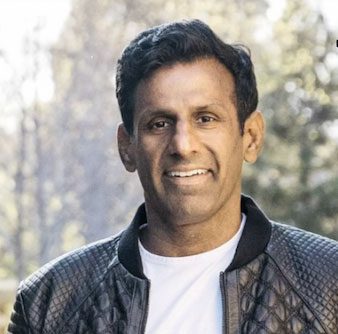
Venk Chandran, Guest
CPO & CCO, PathFactory
Nick Mehta, Host
Former CEO, Gainsight
Transcript
Venk Chandran:
You understand that product, as you release it has to have a financial and value outcome. And so that even changes how you release a product.
Nick Mehta [Host]:
Yeah.
Venk Chandran:
Do you release a really awesome feature in Q4 or do you release it in Q1 when you can actually give, you know, deliver value to your customers?
These are the decisions that customer success teaches you that carry over to product, that help you prioritize and release the right thing.
Josh Schachter [Host]:
You’re listening to Unchurned, brought to you by the Gainsight Podcast network. What happens when a radio host from Canada becomes a Chief Product Officer in Silicon Valley? When a storyteller becomes a technologist? That’s the journey of Venk Chandran from the world of underground music journalism to leading product and AI innovation at PathFactory. In this episode, former Gainsight CEO Nick Mehta sits down with Venk to explore how creativity and empathy can fuel technology, how customer success can shape great product design, and what it really takes to lead in the age of AI. From rave culture to revenue intelligence, this.
Venk Chandran:
One’S got it all.
Josh Schachter [Host]:
I’m Josh Schachter. You’re about to hear from Nick Mehta and this is Unchurned.
Nick Mehta [Host]:
Hi, my name is Nick Mehta. Welcome back. And I’m joined by a good friend and Chief Product Officer amongst many other things which we’re going to talk about, Venk Chandran. So welcome, Venk.
Venk Chandran:
Pleasure to be here, Nick.
Nick Mehta [Host]:
So, Venk, you’re a Chief Product Officer at Pathfactory, but that’s okay. Let’s talk more interesting things first. Although that’s a very cool company.
Venk Chandran:
I knew this would start like this. I came well prepared.
Nick Mehta [Host]:
Okay, well, we came well prepared too. Maybe even done some AI based research. Thanks for our team. So we went some deep cuts here. We got to get to know you as a human first. So you live, you live in the Bay area, you grew up in Toronto, you’re super nice guy, which highly correlated with being Canadian. So that’s. We, we think you are amazing.
Nick Mehta [Host]:
I’ve known you for a long time, which we can talk more about the history in a little bit. But on your history we did learn a few facts. So something about being a radio host in Canada and journalist about music. Tell me more.
Venk Chandran:
The one thing I always appreciate is how we are going to talk about us as people first and as humans and what our shared history and past is. And I’ll tell you, this is one of the most interesting things because everyone in tech has had a lived life and mine actually came from arts and music and for a period of time. And I Want to call this, like, the 90s, when rave culture was still underground? I got this opportunity to work for the Canadian Broadcasting Corporation, which is our version of npr Canadian version, and to focus on electronic music and do journalism around it, which I loved. It was a wonderful experience. And it’s because I’ve actually. I went to an arts high school that you have to audition to get in.
Nick Mehta [Host]:
Oh, wow.
Venk Chandran:
And so I sang, and I did, like, musical theater and stuff. So using your voice was what I focused on for four years. And so radio was just a nice way to interact and interview people. And I have to say, we can all work in product and AI, and we know that we tackle some of the most difficult things in mathematics and product. But the hardest thing you’ll ever do as an interviewer is try to get more than a monosyllabic response from an artist.
Nick Mehta [Host]:
Oh, interesting. They’re not. They’re not used to being interviewed.
Venk Chandran:
They’ll say things like, you know, that’s just how it is.
Nick Mehta [Host]:
Yeah.
Venk Chandran:
And how to pull that story out of them. So all of the stuff we’re doing today is just. Is fun. But a lot of it started at the roots of staring into a microphone and saying, how do I get a story?
Nick Mehta [Host]:
I love this. One thing I love about this on a sort of semi segue, is how in business, you can know somebody for a long time. Like, we have, and we probably met seven, eight years ago, maybe more. And yet, like, I still learn new things about you on the human side. You did musical theater, which I have zero musical ability, but I’m obsessed with. So we certainly need to make some kind of music video. I know. Happening, like, maybe right now.
Nick Mehta [Host]:
We’ll just step on this podcast. Yeah.
Venk Chandran:
It could very well happen. And I’m sure we could. We could.
Nick Mehta [Host]:
You sing, I write. We can do something.
Venk Chandran:
Oh, my God.
Nick Mehta [Host]:
Yeah, we can do something. We don’t want it to be me singing. That’s the main rule. Yeah, yeah.
Venk Chandran:
Don’t cut yourself short. It’s pretty easy.
Nick Mehta [Host]:
Oh, my gosh. Well, it’s so, so fun to do this, but, like, continuing this theme of getting to know you. So you love music. I love music. I think your music tastes way cooler than mine. My kids would say I’m very basic.
Venk Chandran:
I’ve seen your music tastes. I’m basic.
Nick Mehta [Host]:
I own that. I’m basic. Don’t worry. But you have, let’s see, three artists that you could have dinner with or whatever. Doesn’t matter if they’re alive or dead.
Venk Chandran:
Yeah, no, this is a great one. And three is really hard for me. I was out actually with two friends last night who, you know, one owns a club in Oakland and the other one’s like a music music like Licensor. And we got so deep into music and this kind of conversation came up. It’s like, all right, like top three. And so it’s hard. It’s not Taylor Swift. I’m so sorry, Nick.
Venk Chandran:
We’re gonna completely.
Nick Mehta [Host]:
Fine.
Venk Chandran:
Just checking.
Nick Mehta [Host]:
We’ll just edit this out so it’s okay.
Venk Chandran:
But the first one is a weird composer called Manuel Gottschling. And he wrote this very long track called E2, E4. Good luck. Look it up. It’s really interesting. It’s very long. It’ll put you to sleep.
Nick Mehta [Host]:
It’s EDM.
Venk Chandran:
E2, E4. It’s like before electronic music. It’s like very early synthesizer stuff. The second is Peter Gabriel, Kate Bush. I was hoping to get a slash in there because Peter Gabriel. Oh my God. Genesis and like everything world music. I really like that.
Nick Mehta [Host]:
Something accessible for me. I like that.
Venk Chandran:
Okay, Peter Gabriel, it’s in that time. And the third is, you know, Jay Z. Hova.
Nick Mehta [Host]:
Like, no way. I mean, can’t get better though.
Venk Chandran:
I mean, that is for me, that was East Coast 90s rap. That was in for me. But I am really digging Bon Iver.
Nick Mehta [Host]:
Yeah, he’s amazing.
Venk Chandran:
I’m gonna say Bon Iver as well.
Nick Mehta [Host]:
Well. But you know, I got exposed to him because of the collabs with Taylor Swift. So there you go. We do have a connection there. And by the way, I do have 99 problems. But you’re not one of them.
Venk Chandran:
Yeah, 99 problems isn’t one of them.
Nick Mehta [Host]:
Retention needs one of them for everyone. Don’t worry anyone watching that, they have a problem around that. But we can talk more about how to fix that. Last personal question. So you, you just are like, like you’re true human. You wear your heart in your sleeve and I’ve learned about you. But huge Raptors fan. You’re foodie, love music.
Nick Mehta [Host]:
Super interesting guy. Like what right now is just bringing you joy outside of work, man.
Venk Chandran:
You know, we have. I have a family here. I have an eight year old we. And you know, he’s born in San Francisco and I spend a lot of time at the public school coaching volunteer sports like basketball and soccer. I was absolutely not athletic really for like high school, university, as you know, my dad, every one of my family, you know, what a waste. Hunched over a computer, you know, playing games and doing music stuff. But I really Started to pick it up, you know, later on in my life. And I have just loved working with the kindergartners, first graders and now second graders play sports and also making it really inclusive in a sense, because not.
Venk Chandran:
It’s not just about who’s really good at sports physically, but mentally. And everyone’s kind of growing at different ways. They’re very neurodiverse approaches to sport and I really want to make that inclusive. A lot of it is sort of like rethinking how we even do recess at schools. So I spend a fair bit of time putting the coaching plan together. And so I, that’s, that’s really the joy that I get is seeing these kids grow, connect and learn what it is to actually get it. And hey, you know, the best thing I can do is get. Give them back to their parents, incredibly.
Nick Mehta [Host]:
Exhausted so they can go to sleep. I love it. So, Van talking work a little bit. You, you were, you have an interesting mix where you were at some startups, you know, Path Factory today, work Brain Ripple, you’re at an iconic large company with Salesforce. But you also have done a lot of different roles, which I think is really cool, especially for people watching. You know, a lot of times people think, oh, you do this one role, you just kind of move up and move up, move up and then that’s it. And I think it’s really cool to, from the time I’ve known you see, you kind of move between like the customer facing world, customer success, helping customer success strategy and Salesforce and things like that, and then the product world, you know, culminating to date with you being chief product officer at Path Factory. Talk a little about that career arc and how you’ve changed.
Venk Chandran:
Yeah, it’s not all some grand design. That’s one thing I think is important to know. But I, I think in the beginning, the work that I’ve done started off in my, you know, early on working in hr, tech, payroll, time and attendance. And this is in Canada. And I had some great startup founders. David Ossa, David, you know, David Stein, Dan DeBeau. All of these folks were working in HR software. You know, it’s an interesting thing.
Venk Chandran:
What is, what does it actually teach? It taught me a lot about complexity, but it also taught me with the interaction between humans, labor, payroll and what it means to actually owe each other something in software. It was mission critical to get people paid. That never left me.
Nick Mehta [Host]:
That’s a cool.
Venk Chandran:
And with Ripple, it was all about reinventing social performance management. And I realized that when we want to improve Ourselves. In an organization, the hardest thing to rewrite is your operating system. As a human, there’s human behavior. It’s hard. You’re working in a world of accolades, recognition, and an artificial area that is work. How do we make that more real? And so performance management was sort of a really interesting foray into how do you change even in customer success? When I started to go into that, how do you start to change human behavior at scale? Because I think a lot of what we do with customer success in digital products is ultimately fundamentally changing you to do something differently as a human and at scale. I got into customer success because I was in sales when I first joined.
Venk Chandran:
Even though I’d been an engineer and product, the sales was the need. And the head of sales said, you’re too smart for sale. You’re too smart for sales. You should go into customer success because you care more about the outcome of everything.
Nick Mehta [Host]:
I love it. And public service announcement. I think salespeople are smart too.
Venk Chandran:
I. I agree. I am so sorry. It was just.
Nick Mehta [Host]:
That’s what they said to you. You didn’t say that.
Venk Chandran:
I did not say that. And I did. And to say the exact same thing, it was just different skills at the time. But it was also, no one knew what customer success really was.
Nick Mehta [Host]:
Right.
Venk Chandran:
We’re talking 2010. So the work that you’ve done to actually get us from 2010 on to where we are today, we were all at the start of trying to figure out what that looked like. And when we joined Salesforce, I think my journey was very different. I considered this sort of my large scale mba. And I started with customer success because I felt drawn to the end result. And the way that you learn about the end result is renewals. So I sat there learning about renewals and building and making sure that we could align our small amount of contracts and understanding this. And you know what that kind of unlocked for me is you learn to work backwards.
Venk Chandran:
You learn that if people pay you a dollar, that is the ultimate form of value. You then start to understand why adoption matters. You understand what the product does, all from the end. So I took a very different approach to learning. And you’re right, I made some decisions in my career not to focus, to be kind of a. Not a generalist, but move from project to project.
Nick Mehta [Host]:
Right.
Venk Chandran:
And throughout this learning, you know, part of it was, you know, meeting you, part of it was understanding that customer success was also a business. And I think that’s another kind of unlock for me which was learning so much that customer success is Fundamentally an important financial part of a company. And I don’t think you can ever go away from that. I think it needs to be re emphasized even now how important it is for you to run your company with customer success and the financials around it. And then I learned to work backwards and I came to this realization that product could be a wonderful way to drive customer success at scale.
Nick Mehta [Host]:
I love that. You know, it’s interesting, I remember that I don’t want to call it Pivot because it felt more like a continuum. But meeting you when you’re working on CS at Salesforce, which obviously is Salesforce is the company. So that’s pretty cool. And then what I remember and you tell me if I got this right, moving into kind of the, into the product Org and working on the value. Like how do you show the value of sales cloud, which is. Salesforce is marquee product. Right.
Nick Mehta [Host]:
And I think you built, you and your team built some tools.
Venk Chandran:
Good tools.
Nick Mehta [Host]:
Yeah, right. Some tools around that value is very cool because everyone in the CS wants to show value.
Venk Chandran:
That became revenue intelligence, the product that’s out there for sales, which is amazing.
Nick Mehta [Host]:
And then, and then you. What’s cool for me is I remember vividly when you’re in the product Org, I don’t think you were a product manager in the like core software, but you were, you were in the product managing this new thing.
Venk Chandran:
And then, yes, then it sales cloud.
Nick Mehta [Host]:
Became part of sales cloud. And then at some point you’re like, okay, I want to go back to startup. And then honestly I was like, oh my gosh. I just saw like your chief product officer. And a lot of people will, they might be saying they’re as a CSM and be like, I can never be a product manager. I can never be a chief product officer. And like, you know, you didn’t have the, well, maybe you had some of that imposter syndrome, but it didn’t hold you back from the outcome of getting to be a cpo. So talk a little bit about that.
Venk Chandran:
And I still have imposter syndrome.
Nick Mehta [Host]:
Don’t get that twisted.
Venk Chandran:
We all knew.
Nick Mehta [Host]:
We all knew.
Venk Chandran:
But I think here’s the most interesting thing that, and this is what if you’re, if you’re out there, you’re thinking about customer success and your career product. Like when I think about product, and I probably have a very different definition of product that’s ever evolving even with what’s going on with AI. But fundamentally what customer success teaches you is true empathy for your customer. And imagine the Ability to understand that from a product perspective, because now you can hold the design, the decisions, you and the ability to integrate that into what you’re delivering. So that became really important to me. And I think, and this is something that I’ll share even as we go into how I’ve designed my product organization, that the best customer success people are also the best product people and vice versa, because they understand what it’s like from the customer’s perspective. And even, you know, I’ll lean into this a little later too. But even the way that I’ve designed my organization is I actually have two different types of product managers.
Venk Chandran:
I have outbound product managers and inbound product managers. That alone has unlocked the ability to drive better outcomes for our customers in a faster way. And the one thing you learn about customer success, and I think this is important, is what’s really good about the business is you understand that product, as you release it has to have a financial and value outcome. And so that even changes how you release a product.
Nick Mehta [Host]:
Yeah.
Venk Chandran:
Do you release a really awesome feature in Q4 or do you release it in Q1 when you can actually give, you know, deliver value to your customers? These are the decisions that customer success teaches you that carry over to product, that help you prioritize and release the right thing.
Nick Mehta [Host]:
That’s such a good point because you’re right. Like there’s some of those nuances, timing of release and how you announce it and change management that you don’t always appreciate if you’ve only been in product or in engineering. And it’s a different mindset now. The flip side though, is you, not everyone is the right. Has the right background to make that leap or not everyone has yet the right mindset and it can change. How do you determine if you’re csm, if you are ready to get into that, let’s say outbound product role, and if you’re not, what are the things to do to get ready?
Venk Chandran:
There’s always three things to think about. One is there’s obviously the folks that know their customer and their space and can abstract it across and see patterns. I think pattern recognition is actually a really important skill which is looking across your customers, understanding the various trends. The second part that I often find is really important is communicating this. How do you consolidate, aggregate this and then be able to explain the work that needs to be done? The best product managers I’ve had who came from CX or customer success or any way you call it, were able to come to me and say, here’s My pattern, here’s what I’m noticing, here’s the prediction and here’s the 15 customers that I can speak to. I can just pick up the call right now and show you what needs to be done. Then the third part is the intellectual curiosity to learn about number one, the thin layer that is called product management operation. I’m not over glamorizing like what, what that is.
Venk Chandran:
That’s a learned skill of how to be a product manager. But it’s the curiosity of learning about the product and the technology. When you do that, I think you have this really good composite and there’s so many of everyone out there who is a CSM looking and so I know the product. I can do this. You can. It’s a learned skill. It is not at all unattainable.
Nick Mehta [Host]:
I love that. And I think those three levels resonate a lot and bleed into the rest of the conversation. Just kind of reacting and reflecting and you know, probably plant the seeds for the conversation. The first one you said of pattern recognition, I think that’s such a good point and is often the delta between people in general that can move up in companies and those that can, you know, the anti pattern recognition is you have one customer and you’re like we need to do everything for everything for the one. Oh, now I met this other customer, we need to do everything for them versus like let’s take a step back. Yeah, these customers want X, but actually more customers want Y. Or it seems like there’s something they want and they’re thinking about the wrong way and people mistake that. Like sometimes they think product management is get a list of what everyone wants from the customer and do number one and then do number two and then.
Nick Mehta [Host]:
Right.
Venk Chandran:
Well, product management is also incredibly hard for one reason. And I think this is, this is another interesting takeaway. When I was a customer success manager, I could finish this amazing call with a customer and feel really good and go home.
Nick Mehta [Host]:
Yeah.
Venk Chandran:
And my cup would be full emotionally. I could have 10 of these calls a customer would renew. I’d feel really good. My cup would be full and great. When you build product, you may not see the impact of what you’ve done for years.
Nick Mehta [Host]:
Yes. Yeah, you’re.
Venk Chandran:
It’s delayed gratification in a big way. So ask yourself mentally what are you ready for? Because things might change, you might never get the thing built. And so that is a very different mental model for you to exist in when you’re working in production in some ways versus customer success.
Nick Mehta [Host]:
That’s so good too yeah. There’s an emotional aspect to this and what, what, like you said, fills your brain.
Venk Chandran:
If you believe in predictability in some ways, and in some ways customer success is actually less predictable. We all, we all see this. That’s why you need the advent of staircase and, you know, all these data points to pull it through. But I think that’s really the difference is there’s less predictability in product because it’s not just about getting it out the door.
Nick Mehta [Host]:
Yeah.
Venk Chandran:
If you’re really good at your job, it’s, oh, my gosh, did they use it? Did they value it? Did I drive some financial outcome? These are very long term.
Nick Mehta [Host]:
It’s a really interesting point. Yeah. We’ll set our goals for the year. You know, V2 mom, which is a training framework that, you know, used as well. And, you know, we’ll have like, goals for CS and sales that are very much like, do this, hit this GR retention, hit this, bookings. And then for product, it’ll be like, do these things that will help our numbers two years from now or a year from now. Right. Not.
Nick Mehta [Host]:
There’s no way that we’re going to ship something in Q3 and impact sales for the year.
Venk Chandran:
Think about, and in, in our world of digital products, these are ephemeral. They’re also gone very quick. Yes. I can’t name half the products that I built at Salesforce because they’re all gone now. They’ve been superseded by new things. This isn’t like bridges, you know, like the, the bridges that Michael and Dache might have written in Toronto or the Golden Gate Bridge. These are things that stand the test of time. We’re also dealing with things that move so quick, quickly, including what we’re seeing.
Nick Mehta [Host]:
With AI, which is going to be accelerating everything more. All right, so bank, like, let’s talk, you know, business. And Path Factory, which is actually a really cool company. And I’m not just saying this to flower you. Our marketing team is like super excited about it. So that’s great.
Venk Chandran:
That’s great.
Nick Mehta [Host]:
And, and I’m sure you love hearing that. And like, so the mission is really interesting. So simple. Connect content to revenue. What’s that mean to you?
Venk Chandran:
I mean, I’m going to take it a step back and just say this is an interesting change. So for the past 10 years, I think we’ve all been thinking, especially around the problem that we solve. What Pathfactory does, just to be clear, is we’re able to provide the right content at the right time to the right channel, to the right buyer. And in order to do that, you have to understand deeply what content buyers care about. And for the past, like call it 10, a decade ago, most of these are B2B buyers. Our shared buyers were guided by marketing and sellers. You’d go to your salesperson, they would guide you along the journey. They were the locus of authority.
Venk Chandran:
That’s changed dramatically. Buyers now more than ever are, want self service. They want to take control of this narrative. And there’s only two real ways they buy. They talk to somebody they know. They’ve got this buying network of people that’ll figure out, what do you use? What do you use? Do you like that thing? Okay, great. And the second thing they do is they just consume a ton of research and content. And so what pathfactory did, and it’s been around for a while, but it really focused on that one thing.
Venk Chandran:
What is the content that buyers truly care about? How deeply can we understand it? How can we recommend? And if we can do this faster, can we accelerate their education and ultimately grow pipeline? Because as we consume content, it’s a hidden signal, a really powerful signal. Did you read it? How well did they read it? And content, in a funny way, is a really un. Was for a lot of years was really just this sort of like ignored signal because it’s not just a PDF or a video. It’s actually a very important part of your behavior as you’re consuming it. And we all know this. You’ve got Spotify, you’ve got Netflix recommending you this. And in B2B, that was, that was the unlock. And that’s what we do.
Venk Chandran:
So many of our companies and our customers, all of them have sophisticated buyers. And more often than not, they’re sophisticated. There’s a lot of choice, but they know what they’re doing. So we’re able to truly understand the content that they’re consuming. Help marketers fashion these personalized experiences. And that connecting to all our other systems shows you what’s real pipeline, what’s going to close faster.
Nick Mehta [Host]:
That’s awesome. I’ve seen the experience where like there’s the experience for that buyer of a vendor, let’s say a customer of gainsay, right. Where they get this really personalized content experience. Right, right. How does, like you guys are doing a lot around AI. How does AI fit into that? Because it seems, it seems like a.
Venk Chandran:
Logical, you know, it is logical, but it didn’t start in the beginning. I think part of it is that with pathfactory, we focused on thinking about content, almost like a content data platform. Yes, it’s unstructured, it’s a lot of it. So we took an approach where we thought about let’s, let’s, let’s bring all of this together, let’s even make sense of it internally. How do we automatically classify this stuff? Now this is classic, really good use of AI classification. So pre LLM, this is a classification models, then recommender models we had. All of these are pre LLM models that we used, but they often use some of the later technology. But we really thought of content as a data problem.
Venk Chandran:
When you think of it as a data problem, it allowed us to invest in a structure around taking all this material that was ready for AI. But what do we mean by ready for AI? I mean that’s an important thing. It means that we want to change the equation. Essentially today the equation is all our B2B marketers take content, personalize it and send it to the buyer. And then what do we do? We cross our fingers.
Nick Mehta [Host]:
Yes. We hope and pray that they read it.
Venk Chandran:
We hope and pray totally. And what we do or what all this agent stuff has unlocked is the ability for the buyer to be a first party partner in the conversation. So now they’re engaging with the content, they’re creating their own buying journey, they’re figuring this out individually, they’re sending it to their friends, they’re learning and they’re being self educated. And so we’ve built an agent experience or a platform experience that does that. It allows us to take all the content, create these bespoke personalized agents now, not just personalized web pages. And this breaks things. This disrupts a lot of the way that we might think of this equation. The buyer’s in control, but at the same time it’s on your trusted content.
Nick Mehta [Host]:
And it’s, it’s like the experience is I’m a, I’m a buyer and now I’ve got all this content which you know, historically maybe I have to click through and all that. And now I have an agent to ask a question to and it’ll give.
Venk Chandran:
You or even generate your own website. These are all agents that work with other.
Nick Mehta [Host]:
Nice, that’s cool.
Venk Chandran:
And let’s think about that. The majority of the way that most B2B buyers for the past 10 years would say I’m getting my information was from a website.
Nick Mehta [Host]:
Yeah. Or Google. Yeah.
Venk Chandran:
Outside of doing music stuff, I also in high school wrote code in HTML. What has changed, Nick? Not much.
Nick Mehta [Host]:
No. Just new versions of JavaScript and new framework.
Venk Chandran:
And so really websites are, if I may say, the most disruptive thing are not the best experience for buyers anymore.
Nick Mehta [Host]:
Oh my gosh. Totally.
Venk Chandran:
And I think that the scaffolding around websites is so much but it’s collapsing. And so agents are a way to disintermediate that and buyers prefer that.
Nick Mehta [Host]:
Yeah.
Venk Chandran:
And I feel like that’s where we’re heading. And so we want to just say, look, your website will maintain, but it might just be a billboard.
Nick Mehta [Host]:
Yeah.
Venk Chandran:
The real experience will be something that’s really agent ready and is personalizing it for you and is more of a concierge. And that’s what we’re investing in. It’s not necessarily role based agents that mimic human roles, but it’s a concierge that helps you when you need it.
Nick Mehta [Host]:
What’s really cool about that too is, you know, you’ve probably seen this research that there is a shift now where buyers are just like literally looking stuff up about vendors through ChatGPT.
Venk Chandran:
Right.
Nick Mehta [Host]:
You know, how does Gainsight compare to whoever? Right. And what I think Path pathfactory is doing, threading the needle. Well, is like, you know, there’s the extreme of one a website which is becoming kind of dated. But if you just say look, my strategy is just make a content available with ChatGPT you have no control to create a great experience that’s unique and different.
Venk Chandran:
So I think the difference is, and this is a good nuance too, when you look at GPT and all those other even perplexity. They’re canvassing everything.
Nick Mehta [Host]:
Yeah.
Venk Chandran:
But they may not be canvassing the most accurate information.
Nick Mehta [Host]:
Exactly.
Venk Chandran:
So I think companies and our buyers are saying we’re not so willing to give up everything now. We want to also control our own destiny. Exactly. Because it’s all about what do we owe the most accurate information to our buyers.
Nick Mehta [Host]:
Yeah.
Venk Chandran:
And so they want to have their own agents that help even communicate with others. But is the trusted source. And again, I mean all the customers that are on our on this journey with us are in cybersecurity hardware. These are all major companies that have incredibly sophisticated buyers. And so as a result, I think that’s why they want this kind of experience as well.
Nick Mehta [Host]:
I love it. And one thing that’s related to that, some of the folks are gonna be watching aren’t in cs. Of course. Surprise. Right. And every one of the companies that everyone’s watching is working on AI. Right. There’s no software company that’s legitimate that’s not building some AI capability.
Nick Mehta [Host]:
What’s interesting, even like Gainsight has tons of AI capability. And what’s interesting is now the CS job is a unique kind of change management where everyone’s used to like launching a pathfactory microsite that has a bunch of content, you click around it or using a gainsight workflow in a manual way and we’re like no, no, you can just do that totally automated now or you can do an AI agent. How do you use your CS team to convince customers or help them evolve their thinking on using Path Factory?
Venk Chandran:
Man, I think it’s. This is often a thing. One thing I would say about our CX team is they are incredibly good at understanding the marketing functions and the roles of the customer. They speak the language of the customer, they understand the role of marketing operations, demand gen, all of the various kind of jobs that these people do and intimately understand that stuff. And the technology and the pain, the empathy that they have. I think that’s one thing that is not AI related but it’s important. And the second thing that they do and when we think about Path Factory is we really go in depth to showing them how the day in the life will improve. And from the CX side it is we’ve got this great value framework as well, which I think our head of CX has pulled together which actually shows you with the technology.
Venk Chandran:
What, how are you actually measuring and moving?
Nick Mehta [Host]:
Nice.
Venk Chandran:
But I will say the big gap and this is something that we all have to share is educating our customers on AI. And I’m glad that we’re doing the series but I think as vendors, as people in this space, what we owe to our customers is educating them more. Not just of the gloss of AI but how it truly works. When I speak to marketers and I’m sure as you speak to cx, you know, I hear a lot of anxiety. Oh my gosh, like there’s real anxiety because their jobs are unbundling. There’s what you thought of as demand gen is a variety of different things. And so when you think about AI, the best thing that they’re wondering how does this all work? And so a lot of the thing that we invest our time in and I think our CX team, we try to do this is educate them on how these things truly work. Moving them from what is probabilistic to kind of in a more probabilistic way.
Nick Mehta [Host]:
Yeah.
Venk Chandran:
And you talk about workflows, Nick, like marketing, a buying journey is non deterministic anymore.
Nick Mehta [Host]:
Right.
Venk Chandran:
So how about cx? Like is CX deterministic?
Nick Mehta [Host]:
It’s never been determined, it never happens. That’s the Problem is that the workflow and rules concept, which by the way exists in Gainsight and Salesforce. It’s all. I’m so glad you said it. It’s all, you pretend the world is deterministic, but the reality is some days your customer has a bad day or their boss yells at them and they’re pissed off and like, these aren’t deterministic things. There’s no rule for how to handle that. And that’s why I’m excited about generative AI, because it reflects more the real life of customers. I also think one like, it’s very.
Nick Mehta [Host]:
These conversations are so meta. So make sure everyone captures it. There’s like, what I love about what you said is you are building generative AI stuff into your product and your CS team needs to get people to adopt and use that and probably change. And then your buyer is probably doing generai on their own products too, by the way, but also is feeling anxious about how it’s going to change their job, move their cheese. And they’re so used to the way they’re doing things. And yeah, there’s such a big human element and you’re doing so much around this, talking about it. I’m like, my mission every day is on LinkedIn. Have people understand this is a big change.
Nick Mehta [Host]:
Don’t like, you really need to spend more time. And I’m seeing a change, which is awesome. I’m seeing people like individual contributors in CS lean into this. Now yesterday, actually it’s really cool, one of our CSMs created like a custom GPT where he took the entire release webinar of our release which like all release web was like two hours.
Venk Chandran:
Right.
Nick Mehta [Host]:
And took the transcript and then he took all these notes and then he created like personalized emails for each customer about what’s relevant, totally automated. And I love seeing this. And you’re probably seeing this in your clients too. Just like the innovation. Right.
Venk Chandran:
And I think one thing that is going back to those people who are in CX or in marketing and anyone works is like, this is something that we should make this almost citizen development.
Nick Mehta [Host]:
Right.
Venk Chandran:
Everyone should do this. Everyone should try.
Nick Mehta [Host]:
Yeah.
Venk Chandran:
And I think it’s so important for the careers and for what you want to be. I think it’s just, I can’t.
Nick Mehta [Host]:
You can’t emphasize. Understate this enough. Yeah.
Venk Chandran:
Understate this enough.
Nick Mehta [Host]:
Yeah. Right, Right.
Venk Chandran:
This is.
Nick Mehta [Host]:
Or I guess overstate. Yeah. This is exactly where we wanted to go with this conversation. I know we’re coming up on towards the end. I have one final Question, which was not even on the script, so. But you’re so good. So, you know, we talked about change in like our behavior and getting our clients change their behavior around AI and then how that converged from your own personal career, your changes and your evolution and your growth, which is so cool. But you know, we’re growing in how we use AI outside of work too.
Nick Mehta [Host]:
Right. Like, you know, a year ago, some people probably didn’t use Chat gpd. The ones that did might have been like, I used to write recipes. Right. Which is awesome. Still a great use case. And I’ve seen like a massive change in how people are using it in their personal lives. For the people that are leaning in any ways that you use AI outside of work that are interesting.
Venk Chandran:
I use Perplexity a lot.
Nick Mehta [Host]:
That’s good.
Venk Chandran:
I do it for research. I use it for asking questions and recipes and all like Chemex stuff. But I also think in my personal life, the one thing that I think that kind of crosses over is I think about how deliberately I am using AI because I often think back to what we owe each other.
Nick Mehta [Host]:
Yeah, you’ve mentioned that multiple times, which I love.
Venk Chandran:
It’s like what we owe each other, which is I owe. Like when we think about our AI usage and how do I do it, I use it for my personal stuff, but I’m always checking to see the validation because it’s up to me to understand what is valid for me. And then I think about my customers and I think about what I owe them in terms of truth, validation and complete transparency about how AI works. And I think that’s. It’s always a constant reminder of how I do things. But yes, for total fun, Perplexity does my deep research for me and you know, a lot. I’ve had the early access to Google’s like, Ask AI function as well, which has been wonderful. And one thing I will tell you, Nick, I think in our world, you know how badly we have been trained to work with agents by asking only one question, only one question at a time.
Nick Mehta [Host]:
Yeah.
Venk Chandran:
We should be able to ask multiple. And I think we have to retrain ourselves to ask conversations the same way that we are we are doing today.
Nick Mehta [Host]:
That’s a really interesting point. Yeah. We treat the agent very differently and the prompt is insight into our minds and how we’re evolving and can we ask multiple questions? And you know, it’s the oldest cliche that it’s not about the answer, it’s.
Venk Chandran:
About the question you ask.
Nick Mehta [Host]:
Yeah. And it’s so cool to hear you say that, because I think it’s just a good closing of, you know, we’re evolving our careers, but we’re, like, hyper evolving with this use of generative AI. And it’s so fun to hear a different perspective from somebody I really respect. So, bank, thank you so much. This has been great.
Venk Chandran:
I appreciate it.
Nick Mehta [Host]:
Appreciate it.
Venk Chandran:
Thank you.
Nick Mehta [Host]:
Thanks a lot, buddy.
[Un]Churned is the no. 1 podcast for customer retention. Hosted by Josh Schachter, each episode dives into post-sales strategy and how to lead in the agentic era.
Browse Series
Subscribe on